

Popis obrázku
Article
publikum-znak-bck.svg
publikum-znak.svg
newsletter-bck-znak.svg
Back to the article list

When nature awakens and the body protests

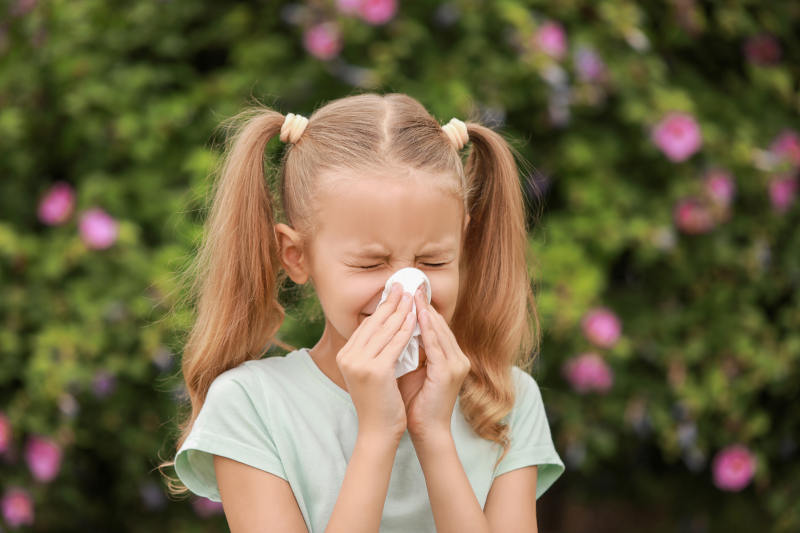
With the arrival of spring, many of us begin to suffer from excessive sneezing, burning and itchy eyes. We generally call this hay fever. In reality, it is not a reaction to hay, but to the pollen grains of plants and trees that are beginning to bloom. A more accurate name is therefore seasonal allergic rhinitis. It is not dangerous in any way, but it can make everyday life very unpleasant. According to statistics, 30−50% of the population suffers from it.
 
It is therefore an allergic reaction with typical symptoms such as a blocked nose, watery nasal discharge and sneezing. Redness, burning and watering of the eyes are also often added. In about 20% of cases, allergic rhinitis is also associated with breathing difficulties. Over time, these can develop into more serious conditions such as bronchitis or bronchial asthma.

Allergic rhinitis from the perspective of Western medicine

From the perspective of Western medicine, the cause of allergic rhinitis is an inappropriate reaction of our immune system to pollen grains. The immune system of a healthy person does not consider pollen grains to be dangerous, but the immune system of an allergy sufferer evaluates pollen particles as an object dangerous to our organism and triggers defensive reactions – it begins to produce IgE class antibodies. In allergic people, these antibodies are found in increased amounts on the surface of so-called mast cells, which are very important for the proper functioning of our immune system. You can find them in strategic places where our organism comes into contact with an external pathogen, i.e. in the skin, in the lungs, in the digestive system, and also in the nasal epithelium. They are also important, for example, in the case of snake bites or as a defence against parasites, bacteria and viruses.
When pollen grains come into contact with the IgE antibody, the cargo carried by the mast cells is unlocked, and substances such as histamine or proteases are released into the system. That is why Western medicine primarily uses drugs for "hay fever" that inhibit (prevent or completely limit) the release of histamine into the organism. Histamine and other substances result in the dilation of blood vessels, which leads to the activation of even larger cells of the immune system and, as a result, to the development of inflammation as a defensive reaction of our organism to an attack from the outside. However, many other mechanisms associated with allergic reactions are likely still waiting to be discovered.

Allergic Rhinitis from the Perspective of Chinese Medicine

People suffered from allergies as far back as ancient China, but not to the same extent as they do today. For this reason, this problem is not often described in classic textbooks of Traditional Chinese Medicine. Doctors of Traditional Chinese Medicine do not speak of diseases in the way we understand them today, but rather speak of "patterns" – the pattern of deficiency of Lung Qi, the pattern of Liver Qi stagnation, the pattern of damp-heat in the Gallbladder meridian, and so on. They do not even have a term for allergic rhinitis. The closest to our designation is the term Bi Qiu, which essentially means "blocked nose". Typical symptoms of Bi Qiu are sneezing and thin, watery mucus running from the nose. The patterns that form the basis for Bi Qiu are deficiency of the defensive Qi of the Kidneys and Lungs (which is the root of the disease – Ben) and the retention of chronic wind in the nose (which is the manifestation of the disease – Biao). In addition to the above, a contributing cause of "hay fever" is often deficiency of Spleen Qi, which creates mucus, or heat from the Liver.
Deficiency of Kidney and Lung Defensive Qi

Kidneys are the foundation of all the energy in our organism. The energy we inherit from our ancestors is stored within them. If our parents did not live a particularly healthy lifestyle (especially the mother during pregnancy), our Kidney energy will be weakened, and we will have a predisposition to a number of illnesses. The Kidneys govern the defensive Qi of our organism. At the same time, they are directly involved in breathing and are connected to the Lungs. Traditional Chinese Medicine theory states that the Kidneys govern inhalation and the Lungs govern exhalation. In one of the classic books of Chinese medicine, the Basic Questions, it is also written: "The Kidneys govern sneezing" (via the governing vessel). From the above, it follows that the Kidney system significantly influences our immune responses and has a close relationship with hay fever.
 
Lungs govern the nose, the airways, and the function of breathing itself. Together with the Kidneys, they also govern defensive energy, which is capable of closing the pores and preventing the entry of pathogens from the external environment. Weakening of the Lungs leads not only to respiratory problems but also to a weakening of immune functions.
The Lungs and Kidneys are weakened mainly due to hereditary influences (especially in children). However, excessive work, overexertion, and subsequently drawing on the energy reserves of our Kidneys, or smoking, do not benefit the state of the Lungs and Kidneys. To all this, there is often added a weakening of the Spleen (which is a synonym for digestion), which creates unwanted phlegm, and Liver fire, which arises from excessive or suppressed emotions.

And what about the wind?

Kidney and Lung deficiency form the "root" of the disease, its foundation. The "peak", or we could say the acute cause, is wind. In Chinese medicine, wind belongs to one of the external climatic pathogens (others include cold, heat, fire, dampness and dryness). In today's understanding, we could say bacteria, viruses, chlamydia or perhaps allergens. But let us stick to the symbolic expression of Chinese medicine. Wind is a very dynamic and changeable pathogen. It can combine with other pathogens, mainly with cold and heat. It is also the cause of autumn viral infections, which share a number of common symptoms with seasonal rhinitis. In the case of allergic rhinitis, however, it is not external wind, nor internal wind (which arises in the Liver and is the cause of, for example, epilepsy or stroke), but rather a certain type of chronic wind that persists in the upper part of the respiratory system due to the deficiency of the defensive energy of the Kidneys and Lungs. Their energy is so weak that it is unable to expel this wind. And when external wind is added (in the form of an allergen, in this case pollen grains), we begin to feel symptoms such as a blocked nose, sneezing and watery rhinitis.

How can Chinese medicine help?

According to Chinese medicine, it is necessary to address both the root of the problem (the original cause) and the tip, i.e., the wind. Chinese medicine offers a number of options for dealing with them. Acupuncture is very good, especially when dealing with the acute state of hay fever. Herbs or medicinal mushrooms are also excellent. Chinese phytotherapy is a very individual therapy and usually uses bespoke herbal recipes. We are all different, and everyone has the causes of their health problems put together a little differently. However, a therapist who can put together an herbal mixture exactly for you is not always within reach. For these situations, products (herbal tinctures, capsules or tablets) already precisely formulated for allergic rhinitis are good.

I would like to mention here the mushrooms and herbs that I use most often in my practice:
 
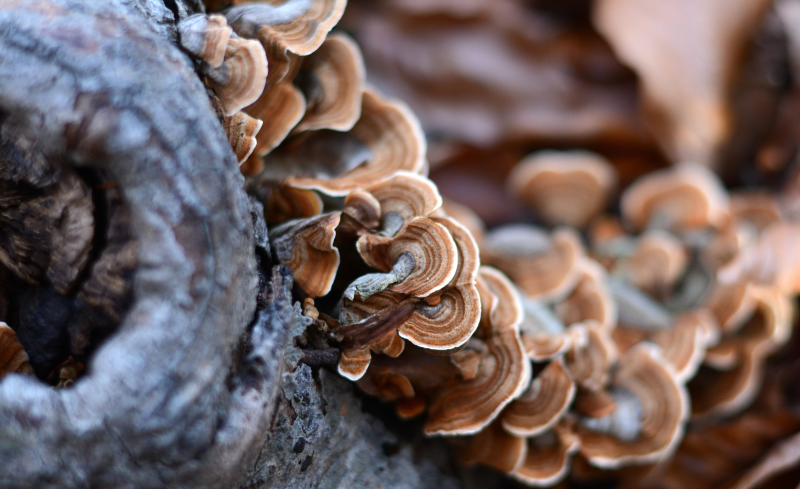
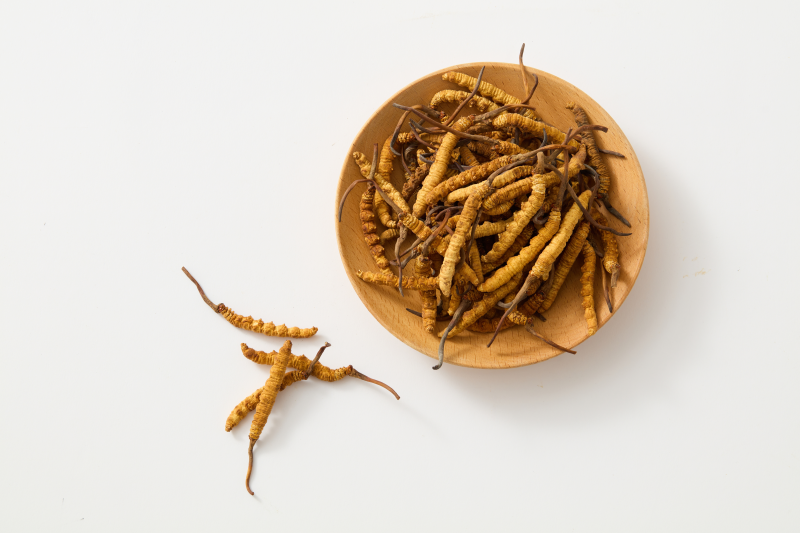
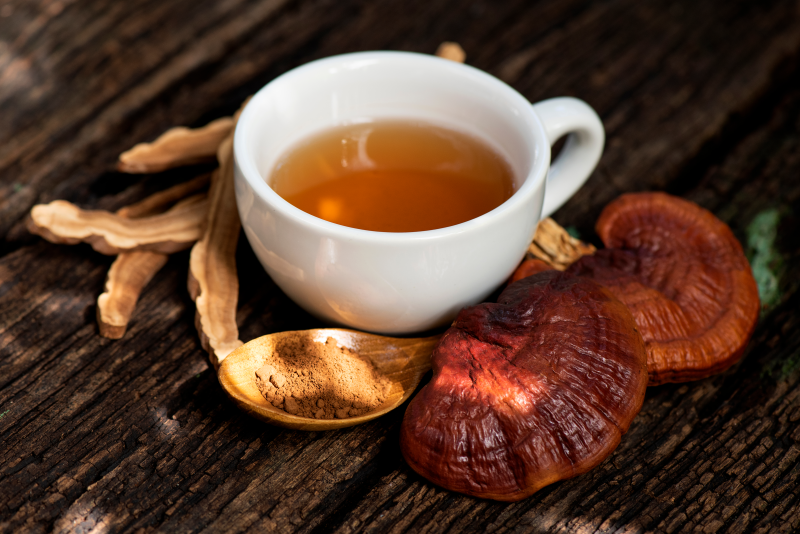
A combination of Reishi and Cordyceps mushrooms, which addresses the root, i.e., strengthens the Kidneys and Lungs.
  1. Cordyceps (Cordyceps sinensis) is a mushroom that strengthens both the Kidneys and Lungs at the same time. I do not recommend it to people who are very hot-blooded or have high blood pressure.
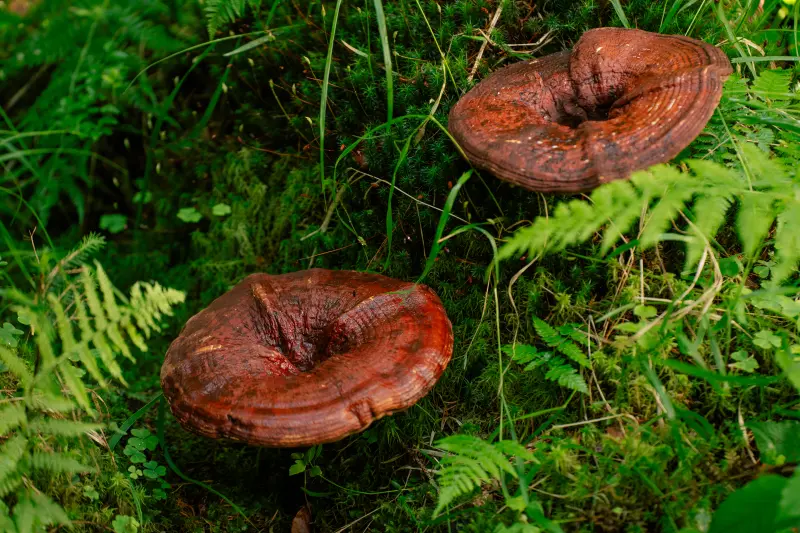
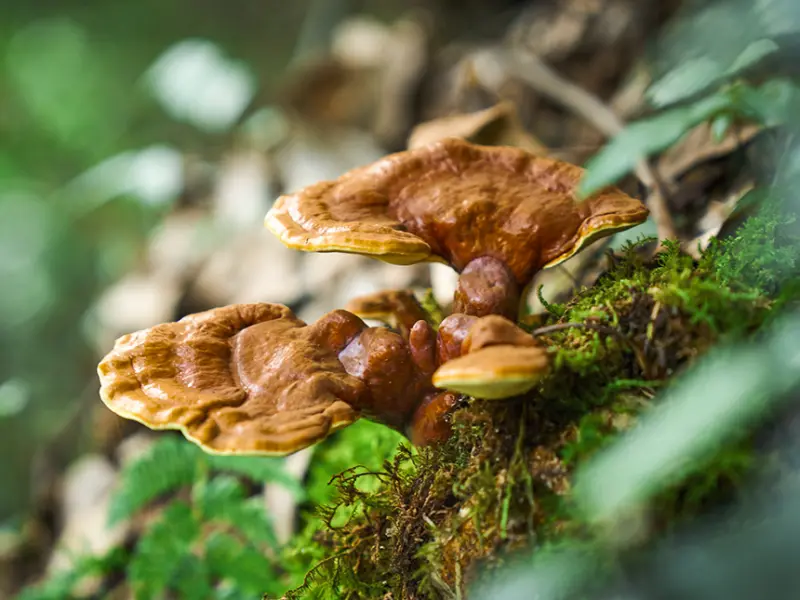
  2. Reishi (Ganoderma lucidum) is a mushroom with a very wide range of effects. It replenishes overall energy and supports vitality. It harmonises the psyche.
I usually recommend taking Cordyceps in the morning and Reishi in the evening. Always take for 5 days and then take a 2-day break. For allergic rhinitis, I recommend taking both mushrooms for at least 3 months before the start of the season. Mushrooms are not exactly for acute states of hay fever; they address the root, and therefore they need to be taken for a longer period.
 
The second option for addressing the root of allergic rhinitis is the traditional Chinese medicine mixture Yu Ping Feng San. It is a mixture of herbs that very significantly stimulates Wei Qi (defensive energy). Wei Qi is our defence system that protects the surface of our body – the skin, but also the mucous membranes of the respiratory and digestive systems. Today, we would say that this mixture regulates the immune system, helps to stimulate it if it is weakened, and suppresses it if it reacts disproportionately to some allergens - such as pollen grains. It is advisable to take the mixture, for example, 2–3 months before the pollen season. I often give it with the mushrooms mentioned above.
 
There are several mixtures for addressing the tip, i.e., the acute symptoms themselves. One of the more modern formulas is Te Xiao Bi Min Gan Tang. It reduces nasal congestion, stops sneezing and clears the airways. It also has significant anti-inflammatory effects. At the same time, it strengthens the Qi energy of the Lungs. The mixture has no negative side effects. It is not addictive and does not cause drowsiness. There is a study that demonstrates the anti-allergic effects of the herbs Xin Yi Hua and Cang Er Zi, which are the two dominant herbs of this formula. It has been proven that they have anti-allergic, anti-inflammatory and analgesic effects. At the same time, they regulate IgE levels. The mixture is given only during the season when a person observes characteristic symptoms.

Can we also help ourselves by changing our diet?

We can. I usually recommend a diet focused on strengthening Spleen energy. The Spleen produces Qi energy and blood, which is fuel for our organism. If it functions well, it also supplies the Lungs and replenishes the Kidneys from any surplus. The Spleen loves regularity. Eat at the same time every day. Ideally 3 times a day. Children and people with hypotension more often. Eat high-quality and varied food. No additives, colourings, or preservatives.
During acute symptoms, I recommend omitting dairy and sweet products. Sometimes it also helps to limit white flour. At the same time, avoid allergenic foods such as peanuts, seafood, citrus fruits, etc. It will be slightly different for everyone - it is necessary to observe this individually. If there are signs of heat, such as red eyes, then limit hot, spicy, fried, and pungent foods.

My final recommendation

Dealing with hay fever and other allergic symptoms is often a long-distance run. We often only address acute symptoms, such as a runny nose and sneezing. However, it is much more important to address the root of the problem. Strengthening the Kidneys, Lungs and Spleen. Or, if necessary, clearing heat from the Liver and Gallbladder. Regarding the Liver, I must point out that in this case, it is not about cleansing by using milk thistle, which regenerates the liver, but about clearing heat from the liver, e.g. with the Long Dan Xie Gan Tang mixture. You can practice this preventive approach of strengthening the Kidneys, Lungs and Spleen throughout the year, not just during the pollen season.

Explore more
from the Encyclopaedia


Further articles, videos 

and podcasts