


The immune system is essential for our survival, yet its activity must remain in balance. During an infection or tissue damage, it must activate quickly, but at the same time, mechanisms are triggered that regulate its response and gradually bring it to an end. If the immune response were too strong or lasted too long, it could begin to damage our own tissues. In extreme cases, it can pose an immediate threat to a person's life; in the case of long-term activation, it contributes to the development of chronic inflammation and a range of diseases.
A properly functioning immune system reacts to genuinely dangerous stimuli, such as pathogenic viruses, bacteria, fungi or parasites. Conversely, it tolerates harmless substances from the surrounding environment, food components and microorganisms that normally inhabit our body. At the same time, under normal circumstances, it does not turn against our own cells and molecules, as happens in autoimmune diseases.
The immune system consists of many types of cells and signalling substances that influence one another. Some activate the immune response, while others suppress it. In simple terms, we can distinguish between innate and adaptive immunity, although these do not function separately but are constantly working together.
Innate immune cells, which include, for example, macrophages, monocytes, neutrophils, dendritic cells and NK cells, are the first to react to danger. They move to the site where infectious microorganisms have penetrated or where injury or other tissue damage has occurred. Their task is to quickly recognise, contain and, if possible, eliminate the danger.
These cells carry receptors on their surface and inside themselves that can recognise molecules typical of microorganisms or signals released by damaged and dying cells. The binding of such a molecule to a receptor triggers a set of processes within the immune cell known as a signalling pathway. This can activate the cell, increase its division, change its behaviour and prompt it to produce other biologically active substances.
Individual innate immune cells have different tasks. Macrophages and neutrophils can engulf bacteria, cellular debris and other particles and subsequently break them down inside themselves. This process is called phagocytosis. NK cells, in turn, are capable of recognising and killing certain virus-infected cells or tumour-altered cells, thereby preventing the spread of viral infection through the body and the increase in the number of tumour cells.
Activated innate immune cells also produce biologically active signalling substances known as cytokines and chemokines, which attract other immune cells to the affected area and direct their activity. In this way, the innate immune system also participates in the activation of the adaptive immune system, which is primarily ensured by T- and B-lymphocytes.

Dendritic cells and macrophages can display parts of an ingested microorganism on their surface using specific surface molecules. By doing so, they "show" them to T-lymphocytes, which can recognise the specific source of the danger and initiate a more targeted immune response. Some activated T-lymphocytes subsequently support B-lymphocytes in the production of antibodies, while others use this information to destroy infected or abnormal cells.
Innate immunity thus provides a rapid but less specific defence, while acquired immunity creates a more precisely targeted response. Furthermore, some T and B lymphocytes persist as memory cells, allowing for a faster reaction upon repeated encounter with the same dangerous stimulus.
Activation of the immune system is associated with the development of inflammation. Although we often perceive the word "inflammation" negatively, acute inflammation is a natural and necessary defence process. It helps to limit infection, remove damaged cells and initiate tissue healing.
For inflammation to maintain this protective function, it must be proportionate and terminated in a timely manner once the danger has been removed. Simultaneously with activation mechanisms, regulatory and anti-inflammatory mechanisms are therefore also triggered.
Various types of cells are involved in the regulation of the immune response, such as regulatory T and B lymphocytes, regulatory dendritic cells and macrophages with anti-inflammatory and reparative properties, which are simply referred to as M2 macrophages. These cells can suppress activated immune cells, produce anti-inflammatory substances and support the repair of damaged tissues.
After fulfilling their role, a portion of the activated immune cells also undergoes controlled cell death. This is important because these cells multiply rapidly during the defence reaction. If their activation and proliferation were to continue even after the original danger had been removed, inflammation could persist and damage surrounding tissues.
The immune system must be able not only to react and subsequently dampen its response, but also to distinguish between dangerous and harmless stimuli. This ability is called immune tolerance. Thanks to it, the immune system does not react against its own molecules or against most harmless substances, such as food components, pollen, or microorganisms of the natural microbiota.
However, tolerance can be disrupted. Genetic predispositions, a disorder of regulatory mechanisms, infections, tissue damage, or long-term inflammation can contribute to this. Furthermore, some microbial molecules can resemble the organism's own structures, which, under certain circumstances, contributes to the development of a misdirected immune response.
The immune system can then begin to consider harmless substances as dangerous, as is the case with allergies, or attack its own cells and tissues, which leads to autoimmune diseases.
We have described the immune system here only in a very simplified form. However, for understanding the action of medicinal mushrooms, it is essential that a healthy immune system does not mean just the strongest possible immune response. What is decisive is its proper regulation – the ability to activate defences when necessary, manage them appropriately, and dampen them again after the danger has been removed. It is precisely some of these activation, regulatory, and anti-inflammatory mechanisms that can be influenced by the bioactive substances contained in mushrooms.
Bioactive substances in medicinal mushrooms act as immunomodulators rather than non-specific stimulators of the immune system.
Mushroom polysaccharides, primarily β-(1→3, 1→6)-D-glucans, are recognised by innate immune receptors, such as the dectin-1 receptor, Toll-like receptors (TLR2, TLR4), and the complement system is also activated.
The binding of β-glucans to receptors can activate macrophages, neutrophils, dendritic cells and NK cells. The result is:
However, the effect is dose- and context-dependent. Low concentrations may support immune surveillance, while higher therapeutic concentrations may dampen an excessive inflammatory response.
In chronic inflammation, pro-inflammatory M1 macrophages are typically activated long-term, producing, for example, pro-inflammatory cytokines TNF-α, IL-1β, IL-6, nitric oxide, and other mediators that contribute to tissue damage through inflammation.
Bioactive substances in mushrooms, such as phenolic compounds and triterpenoids, can:
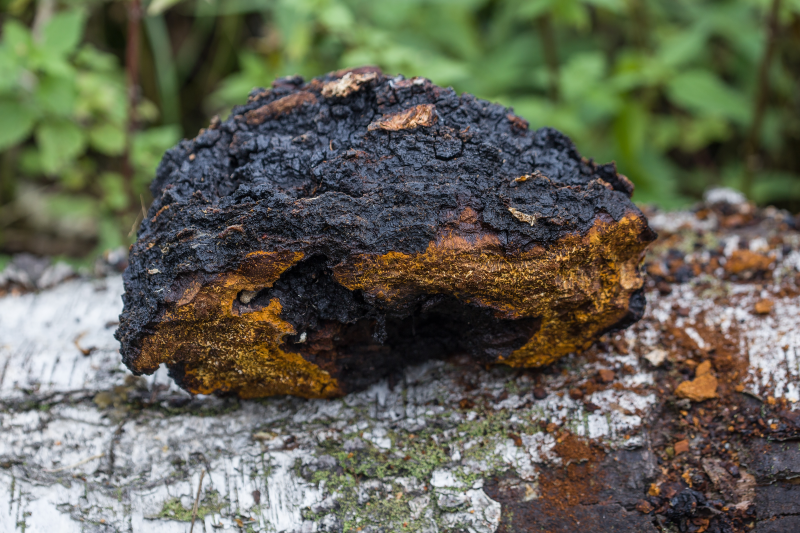
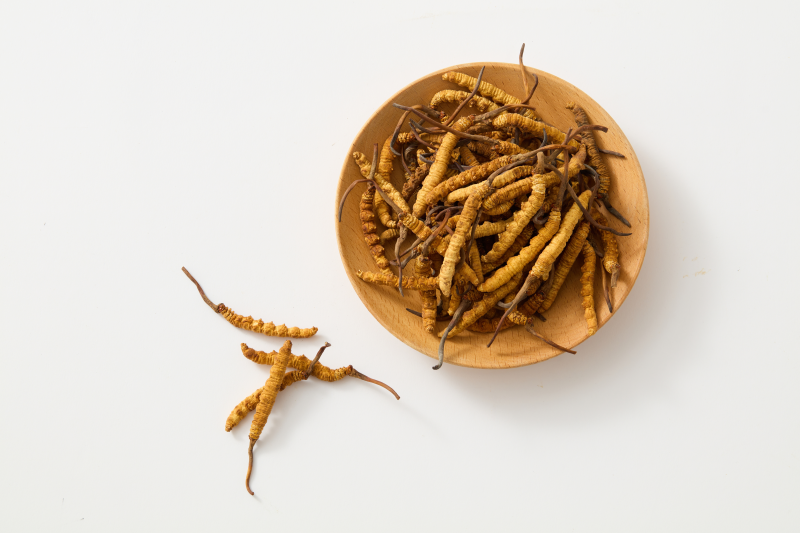
According to the article, this modulation is primarily contributed to by polysaccharides from Cordyceps militaris, substances from Inonotus obliquus, and triterpenoids or phenolic compounds, such as hispolon.
NF-κB is one of the most significant regulators of chronic inflammation. As a transcription factor, it enters the nucleus, binds to DNA, and influences the transcription of genes related to inflammation. Its persistent activation promotes the synthesis of pro-inflammatory cytokines, chemokines, and other molecules that promote and maintain inflammation.
β-glucans, triterpenoids (e.g., ganoderic acid), cordycepin, phenolic compounds, and peptides from medicinal mushrooms can suppress this signalling pathway, thereby reducing the production of pro-inflammatory cytokines and the activation of other pro-inflammatory genes.

Another significant target of mushroom components are mitogen-activated protein kinases (MAPK):
These pathways regulate cytokine production, cell proliferation (cell multiplication), apoptosis (programmed cell death) and the response to cellular stress. Mushroom substances (polysaccharides, cordycepin, triterpenoids) can limit the activation of individual MAPKs and thereby reduce the inflammatory response.
The NLRP3 inflammasome is assembled in the cell from several components after the cell is stimulated. The inflammasome reacts to the presence of microbial molecules and signals of cellular damage. Its chronic activation leads to the activation of the production of pro-inflammatory cytokines and processes, i.e. to:
Of interest, for example, are β-glucans from Ganoderma lucidum, which limit NLRP3 activation through several mechanisms:
Here, too, the effect is biphasic: low doses of certain polysaccharides can support NLRP3 activity and strengthen defence against pathogens, while higher concentrations suppress its activation and promote the resolution of inflammation.
Gasdermin D is a key protein that functions in the body as the main activator of pyroptosis, a form of cell death that activates immune cells and promotes inflammation. Gasdermin is cleaved by activated caspase-1 (which is activated by the assembly of the inflammasome). Its cleaved portion reacts with cell membranes and creates holes (pores) in them, which leads to:
Mushroom bioactive substances can indirectly prevent the cleavage of Gasdermin D by inhibiting the aforementioned NLRP3 and caspase-1. In this way, they can limit highly pro-inflammatory pyroptosis without necessarily suppressing physiological apoptosis (programmed, controlled cell death that does not activate inflammation).
Oxidative stress and chronic inflammation reinforce each other. Activated pro-inflammatory cells produce large amounts of oxygen radicals. Free oxygen radicals activate NF-κB, MAPK and NLRP3, which we have mentioned are involved in the development and maintenance of inflammation.
Triterpenoids, phenolic substances and ergothioneine from mushrooms can activate the pathway that suppresses oxidative stress and can thus support the suppression of inflammation. Individual steps included:
The result is a reduction in the concentration of free radicals, a limitation of oxidative damage and a secondary reduction in the activation of NF-κB and NLRP3.
In addition, some mushroom components, e.g. phenols and flavonoids, can directly scavenge oxygen radicals and thus neutralise them.
Mushroom substances can influence:
Depending on the initial state, the result can be either the strengthening of the adaptive immune response or its suppression. In chronic inflammation, the following are particularly significant:
Some β-glucans and polysaccharides from Phlebopus portentosus, Agaricus blazei and other species can:
This represents the immunostimulatory part of the effect of medicinal mushrooms, which occurs simultaneously with the suppression of the pathological chronic inflammatory response.
High-molecular-weight β-glucans and polysaccharides are only minimally absorbed from the intestine, and a significant part of their effects is therefore linked to the intestine itself, which contains a large number of immune cells. Mushroom polysaccharides therefore modulate the immune system thanks to:
The immune system is a highly complex entity, the activity of which can be regulated not only by standard medications but also by natural substances, including the well-known vitamin C. These substances also include components of vital mushrooms.
Polysaccharides, terpenes, and phenolic compounds have a fundamental influence on the immune system.
Fungal β-glucans are recognised by innate immune receptors, particularly Dectin-1, TLR, and CR3, and can support phagocytosis, antigen presentation, and the cytotoxic activity of NK cells. At the same time, however, they limit excessive inflammatory responses through the modulation of macrophage polarisation, the reduction of NF-κB and MAPK activity, and the suppression of the NLRP3 inflammasome. Inhibition of NLRP3 leads to a reduction in caspase-1 activation, the production of IL-1β and IL-18, and gasdermin D-mediated pyroptosis. Polysaccharides can also alter the composition of the gut microbiota and promote the production of short-chain fatty acids, which, through GPR43 and GPR109A receptors, contribute to the maintenance of the intestinal barrier and systemic immunological tolerance. The resulting effect thus includes the simultaneous strengthening of defences against infections and tumour cells and the dampening of long-term, tissue-damaging inflammatory responses.
Triterpenoids and phenolic substances further reduce the production of pro-inflammatory cytokines TNF-α and IL-6 and activate the Nrf2/HO-1 antioxidant pathway. Increased expression of HO-1, superoxide dismutase, catalase, and glutathione peroxidase leads to a reduction in oxidative stress, which is a significant maintenance factor for chronic inflammation.
Mushrooms and their components modulate the activity of the immune system in a complex manner. Not merely to increase or suppress activity, but primarily to harmonise activity so that our immune system serves us well.
It goes without saying that to achieve the described effects, it is necessary to use high-quality mushroom extracts from verified and reputable manufacturers. All the mechanisms discussed are linked to specific bioactive substances—primarily β-glucans, triterpenoids, and phenolic compounds. If a product does not contain these in sufficient quantities and in a bioavailable form, it has nothing to manifest, regardless of what is stated on the packaging. Quality here is therefore not a marketing add-on, but a condition for efficacy. With vital mushrooms, it is not the case that "a mushroom is a mushroom"—the raw material, processing method, standardisation, and documented purity are what decide.
In anonymous and cheapest products, the content of active substances is often the weakest point. It is common to state "polysaccharides" on the packaging—a high number, which, however, also includes α-glucans, i.e., common starch from a grain substrate. Yet, it is almost exclusively β-(1→3,1→6)-glucans that are immune-active, so an impressive figure may in reality mean a lot of starch and very little of what is essential. Related to this is the difference between an extract from the fruiting body and cheap mycelium grown on rice or oats, which is ground together with the substrate—the resulting powder is then largely grain, not mushroom. Direct adulteration also occurs, i.e., dilution with fillers such as polydextrose, maltodextrin, or dextrins, so that the product artificially "meets" the declared extraction ratio at a lower price. Such a product looks correct at first glance, and only an independent laboratory will reveal the difference.
In addition to the loss of effect, there are risks that the customer has no way of knowing about. Mushrooms are natural bioaccumulators and absorb heavy metals from contaminated soil or substrate—cadmium, lead, arsenic, and mercury. Poor drying and storage pose risks of mould and mycotoxins. Missing or insufficient processing is also common: β-glucans are locked in the chitin cell wall, which human digestion cannot break down on its own, and without proper hot-water extraction, they remain unavailable to the body, even if they were present in the raw material. Finally, there are no exceptions to products that do not contain the declared mushroom species at all—which DNA analyses repeatedly show, for example, in products made from oyster mushrooms or Cordyceps.
Therefore, we recommend following a simple guide. A quality manufacturer never states only "total polysaccharides", but the specific content of β-glucans, or other active substances according to the mushroom species. Upon request, they will provide proof of the product's purity—analyses for heavy metals, microbiology, and pesticides—and consistency between individual batches. It is this verifiability that distinguishes a serious manufacturer from an anonymous one. With vital mushrooms, it is not true that nature automatically means safety and effect; only careful processing and control make a mushroom what we expect it to be.
Adapted from the article:
Xiaoying M, Peng Z, Hong W, Na G, Jun X, Ying Z, Xun C and Guoli L (2025) From functional foods to immunotherapeutic agents: mechanistic insights into medicinal mushroom bioactives in chronic inflammation management. Front. Nutr. 12:1725297. doi: 10.3389/fnut.2025.1725297
Clinical studies are financially demanding and subject to high ethical standards, which is why their number is limited. Studies have been conducted on both healthy volunteers and patients with certain inflammatory diseases, including autoimmune conditions. The studies suggest that the administration of mushrooms may lead to the alleviation of symptoms, especially in the case of chronic intestinal inflammation, and a decrease in inflammatory activity. However, the results are not yet entirely sufficient, and more extensive studies would be needed. Nevertheless, the results do not indicate that the administration of mushrooms worsens the course of the disease or increases inflammation (detailed studies in the table).
Many more studies have been conducted on animal models of human inflammatory and autoimmune diseases, such as rheumatoid arthritis, chronic intestinal inflammation, multiple sclerosis, systemic lupus, etc.
In vivo studies show that mushroom preparations can interfere with several interconnected areas in influencing the immune system in experimental models:
Through these mechanisms, symptoms, i.e., chronic inflammation, are alleviated, and the condition of animals using mushrooms or their components is improved.

Subscribe to our newsletter and you won't miss any promotions or important information