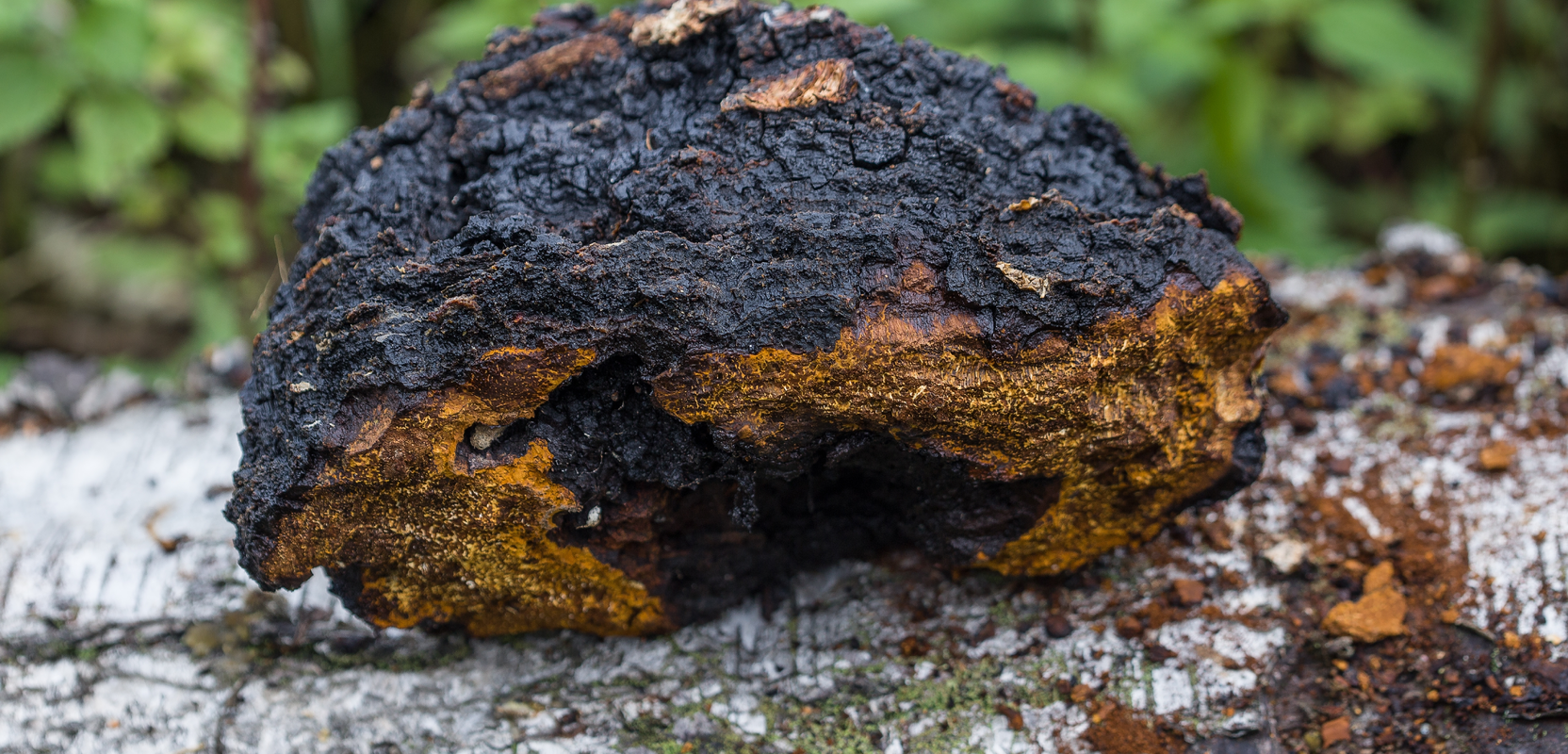



Chaga, also known as Chaga, is a mushroom that at first glance resembles a piece of burnt wood. It grows primarily on the trunks of birch trees, from which it naturally obtains a range of bioactive substances. It is precisely because of this specific way of growing that it has gained the attention of both traditional cultures and contemporary enthusiasts of vital mushrooms.
One of the substances often associated with Chaga is betulinic acid, which is naturally contained in birch bark. Chaga is also valued for its content of other natural compounds and antioxidants, which contribute to its popularity in the field of supporting vitality and the body's natural defences.
In traditional use, Chaga is primarily associated with periods of increased physical stress, weakness or long-term fatigue. Many people include it as part of their care for overall body balance and vitality support, especially during more demanding periods.
Although it appears inconspicuous, Chaga is among the best-known and most sought-after vital mushrooms today. Its long history of use and unique origin associated with the birch tree make it an interesting part of a modern approach to body care.

Characteristics and effects of mushrooms according to traditional Chinese medicine

Description of herbal blends, effects according to Chinese medicine and main usage

Dietary recommendations including individual foods for specific patterns

Characteristics and effects of herbs according to traditional Chinese medicine

Characteristics of food and its influence on individual organs

Classification of herbs and mushrooms by individual diseases

Subscribe to our newsletter and you won't miss any promotions or important information