


Psychological well-being and mental health are extremely important. There are natural substances that can support this state, such as vital mushrooms, which have positive effects on human health, including neurological and mental illnesses.
Nowadays, psychological well-being and mental health are increasingly at the forefront of interest. With growing awareness of the influence of lifestyle, diet, and food supplements on psychological well-being, attention is also turning to natural substances that can support this state. One such natural aid is vital mushrooms, which are becoming increasingly popular for their potential positive effects on human health, including neurological and mental illnesses.
Vital mushrooms are a rich source of biologically active substances that can have diverse effects on the human body. Among the most interesting are adaptogens, which help the body respond better to stress and increase its resistance to negative environmental influences.
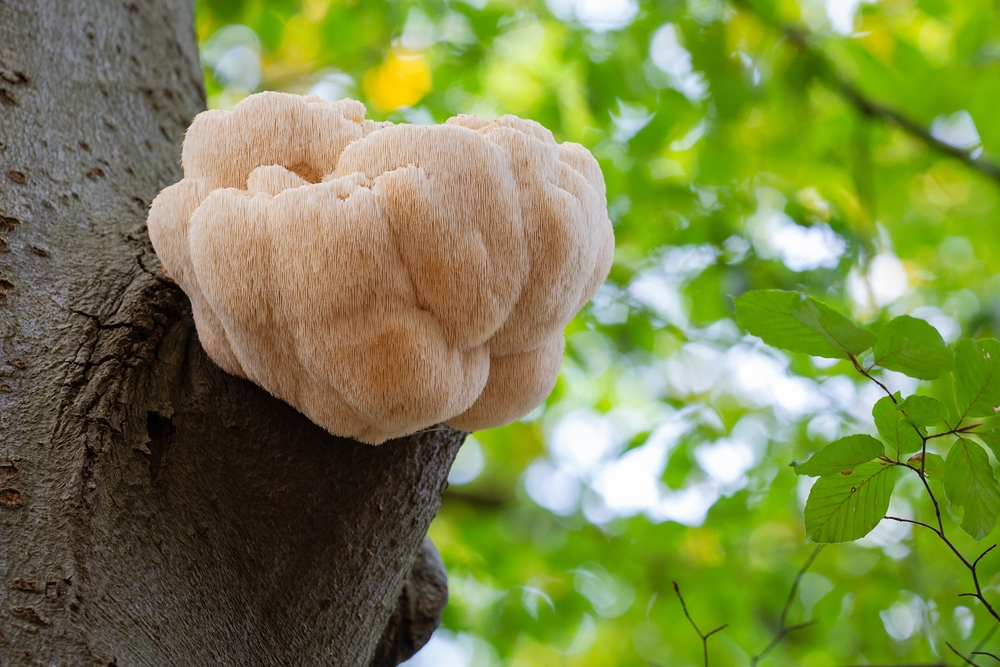
If we are looking for medicinal mushrooms capable of influencing psychological or neurological problems, the first one that comes to mind is Hericium – Hericium erinaceus – also known in English as Lion’s Mane, in Czech as Lion’s Mane, in Chinese as Hou Tou Gu, and in Japanese as Yamabushitake.
In nature, Hericium parasitises the trunks of deciduous trees (mainly beeches and oaks) in temperate regions – from America through Europe to Asia. In Japan and China, it is prized as a culinary delicacy, with a taste reminiscent of seafood. In the wild, it is very rare and protected.
The positive effects of Hericium on human health were known to doctors even in ancient China. They mainly utilised its ability to treat digestive tract disorders – gastritis, stomach ulcers, digestive difficulties, stomach or oesophageal cancer, etc.
Today, Hericium is the subject of much research investigating its ability to stimulate the production of NGF (Nerve Growth Factor). NGF is a protein that influences the growth and viability of nerve cells. Low levels of NGF are associated with the occurrence of Alzheimer’s disease or dementia. The main active substances contained in Hericium that are responsible for stimulating the production of NGF and the formation of myelin are erinacine and hericenone.
Dementia and Alzheimer's Disease
Hericium has a beneficial effect on patients with moderate levels of dementia. Low levels of NGF influence the development of Alzheimer's disease, and recent research shows that Hericium has the ability to stimulate NGF synthesis, thereby significantly improving the patient's cognitive functions, which has been confirmed by several studies.
Multiple Sclerosis
Some studies suggest that Hericium may have potential neuroprotective effects, meaning it can protect nerve cells and reduce inflammation in the nervous system. This may be particularly interesting for patients with multiple sclerosis (MS), an autoimmune disease of the nervous system that involves inflammation and damage to nerve tissue.
Studies suggest that Hericium extract may have immunomodulatory effects and may help reduce the inflammation associated with MS. This mushroom contains various bioactive substances, including polysaccharides and peptides, which may have anti-inflammatory and neuroprotective properties.
However, it is important to note that research regarding the use of Hericium in patients with multiple sclerosis is still in the early stages and requires further thorough studies to definitively confirm its efficacy and safety for this population.
Neuropathy
NGF (Nerve Growth Factor) plays an important role in the ability to perceive pain. Its low level leads to sensory neuropathy. Sensory neuropathy focuses on the sensory nerves that transmit signals from various sensory receptors in the body, such as the perception of heat, cold, pain, or touch. If these nerves are damaged, it can result in changes in sensory perception, such as numbness, tingling, burning, pain, or other similar symptoms.
Treatment of Damaged Nerve Cells
Scientific studies demonstrate that Hericium also has a positive effect on the treatment of damaged nerve cells, meaning it has the ability to regenerate damaged nerve cells and supports the production of myelin, which increases the speed at which nerves transmit signals. According to some sources, they may even increase the number of neurons and their branching, thereby improving memory and increasing intelligence.
It is used to alleviate anxiety, inner tension, and insomnia.
According to Italian scientists, the level of NGF strongly influences the emotions of love – with a bit of exaggeration, we can therefore use Hericium as a "love potion".
I will briefly mention two other vital mushrooms that can be used for mental health issues:
REISHI
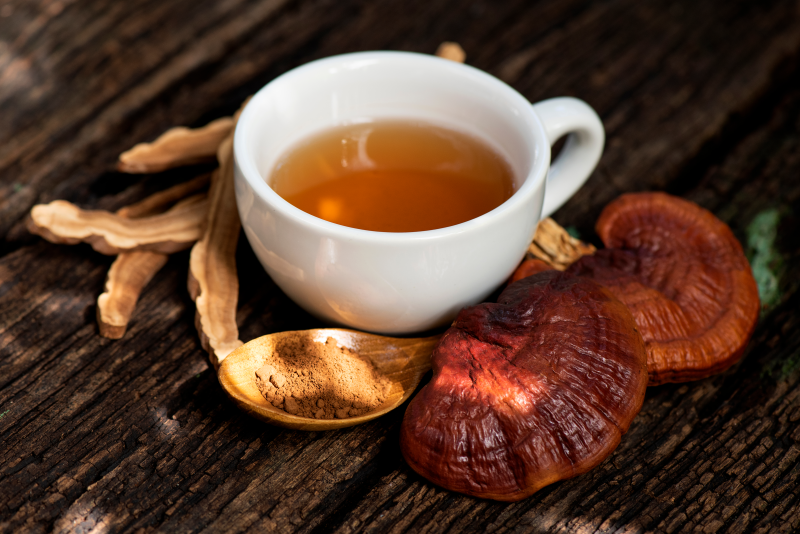
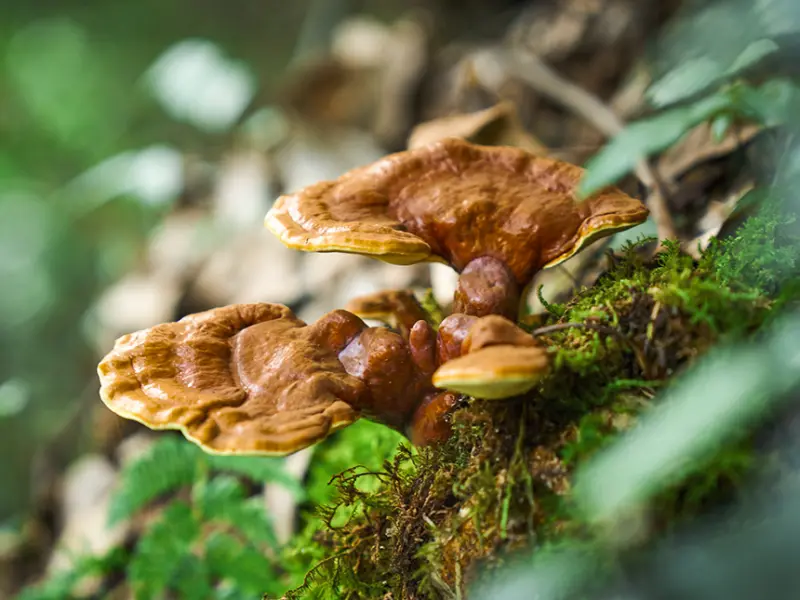
Reishi – Ganoderma (traditionally also called the "spiritual mushroom") has a significant An Shen effect (it has a tropism for the heart). Thanks to the sedative function of a specific combination of triterpenoids, it can therefore be used for problems with insomnia or states of anxiety. Studies show that Reishi has antioxidant and anti-inflammatory effects, which are associated with protecting the nervous system and supporting mental well-being. Furthermore, its ability to reduce anxiety and depression has been observed. Together with Hericium, Reishi extract is used for Alzheimer's disease.
CORDYCEPS
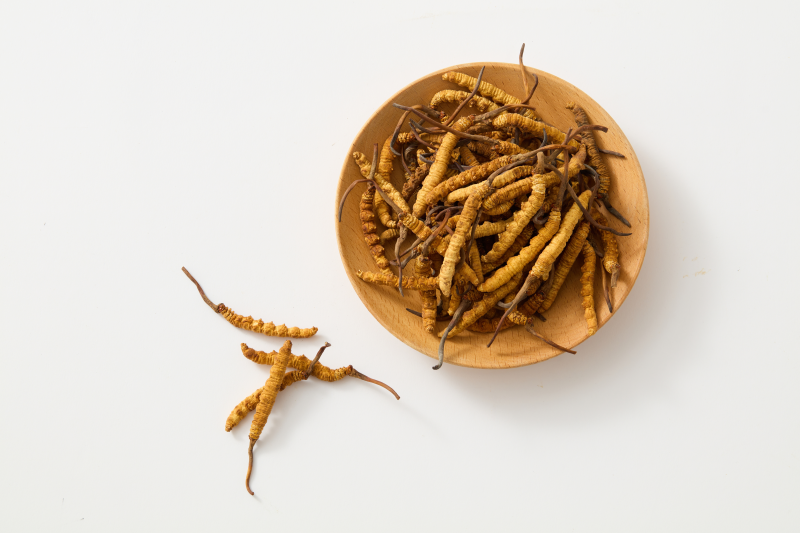
Compared to Reishi, Cordyceps has more of a tonic effect. It replenishes the essence and Yang of the Kidneys, thereby strengthening libido and increasing testosterone levels. It is therefore suitable for use in cases of fatigue, lack of performance, decreased libido, loss of motivation, weakened memory...

Subscribe to our newsletter and you won't miss any promotions or important information