


What really happens during an allergy — and what can we do about it?
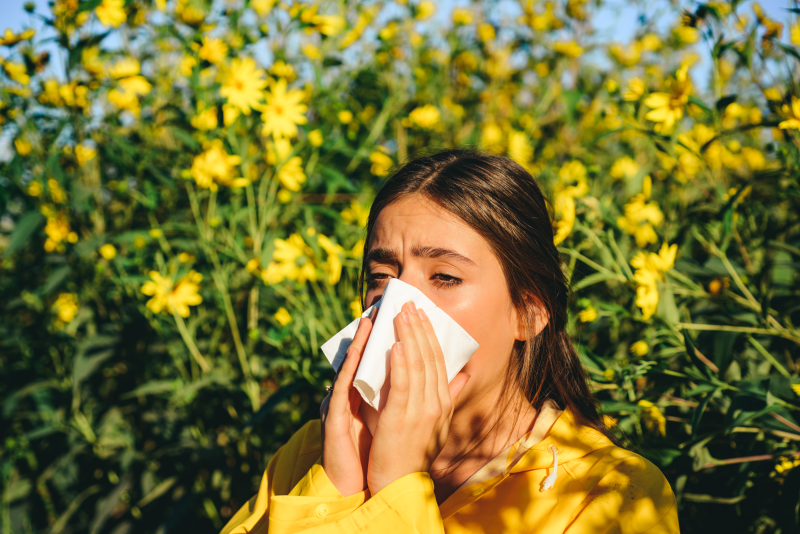
Every spring it is the same. Sneezing, watering eyes, a blocked nose, red eyes. Millions of people around the world reach for antihistamines and wait for the pollen season to end. But what if we are tackling the whole thing from the wrong end? What if pollen is not the cause at all?
Let us look at hay fever a little differently — through the eyes of both modern science and Traditional Chinese Medicine. And most importantly: let us look at what can actually be done about it.
Hay fever, technically known as allergic rhinitis, is defined by Western medicine as an exaggerated reaction of the immune system to an otherwise harmless substance—a pollen grain from a grass, tree, or shrub. The immune system mistakenly identifies this substance as dangerous and triggers a defensive cascade: it releases histamine, the mucous membranes swell, the nose begins to run, the eyes burn, and the sneezing cannot be stopped.
The key word is mistakenly. Your immune system is overreacting. It is fighting an enemy that is not an enemy.
Why? Western medicine has only a partial answer to this question. It speaks of genetic predisposition, increased permeability of mucous membranes, and an imbalance of immune cells. Antihistamines suppress the reaction—but they do not cure the cause. Next year, everything is the same again.
Traditional Chinese medicine views hay fever in a completely different way. It is not interested in the pollen itself — it is interested in the terrain. Why do some people react allergically to pollen while others do not at all? After all, everyone breathes in the same pollen.
The answer of Chinese medicine is: it depends on the state of the internal environment of the organism. On the strength and balance of three key organ systems.
Lungs are the first line of defence in Chinese medicine. They govern the so-called protective energy Wei Qi — a thin energy shield on the surface of the body that prevents the penetration of external pathogens. At the same time, they manage the condition of the mucous membranes. When the Lungs are weakened, Wei Qi is thinned, the mucous membranes are vulnerable, and everything — pollen grains, cold wind, disease germs — penetrates inside more easily.
Spleen is the engine of immunity in TCM. It produces energy and blood from the food consumed, which nourishes the entire organism. When the Spleen is not functioning properly — weakened perhaps by irregular eating, cold food, or overexertion — the body weakens and becomes clogged with so-called dampness and phlegm. It is precisely the excess of phlegm that is one of the main causes of chronic runny nose and congestion in Chinese medicine.
Kidneys are a deep reservoir of life force — Jing essence. They are the root of the entire constitution, the source of primary energy for all other organs. They are also the root of our immunity. Exhausted Kidneys (due to overwork, lack of sleep, stress, or simply age) mean that the entire system loses its foundation. Immunity cannot function reliably without this foundation.
When these three organs are weakened, the body's protective barrier is compromised. The body becomes more susceptible to everything that comes from the outside. But that is still only half the story.
Here comes a concept that Chinese medicine knows well, but Western science is only just beginning to suspect. We call it latent wind.
Imagine that years ago you had the flu, tonsillitis, or another viral infection. TCM refers to these infections as "wind-cold" or "wind-heat". You overcame the infection — but not completely. The body suppressed the infection, but did not eliminate the pathogen entirely. The remainder of the pathogen (in the form of wind according to TCM) hid deep in the tissues, in the folds of the immune system. Latent wind.
Your immune system knows about it. And because of it, it is in a state of constant alert. Like a guard who must never fall asleep because he suspects that an enemy is hiding in the castle. It is exhausted, overloaded, and hypersensitive.
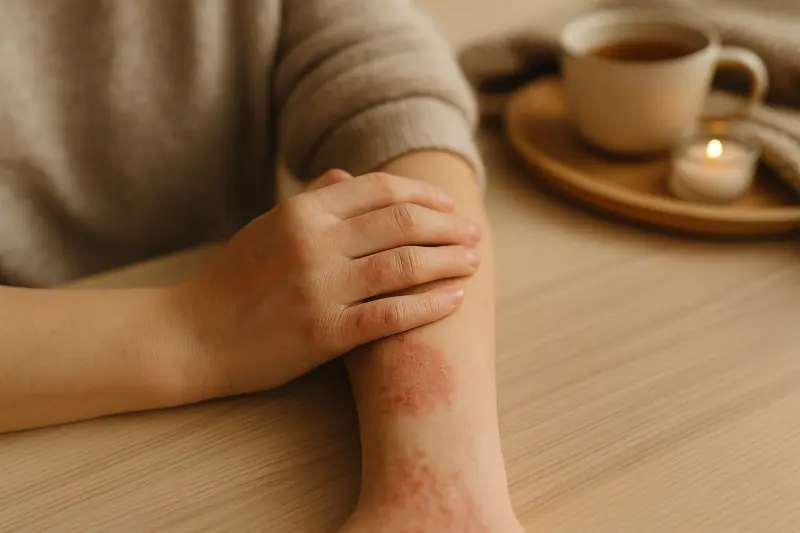
And now spring arrives. Pollen. External wind. For a healthy, balanced body, a completely harmless matter — the immune system identifies it, ignores it, and carries on. But for this overloaded, nervous immune system with latent wind inside, a pollen grain is the final straw. The external wind clashes with the latent one — and an allergic storm breaks out. Sneezing, watery rhinitis, burning eyes, red skin.
So, an allergy is not about pollen. It is about the fact that your body has been fighting for a long time — and pollen is just the trigger.
This is also why some people suffer from hay fever and others do not, even though they live in the same environment. The amount of pollen is not the deciding factor — the internal state of the organism is.
In the terminology of Chinese medicine, pollen is a so-called external wind pathogen — it comes from the outside, moves quickly, changes, and mainly affects the upper part of the body (nose, eyes, throat). That is why allergic symptoms occur where they do: runny nose, tearing, and an itchy throat.
Wind itself is not evil. It is a natural part of the world. The problem arises when a weakened organism cannot process it. And this is where the key to the solution lies: not to suppress the reaction to the wind, but to strengthen the body's ability to deal with it.
The goal of treatment in Chinese medicine is not to block immunity with antihistamines. The goal is to reset it — to help it distinguish a real enemy from a harmless pollen grain.
However, this takes time. That is why it is essential to start in good time — ideally two to three months before the pollen season.
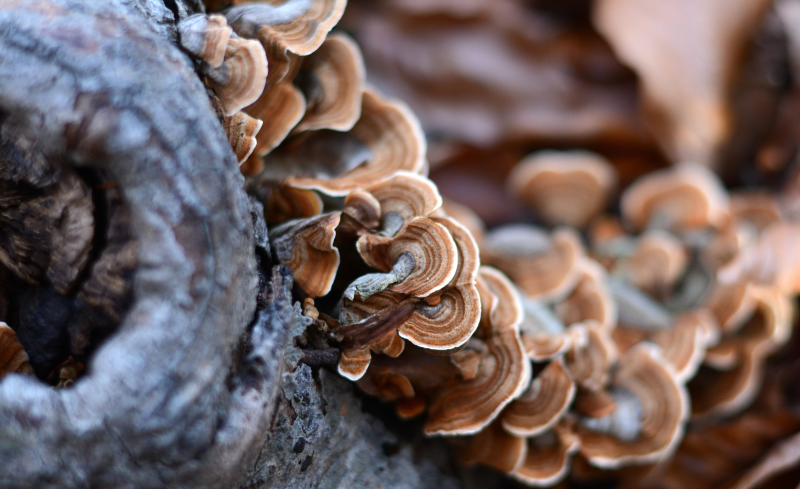
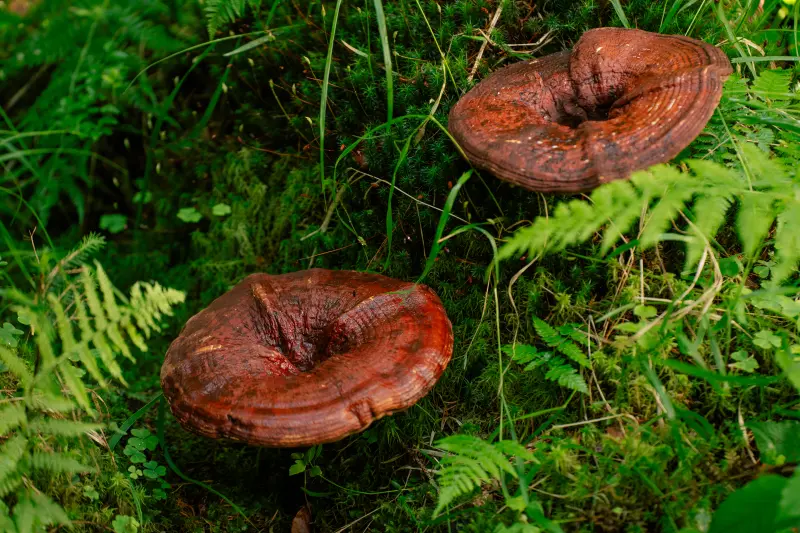
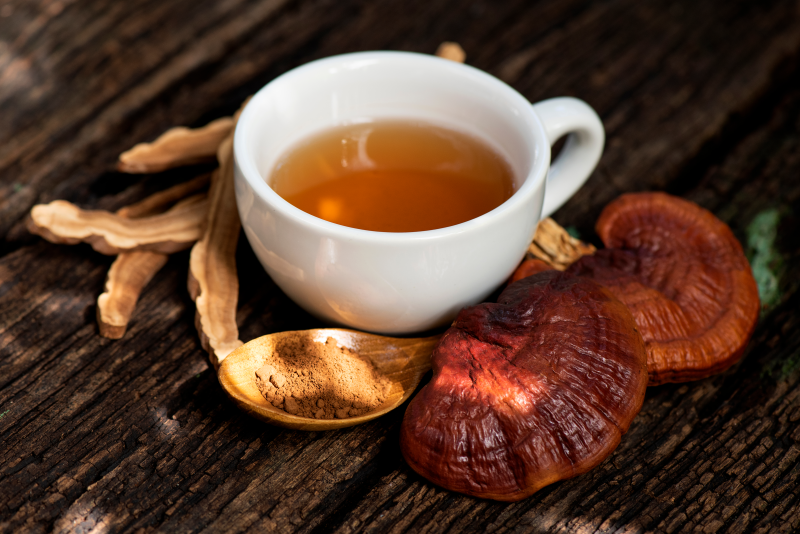
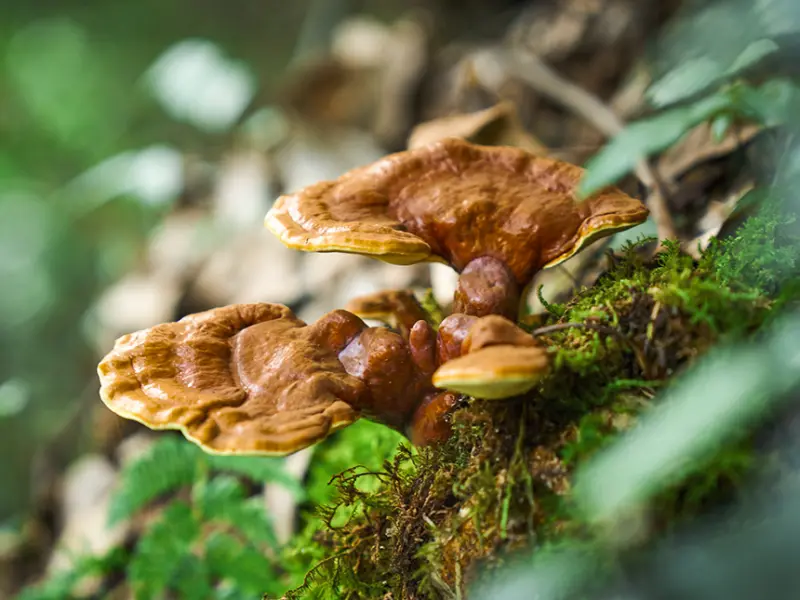
Reishi (Ganoderma lucidum) is one of the most valuable medicinal mushrooms in Chinese medicine. It acts on the so-called Shen — the spirit of the heart — and harmonises the entire organism. From the perspective of modern research, it contains unique polysaccharides and triterpenes that regulate the immune response: they dampen excessive inflammatory reactions while simultaneously strengthening immune vigilance. For allergy sufferers, this is key: Reishi helps the immune system to stop overreacting.
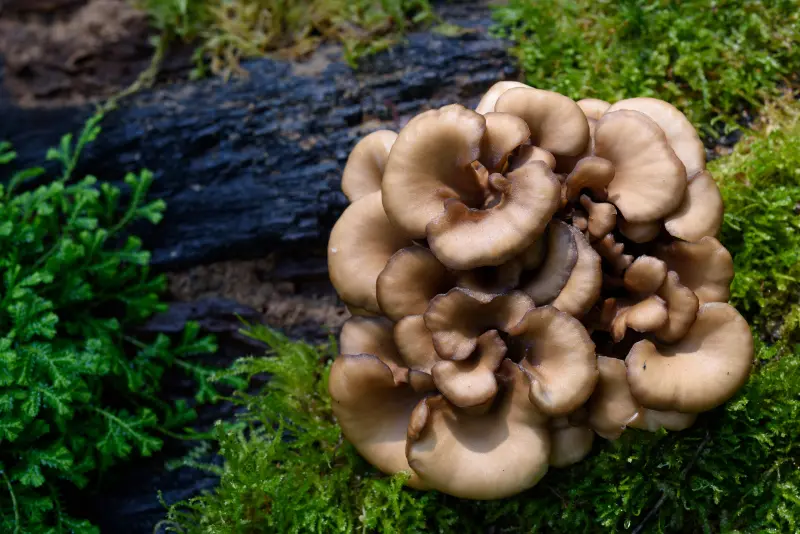
Agaricus (Agaricus blazei Murrill) has arguably the strongest immune modulation capability of all vital mushrooms. It contains beta-glucans with an exceptional structure that activate specific immune cells while helping to regulate the Th1/Th2 balance — the very balance that is disrupted in allergy sufferers. Th2 dominance (an exaggerated reaction to harmless substances) gradually shifts back into balance with regular use of Agaricus.
Recommended dosage before the season: one capsule of Reishi in the morning and one in the evening + one capsule of Agaricus in the morning, the same in the evening. Take on an empty stomach. Schedule: take for five days, two days off. Start at least two months before the beginning of the pollen season.
If the season is already underway and symptoms are in full swing, the Nefritový závoj tincture comes into play. This herbal blend combines traditional Chinese herbs that act on multiple levels at once: they soothe an overheated immune response, clear congested mucous membranes, reduce itching and nasal discharge, and help the body restore balance.
Nefritový závoj is not an antihistamine—it does not block the reaction by brute force. It harmonises energy flows so that the body itself stops overreacting. The effect comes on gradually and depends on the overall state of the organism. It is also important that it does not suppress the organism, as common antihistamines do.

Mushrooms and herbs are powerful helpers — but without changing your environment, their effect is limited. Chinese medicine always emphasises that treatment begins with lifestyle.
Eliminate or reduce dairy products. In Chinese medicine, dairy products promote the formation of dampness and phlegm in the body. This directly worsens allergic symptoms — more phlegm, more congestion, more inflammation. For many allergy sufferers, simply reducing milk and cheese brings noticeable relief.
Eat regularly and eat warm food. Cold meals and irregularity weaken the Spleen — the engine of immunity. Warm, cooked, regular meals strengthen the Spleen. Do not skip breakfast. Soups, porridges, and stewed vegetables are your allies.
Move — but in moderation. Movement supports the circulation of Qi and blood, strengthens the Lungs, and increases overall vitality. But be careful: exhausting exercise drains the Kidneys. Walking, Tai Chi, yoga, swimming — these are movements that truly help.
Do not overwork. A problem that exhausts us is, of course, overworking. This forces the body to draw on reserves from the Kidneys. These reserves are difficult to replenish. And it weakens our immunity.
Get enough sleep. The Kidneys, the root of our constitution, regenerate at night. Chronic sleep deprivation is one of the main factors why the Kidneys weaken — and why allergic problems increase. Sleep regularly, ideally before midnight.
Manage stress. Long-term stress devastates the Kidneys and disrupts overall balance. Meditation, breathing exercises, time in nature — these are not a luxury, but treatment.
During pollen season: ventilate in the morning and evening when pollen concentration is lower. Wash your hair after being outside. Wear sunglasses to protect your eyes. These simple measures will reduce direct exposure and ease the burden on your body.
It is important to say this straight: resetting your immunity is not a one-week affair. It is a process.
First year: allergic symptoms generally still appear, but they tend to be noticeably milder. Less intense sneezing, shorter episodes, less need for antihistamines.
Second year: most people notice a significant improvement. The body begins to learn new reaction patterns.
Third year: for many people, allergic manifestations are significantly reduced or disappear completely after the third year of regular support. The immune system has learned to distinguish.
However, this only applies if you are consistent — regular use of mushrooms before the season, appropriate changes to diet and lifestyle, and patience.
Hay fever is neither a twist of fate nor an exaggerated reaction of nature. It is a signal that your organism needs support — that its internal environment has lost its balance.
Pollen is just the trigger. The real work happens inside: in the state of the Lungs, Spleen and Kidneys, in the quiet presence of latent wind, in the chronic overload of the immune system, which can never rest.
When we give it the right support — in time, patiently and comprehensively — next spring can finally be about the joy of blooming nature. And not about searching for the nearest pharmacy.
2–3 months before the season: Reishi + Agaricus | 1-0-1 | 5 days on / 2 days off | on an empty stomach
During the season: tincture Nephrite Veil for acute symptoms
Diet: limit dairy products, eat regularly and warm, avoid cold drinks
Movement: moderate, gentle activity — walking, tai chi, yoga
Sleep: regular, before midnight, sufficiently long
Stress: meditation, breathing, time in nature
Patience: 1st year milder symptoms | 2nd year significant improvement | 3rd year for many without allergies
Take care and keep to the Middle Way.
Milan Schirlo | founder of MycoMedica.cz

Subscribe to our newsletter and you won't miss any promotions or important information