


Have you ever wondered why, during the Dark Ages, some people died of the plague while others not only did not get infected but even cared for the sick? A simple answer. They had a strong immune system.
The immune system is like a shield that protects us from invaders that are constantly trying to enter our organism by all possible means. Why? They want our energy, a place to survive and multiply. That is all it is about. They are programmed that way. Viruses, bacteria, yeasts, chlamydia and many others. They are always around us. It is only an illusion that they will ever be completely eradicated. The enemy is constantly improving. And man, on the contrary, is constantly weakening himself with his deteriorating lifestyle.
Our immune system prevents pathogens from entering the organism, and if they do get through, it attempts to eliminate them. To be precise, the immune system is not only responsible for external enemies, but also internal ones. These can be, for example, cancer cells, damaged cells, or certain microorganisms that multiply in an undesirable way within the microbiota.
It is also very important that the immune system is able to distinguish which cells are good and which ones need to be fought. If it cannot distinguish this well, it begins to turn against our own cells, resulting in an autoimmune problem.
Our immune system can be divided into two parts: innate or non-specific immunity, and acquired or adaptive (capable of adapting) immunity.
Innate immunity
Think of the first one as mountains and hills protecting a territory from an invasion by the Huns. In our organism, these mountains and hills are formed by the skin, sweat, saliva, gastric juices, and cells such as phagocytes—a type of white blood cell capable of engulfing pathogens, particles from the external environment, and various types of agents produced not only by immune cells.
For example, interleukins, some of which induce fever to kill pathogens (e.g., IL-1), chemokines, and interferons alpha and beta, which are substances produced by infected cells to help protect healthy cells adjacent to the infected ones, as well as growth factors that support the proliferation of immune cells.
An important component is also the complement system and markers of inflammation, such as CRP. They are capable of marking a dangerous particle for phagocytes to engulf, triggering an immune response, or killing bacteria directly by creating a complex on the surface that damages the cell membrane. This part of the immune system always reacts in the same way; it is not capable of evolving and has no immunological memory. It fights pathogens it has encountered before with the same forceful intensity every time.
Acquired immunity
In contrast, acquired immunity is like a well-trained and armed army. It consists of a humoral component, which are immunoglobulins (antibodies), and two types of white blood cells: B and T lymphocytes.
Unlike innate immunity, adaptive immunity can remember which pathogens it has had to deal with in the past. And if the same pathogen appears again, the intervention of this immune system is faster and more targeted.
B lymphocytes originate in the bone marrow and produce proteins called antibodies. These are mainly effective against extracellular pathogens. T lymphocytes are also born in the bone marrow but gradually go to "school" in our thymus, where they learn how to defeat pathogens. Immunoglobulins can identify and mark a pathogen, restrict its mobility, or even kill it.
We have described a part of our organism that is capable of protecting us from both external and internal enemies. But who is this enemy? If we want to defeat the enemy, we must get to know them.
It is not possible within the scope of this text to describe all the pathogens that our organism may encounter during its lifetime. Let us look at one that has gained great, albeit relatively negative, popularity in recent days.
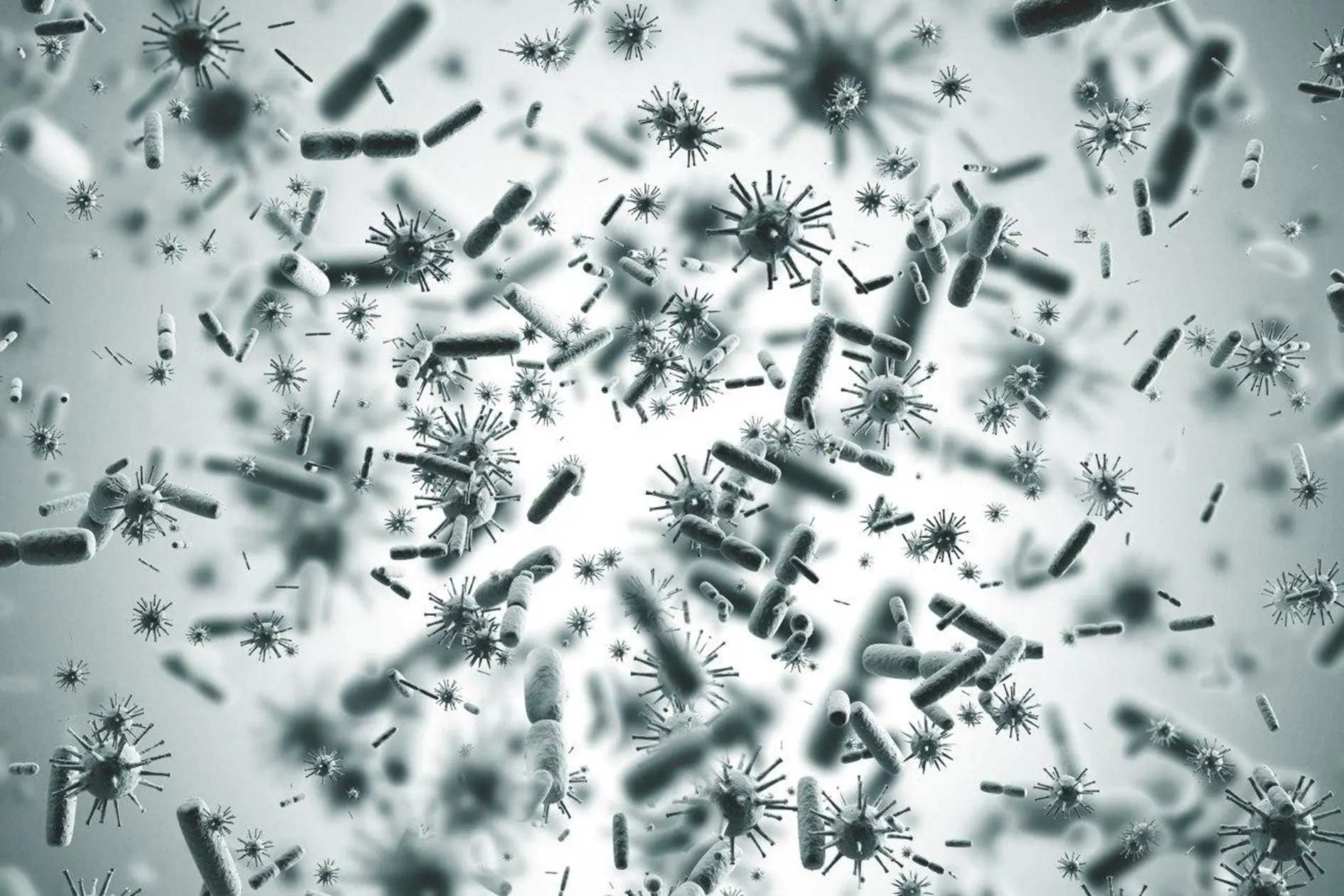
Yes, the pathogen is a virus. A virus is a very small non-cellular organism. It sits somewhere on the boundary between a living and a non-living organism. Most scientists classify it as non-living.
However, it is a matter of perspective. Chinese medicine claims that every living thing contains 3 treasures – Shen (spirit or intention), Qi (energy) and Jing (essence, matter). The virus certainly has matter. It is just RNA or sometimes DNA wrapped mostly in a protein shell. It also has energy, even though, like a proper parasite, it takes it from the host cell. And it probably also has Shen, some kind of intention, a programme that it tries to carry out.
We mostly perceive viruses as our enemies. However, viruses wage a much more extensive battle with bacteria. That is their arch-enemy. Nevertheless, as we see today, viruses are often a major problem for humans as well.
Viruses cannot multiply on their own. They need a host cell to do so. Viruses are also unable to move. They "travel", for example, together with droplets that we sneeze or cough out.
They have keys or triggers on them, thanks to which they are able to open locks located on the cells of our organism. The virus unlocks the cell, gets inside, and begins to establish its own order. Its goal is to replicate. The cell gradually stops performing the functions in the organism for which it was created and begins to work for the benefit of the virus.
Errors occur quite frequently during replication, which leads to the emergence of various virus mutations. If a mutation is disadvantageous for the virus and does not improve its ability to survive, the virus dies out. However, if a mutation provides it with an advantage over other viruses, the mutated virus begins to displace the others and gradually becomes dominant in the organism.
Coronaviruses are a well-known group of viruses that bother us every autumn, typically manifesting as a common cold. During replication, however, mutations arise that are more active than the common coronaviruses for which our immune system is already prepared. The SARS-CoV-2 (Severe Acute Respiratory Syndrome Coronavirus 2) virus belongs to this category.
In the early stages of its spread, the problem was that our immune system could not quickly recognise and eliminate this type of virus. It took longer for it to identify the virus, to begin generating an immunological response, and to start eliminating it.
So we know how our defence works, and we partly know what our enemy looks like. What can we do to avoid getting ill? How can we defend ourselves?
The purpose of this article is not to talk about treatment. Prevention is extremely important.
It is necessary to steer our lifestyle so that our organism works optimally and has enough energy to build a strong immune system:
Eat high-quality, varied and regular meals. Eat high-quality and chemically unprocessed food.
Get enough sleep and rest appropriately.
Regular exercise is important, but it should not be too exhausting.
Try to keep your emotions in check (which is a rather difficult task these days).
Enjoy the little things and cultivate good relationships. Things will get better again.


Subscribe to our newsletter and you won't miss any promotions or important information