

Please note that the information provided below is the personal opinion of Mr Milan Schirlo, who is a therapist and an advocate of traditional Chinese medicine and a healthy lifestyle. Mr Schirlo does not promote any specific products or manufacturers of food supplements. Furthermore, this article is not connected to the sale of any products. The information is provided for the purpose of disseminating publicly available knowledge, conclusions of professional studies, education, and personal findings regarding vital mushrooms and a healthy lifestyle.
For legislative reasons, I cannot state some information. Therefore, the text for some points is missing. I am working on republishing it. Thank you for your understanding.
Latin: Ganoderma lucidum
Czech: Glossy Ganoderma
Chinese: Ling Zhi
Japanese: Reishi
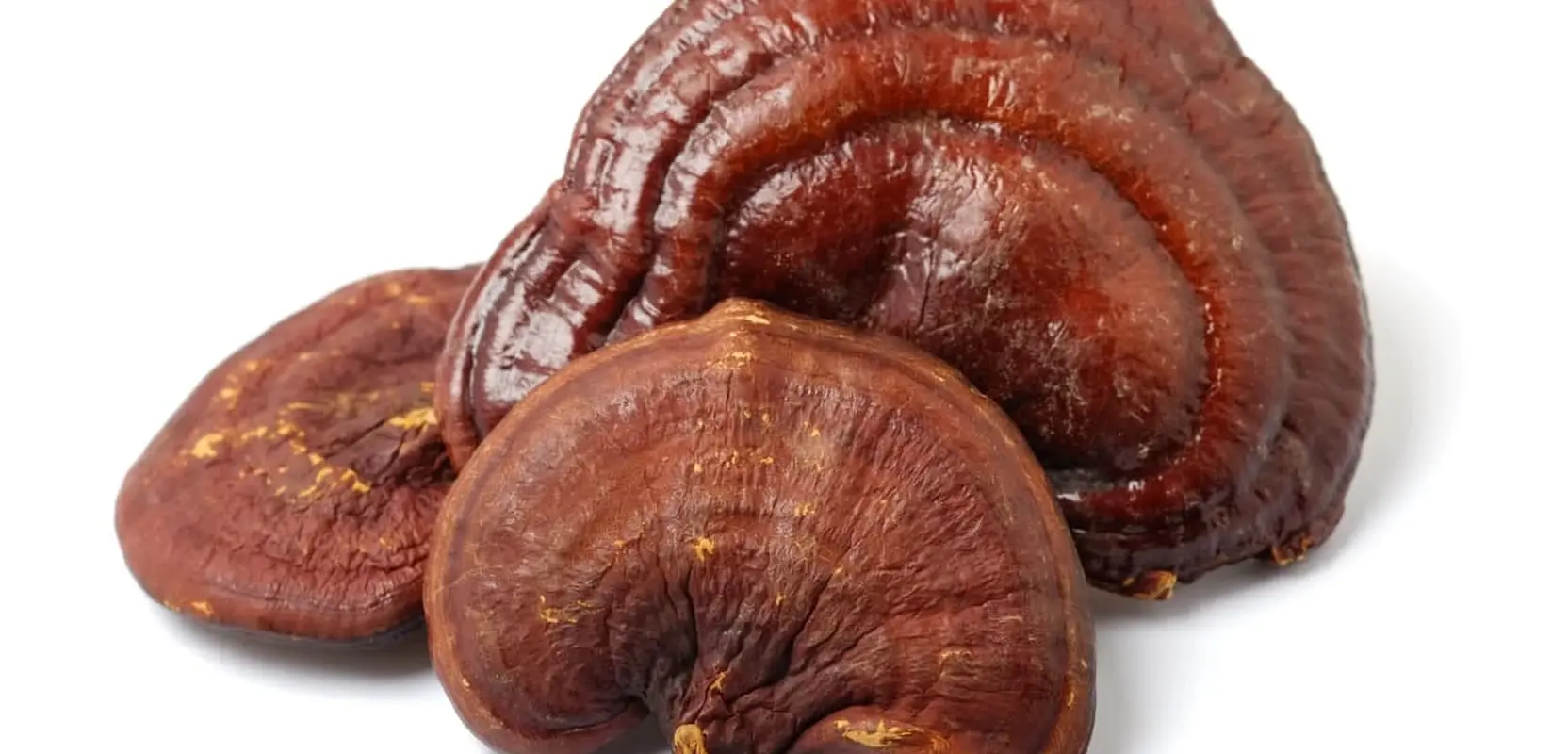
Reishi (Glossy Ganoderma, Ganoderma lucidum, Ling zhi) is a non-poisonous but inedible wood-decay fungus. It is inedible only due to its hard consistency and relatively bitter and pungent taste. Reishi grows mainly on damaged trees or stumps. It draws nutrients from the wood. Its Czech name is derived from its appearance. The cap is reddish-brown to dark brown and very shiny, giving the impression that it is varnished; it is sessile and semicircular.
Reishi originates from Asia, but today it can be found all over the world, partly because it is artificially cultivated, as it no longer occurs much in the wild and the demand for it is enormous. During artificial cultivation, it is also possible to slightly change the composition of the mushroom according to the substrate on which it is grown; moreover, it is possible to harvest mycelium or fruiting bodies of different ages. Each developmental phase has a slightly different composition of active substances. Reishi grown on oak trunks and harvested after 6-9 months has an optimal composition.
If we wanted to look into history to see when Reishi began to be cultivated, we would have to go very deep. Reishi has been known for about 2000 years and is described in many Chinese herbals, including the most famous one, Shen Nong Ben Cao Jing, which dates back to before our era, i.e., 206 BC. Even then, Reishi was highly valued; it was attributed with life-prolonging and strength-giving effects, and it was even stated that it brings the dead back to life. It is no wonder that it has the nickname the mushroom/elixir of immortality. The popularity of Reishi in ancient China was enormous, and so it also began to be cultivated.
It was different in the so-called Western world. The mushroom was not described until 1781 by the biologist William Curtis. For a long time, Reishi was not given attention, but reports of its effectiveness originating from traditional Chinese medicine prompted scientists to research it. Now we know the composition of Reishi, and some of its effects are verified by studies, including clinical ones with volunteers.
Si Qi (nature): neutral
Wu Wei (taste): sweet and slightly bitter
Gui Jing (tropism): heart, liver, lungs (according to some sources, it also has tropism to the kidneys)
1, Fatigue states
2, Strengthens kidney essence Jing
4, Strengthens Wei Qi
5, Supports Zheng Qi
6, Adaptogenic effect
7, Allergies
8, Asthma
9, Cough
10, Eczemas
11, Cancer
12, Menopause
13, Hair loss
14, Nutrition of tendons and ligaments
15,
16, Autoimmune problems
17, Supports the cardiovascular system
18, Harmonises cholesterol
19, Harmonises blood pressure
20, Hyperthyroidism
21, Insomnia
22, Mental imbalances
23, Neuro problems
24, Athletes
25, Protects the liver
26, Diabetes
27, Anti-ageing effects
28, Support of organism detoxification
a, Mushrooms in the form of extracts (recommended form of use)
If you use mushrooms in the form of 30% extracts, I recommend:
Preventive use
For milder health problems
For more serious health problems
b, Mushrooms in tincture
c, Mushrooms in the form of powder (biomass)
d, Dried mushrooms
Like every mushroom, Reishi is also made mainly of water, i.e., up to 90%. The remaining part, the dry matter, is however packed with bioactive substances that have a positive influence on the organism. We will mention the most significant components in the following text.
1, Terpene compounds:
With other mushrooms, we started with polysaccharides, but with Reishi, we will start with terpene compounds. They are exactly what give Reishi its bitterness and pungency and also many effects for which it excels.
Terpenes have the ability to destroy tumour cells and oxidative stress and blood fat values.
More than 50 triterpenes have been successfully extracted from Reishi, among which belong
Given the significance of ganoderic acids, we will look at them more closely. There is a whole spectrum, it is possible to say from A to Y, then DM and C2. Ganoderic acids are significant for their anti-tumour effects. They can stop the cell cycle, thanks to which cells multiply, and induce cellular death, apoptosis, in them. However, they also limit metastatic activity, mainly by reducing the production of enzymes that break down intercellular matter. If the intercellular matter is loosened, the tumour cell passes through it better and gets outside the place of its origin, i.e., it metastasises. Under the influence of ganoderic acids, the expression of metalloproteinases is reduced.
Effects have been proven, for example, on cells of lung, colon, liver, prostate, bone, cervical cancer, etc. An important component of the anti-tumour effect of ganoderic acids is also the fact that they cancel the resistance of tumour cells to treatment. Many tumour cells do not respond to chemotherapy at all, but ganoderic acid makes them sensitive and strengthens the effects of treatment.
It is not possible to omit their antioxidant properties, i.e., they reduce oxidative stress, which stands behind many degenerative diseases, including dementias, tumours, etc. Thanks to the neutralisation of free radicals, ganoderic acids act protectively against organ damage.
2, Carbohydrates
The dry matter of Reishi is largely made up of carbohydrates. The most important are undoubtedly polysaccharides (more than 200 types have been successfully obtained from Reishi), among which also belong glucans. In Reishi, there are beta-1-3 and beta-1-6-D glucans. We cannot omit other polysaccharides, namely ganoderans A, B, and C. Other polysaccharides are also those insoluble and unabsorbable, i.e., fibre, which is food for intestinal symbiotic bacteria.
Besides polysaccharides, there are also monosaccharides in Reishi, mainly mannose, ribose, glucose, galactose, fucose, and arabinose.
3, Fatty acids/fats
Fatty acids are an integral part of Reishi. It is important that they are mainly unsaturated ones in it, which are beneficial to health. These are mainly oleic and linoleic acid. Saturated fatty acids, namely palmitic and stearic, are also present in Reishi in smaller amounts.
4, Amino acids, peptides, proteins
Mushrooms, therefore also Reishi, are unique in that they also contain amino acids and proteins. All amino acids are represented in Reishi, i.e., non-essential, which our organism can create, and essential, which the body does not have to produce and it is necessary to receive them in food.
Among proteins, many enzymes are worth mentioning. These are mainly enzymes that can break down wood matter so that the mushroom can obtain nutrients from it, e.g., galactosidases, ligninolytic oxidoreductases...
An important protein is Ling Zhi8.
Just as we highlighted ganoderic acids, we will also devote ourselves to the Ling zhi 8 protein, which can be obtained both from the mature mushroom and from mycelia. It was described in 1989. In its structure, it is in many ways similar to the heavy chain of human antibodies, immunoglobulins. It is composed of amino acids aspartic acid, threonine, serine, glutamic acid, glycine, alanine, cysteine, valine, and methionine. Scientists were interested in its composition, and therefore many studies were conducted.
These were, for example, tests on animals with anaphylaxis, i.e., an allergic reaction, which can lead to the death of the affected person. In sensitised mice (an antigen was administered to them beforehand so that an allergy would be created to it), to which an allergen was administered, a serious reaction occurred within 30 minutes, respiratory frequency decreased, cramps and also death occurred. However, if sensitised mice, which were exposed to an allergen dangerous to them, also received Ling zhi 8, the situation was different. No serious anaphylaxis occurred that would endanger the animals' lives. Administering Ling zhi to allergic mice before exposure to the allergen therefore led to limiting the development of the allergic reaction.
Subsequent studies then brought further evidence about the effects of Ling zhi 8.
Anti-cancer effects were also proven. In its presence, the multiplication of lung cancer cells was limited, as it blocks the cell cycle that a cell must pass through in order to be able to divide and give rise to a new cell.
5, Nucleosides and nucleotides
Compounds that are part of genetic information, i.e., DNA and RNA, are also found in Reishi. These are, for example, adenine, adenosine, uracil, uridine... Nucleosides are also used in medicine, mainly adenosine, it can adjust heart action, i.e., it is against arrhythmias, and lowers blood pressure. It can also reduce the clumping of blood platelets, i.e., it acts antithrombotically, against the formation of blood clots.
6, Sterols:
Sterols are substances that are built on a steroid nucleus, like cholesterol. Ergosterol, i.e., provitamin D2, occurs in Reishi. In the body, it acts identically to vitamin D from animal sources.
7, Phenolic compounds
We cannot end the list of Reishi components without mentioning phenolic compounds, among which also belong flavonoids. These are substances with significant antioxidant effects. To this group belong, for example,
phenols
flavonoids
8, Minerals and trace elements
Reishi also contains many minerals and trace elements that are essential for our health. These are mainly sodium, potassium, zinc, selenium, iron, copper, magnesium, etc. The amount and type of these elements differ according to the place where the mushrooms grow, as they accumulate minerals from the environment.
9, Vitamins:
It probably won't surprise you that there are also vitamins in Reishi. And mainly B-group vitamins and the already mentioned vitamin D.
10, Other substances:
Although Reishi has been researched for many years, other significant components are still being found in it. Interesting are, for example, lucidolactones A and B.
Alkaloids lucidimines A to D, we will talk a little more about lucidimine B and C.
Lucidimines from Reishi have significant antioxidant potential. They reduce "toxic" oxidative stress, which accelerates the degeneration of the organism, increases the risk of cancer, etc. Scientists tested them in solutions, where they dealt very well, for example, with peroxyl radicals. Overall, lucidimines in antioxidant effects are on par with vitamin C.
Besides antioxidant effects, anti-tumour effects were also successfully proven. Experiments were conducted on cell cultures of breast cancer. Lucidimines had an antiproliferative effect, tumour cells stopped multiplying in their presence. These alkaloids stop the cell cycle that a cell must reach in order to be able to divide and thus give rise to a new cell. Also important is the fact that lucidimines can start intracellular signalling pathways that lead to apoptosis, i.e., cellular death. This is also triggered by the fact that lucidimines damage mitochondria, which produce energy essential for cellular life.
We have already discussed the most fundamental components from Reishi, thanks to which we also touched upon some effects of Reishi. Now we will look at some more closely and state some studies, including clinical ones, if they are available.
Research is most often conducted on cell cultures; it is the "easiest" from the point of view of ethical rules. Studies with volunteers are the hardest to conduct; firstly, there are very strict rules for including people in studies, and secondly, these studies are very expensive.
A71. Front Immunol. 2020 Sep 29;11:561758. doi: 10.3389/fimmu.2020.561758.
Tumour diseases are increasingly common in the population. This is due to lifestyle, environmental pollution, and the fact that we are living to an older age. Thanks to early diagnosis and effective treatment, many people with cancer survive, yet many people succumb to cancer. Even the treatment itself is very demanding and health-damaging. Scientists are trying to find treatment that would be sufficiently effective but at the same time non-damaging.
It turns out that Reishi contains substances that have anti-tumour effects, as we have already stated above in the composition. Experiments on cell lines of various types of cancer proceed by adding Reishi to the cell culture in which cells multiply and observing the reaction of the cells to the presence of Reishi. Cells of many types of cancer (breast, lung, colon, meninges, sarcoma, liver, cervix, leukaemia) stop multiplying in the presence of Reishi, cell division is stopped, so the tumour would not grow. Moreover, a large part of the cells undergo apoptosis, i.e., cellular death. Reishi kills tumour cells. Moreover, it limits the new formation of blood vessels that would supply the tumour with blood, and therefore also with nutrients and oxygen. We must also mention that Reishi deprives tumour cells of the ability to move, therefore also to travel out of the tumour and create metastases. Also interesting is the hormonal activity of Reishi. Its component ganoderol B binds to receptors for androgens (male sex hormones) on the prostate, which can help with the treatment of prostate cancer. Tumour cells are namely stimulated by testosterone, and thus the tumour grows. If the effects of sex hormones are blocked, cancer growth is limited.
It is not possible to omit the fact that many tumour cells become resistant to anti-tumour treatment, i.e., they do not respond to it and survive. Adding Reishi makes cancer cells sensitive to chemotherapeutics again.
Another amazing effect of Reishi is that it limits the undesirable effects of cancer treatment. It supports the renewal of the organism, which is damaged by chemo- or radiotherapy.
Since clinical studies also exist, we must mention them. In one study, patients with lung cancer (36 people) used Ganopoly, which is an aqueous solution of polysaccharides from Reishi. These patients also underwent anti-tumour treatment. In those who used Ganopoly, the immune system was in a better state, and the patients felt somewhat better. In another study with 47 patients with colon cancer, anti-tumour effects were also captured. The quality of life of patients with lung cancer was also investigated. 82 patients undergoing chemotherapy participated in the study, who were divided into groups, where one received a preparation with Reishi and the other a placebo, i.e., an ineffective preparation. Patients with Reishi described a subjective improvement in condition (they did not know they were using Reishi), while patients with placebo did not. They improved physically and mentally, unfortunately, the results were not statistically significant.
Reishi can also be used as prevention of cancer formation. In a Japanese study, extract from Reishi was administered to people with colon adenomas (polyps that can degenerate into cancerous growth), and that was as soon as the diagnosis was determined. 132 patients received Reishi, 102 nothing. After 12 months, a control colonoscopy was performed. In the control group, changes in polyps occurred +0.66, in persons with Reishi -0.42. The total size of polyps in the group without Reishi increased by 1.73 mm, while with Reishi it decreased by 1.40 mm. Reishi therefore not only stabilised the state but even improved it and reduced the risk of cancer outbreak, while in the group without Reishi, a worsening of the state of polyps occurred in some persons.
Li A, Shuai X, Jia Z, et al. Ganoderma lucidum polysaccharide extract inhibits hepatocellular carcinoma growth by downregulating regulatory T cells accumulation and function by inducing microRNA-125b. Journal of Translational Medicine. 2015;13:100.
Liu RM, Li YB, Liang XF, Liu HZ, Xiao JH, Zhong JJ. Structurally related ganoderic acids induce apoptosis in human cervical cancer HeLa cells: involvement of oxidative stress and antioxidant protective system. Chem Biol Interact. 2015 Aug 14. pii: S0009-2797(15)30034-X.
Liu DL, Li YJ, Yang DH, Wang CR, Xu J, Yao N, Zhang XQ, Chen ZS, Ye WC, Zhang DM. Ganoderma lucidum derived ganoderenic acid B reverses ABCB1-mediated multidrug resistance in HepG2/ADM cells. Int J Oncol. 2015;46(5):2029-38.
Na K, Li K, Sang T, Wu K, Wang Y, Wang X. Anticarcinogenic effects of water extract of sporoderm-broken spores of Ganoderma lucidum on colorectal cancer in vitro and in vivo. Int J Oncol. 2017 May;50(5):1541-1554.
Hsin IL, Wang SC, Li JR, Ciou TC, Wu CH, Wu HM, Ko JL.Immunomodulatory proteins FIP-gts and chloroquine induce caspase-independent cell death via autophagy for resensitizing cisplatin-resistant urothelial cancer cells. Phytomedicine. 2016 Dec 1;23(13):1566-1573.
Barbieri A, Quagliariello V, Del Vecchio V et al. Anticancer and Anti-Inflammatory Properties of Ganoderma lucidum Extract Effects on Melanoma and Triple-Negative Breast Cancer Treatment. Nutrients. 2017 Feb 28;9(3). pii: E210.
Chen Y, Lv J, Li K, Xu J, Li M, Zhang W, Pang X. Sporoderm-Broken Spores of Ganoderma lucidum Inhibit the Growth of Lung Cancer: Involvement of the Akt/mTOR Signaling Pathway. Nutr Cancer. 2016 Oct;68(7):1151-60.
Wang T, Xie ZP, Huang ZS, Li H, Wei AY, Di JM, Total triterpenoids from Ganoderma Lucidum suppresses prostate cancer cell growth by inducing growth arrest and apoptosis. J Huazhong Univ Sci Technolog Med Sci. 2015 Oct;35(5):736-41.
Gao Y, Tang W, Dai X, et al.: Effects of water-soluble Ganoderma lucidum polysaccharides on the immune functions of patients with advanced lung cancer. J Med Food 8 (2): 159-68, 2005. [PubMed]
Chen X, Hu ZP, Yang XX, et al.: Monitoring of immune responses to a herbal immuno-modulator in patients with advanced colorectal cancer. Int Immunopharmacol 6 (3): 499-508, 2006. [PubMed]
Liu J, Mao JJ, Li SQ, Lin H. Preliminary Efficacy and Safety of Reishi & Privet Formula on Quality of Life Among Non-Small Cell Lung Cancer Patients Undergoing Chemotherapy: A Randomized Placebo-Controlled Trial. Integr Cancer Ther. 2020 Jan Dec;19:1534735420944491. doi: 10.1177/1534735420944491.
Oka S, Tanaka S, Yoshida S, et al.: A water-soluble extract from culture medium of Ganoderma lucidum mycelia suppresses the development of colorectal adenomas. Hiroshima J Med Sci 59 (1): 1-6, 2010.
Oxidative stress is caused by increased production of free radicals. Radicals are also formed under normal conditions, e.g., during metabolism, energy production in the cell, etc. In the event that the organism is exposed to stress (harmful substances, infections...) higher production of free radicals occurs. Production exceeds the organism's ability to neutralise free radicals. Free radicals react with many compounds, including lipids in cell membranes and DNA. This accelerates ageing, causes inflammation, increases the risk of cancer, etc. Substances in Reishi have significant antioxidant properties. These are mainly flavonoids, phenols, polysaccharides, etc. Antioxidant abilities can be tested in solutions, but also on animal models. Where the value of malondialdehyde can be tested, the concentration of which grows during lipid peroxidation by free radicals (reaction of fats in membranes). Reducing oxidative stress acts as prevention of many diseases, including cancer, degenerative diseases of the central nervous system, etc.
Tang X, Cai W, Xu B. Comparison of the Chemical Profiles and Antioxidant and Antidiabetic Activities of Extracts from Two Ganoderma Species (Agaricomycetes). Int J Med Mushrooms 2016; 18(7):609-20.
Cilerdzic J, Stajic M, Zivkovic L, Vukojevic J, Bajic V, Spremo-Potparevic B. Genoprotective Capacity of Alternatively Cultivated Lingzhi or Reishi Medicinal Mushroom, Ganoderma lucidum (Agaricomycetes), Basidiocarps. Int J Med Mushrooms. 2016;18(12):1061-1069.
Rani P, Lal MR, Maheshwari U, Krishnan S. Antioxidant Potential of Lingzhi or Reishi Medicinal Mushroom, Ganoderma lucidum (Higher Basidiomycetes) Cultivated on Artocarpus heterophyllus Sawdust Substrate in India. Int J Med Mushrooms. 2015;17(12):1171-7.
Mohsin M, Negi P, Ahmed Z. Determination of the antioxidant activity and polyphenol contents of wild Lingzhi or Reishi medicinal mushroom, Ganoderma lucidum (W.Curt. Fr.) P. Karst. (higher Basidiomycetes) from central Himalayan hills of India. Int J Med Mushrooms. 2011;13(6):535-44.
Diabetes (diabetes mellitus) is a disease associated with increased levels of sugar in the blood, hyperglycaemia. Two basic types of diabetes are commonly distinguished, namely type I and II. Type I manifests itself already in childhood, it is caused by an autoimmune inflammation that damages the pancreas. This is associated with a decrease in insulin production. We see type II in older people who are overweight or obese (however, obese children can also suffer from it), here either the pancreas can be damaged and insulin production decreased, but we often encounter the fact that there is enough insulin, only cells do not respond to it, i.e., insulin resistance is present. Increased values of sugar in the blood damage the lining of blood vessels, damage nerves, the immune system, this leads to a higher incidence of cardiovascular diseases in diabetics, damage to kidneys, retina, neuropathic pain, slowing of healing, etc.
Anti-diabetic effects of Reishi are most often tested on mice or rats, in which a state similar to diabetes is caused. If Reishi is administered to a part of the mice/rats, a decrease in glycaemia occurs, an increase in insulin production, and a restoration of cell sensitivity to insulin also occurs. A very interesting study brought evidence that Reishi improves the composition of intestinal microflora and thus also influences metabolism. Even just thanks to the manipulation of microflora using Reishi, a significant improvement in condition occurred in rats with diabetes. Diabetes was brought under control.
There are also clinical studies. We can mention one with 71 patients with type II diabetes who used ganopoly for 12 weeks. Afterwards, their health condition was checked, it was found that the patients had glycaemia under control, values of glycated haemoglobin decreased (if there are long-term higher levels of sugar in the blood, sugar binds to red blood pigment). Reishi can also mitigate the impacts of diabetes. This is evident mainly in diabetic kidney damage. Damaged kidneys react to the administration of Reishi with an improvement in functions, etc.
Juing SH, Lee YS, Shim SH, Shin KH< Kim JS, Kand SS. Inhibitory effects of Ganoderma applanatum in rat lens aldose reductase and sorbitol accumulation in streptozotocin-induced diabetic rat tissues. Phyto Res. 2005 Jun;19(6):477-80.
Ma HT, Hsieh JF, Chen ST.Anti-diabetic effects of Ganoderma lucidum. Phytochemistry. 2015 Mar 16. pii: S0031-9422(15)00083-7.
Xiao C, Wu Q, Zhang J, Xie Y, Cai W, Tan J, Antidiabetic activity of Ganoderma lucidum polysaccharides F31 down-regulated hepatic glucose regulatory enzymes in diabetic mice. J Ethnopharmacol. 2016 Nov 27. pii: S0378-8741(16)32110-9.
Ma HT, Hsieh JF, Chen ST.Anti-diabetic effects of Ganoderma lucidum. Phytochemistry. 2015 Mar 16. pii: S0031-9422(15)00083-7.
Li F, Zhang Y, Zhong Z.Antihyperglycemic effect of ganoderma lucidum polysaccharides on streptozotocin-induced diabetic mice. Int J Mol Sci. 2011;12(9):6135-45.
Land J, Dai X, Ye J, China; Zhou S. A Phase I/II Study of Ling zhi Mushroom Extract in Patients with Type II Diabetes Mellitus Gao Y, New Zealang; Int J Med Mushr 2004, 6(1):30-8.
Chen M, Xiao D, Liu W, Song Y, Zou B, Li L, Li P, Cai Y, Liu D, Liao Q, Xie Z. Intake of Ganoderma lucidum polysaccharides reverses the disturbed gut microbiota and metabolism in type 2 diabetic rats. Int J Biol Macromol. 2020 Jul 15;155:890-902. doi: 10.1016/j.ijbiomac.2019.11.047. Epub 2019 Nov 9. PMID: 31712153.
He CY, Li WD, Guo SX, Lin SQ, Lin ZB.Effect of polysaccharides from Ganoderma lucidum on streptozotocin-induced diabetic nephropathy in mice. J Asian Nat Prod Res. 2006 Dec; 8(8):705-11
Increased values of fats in the blood are associated with a high risk of cardiovascular diseases. Fats namely deposit in blood vessel walls, which damages them, causes inflammation, narrows the lumen of blood vessels, etc. Atherosclerosis develops, which is also accompanied by high blood pressure, the incidence of heart or brain attack. Fats in the blood can in many cases be regulated by diet and lifestyle with sufficient movement. However, there are cases that are genetically conditioned and diet does not help.
With the first cases, however, Reishi can also help. Experiments are most often conducted on rodents that are fed a high-fat diet, which leads to an increase in fats in the blood. Reishi is then administered to a part of the rodents and not to a part, and the state between the two groups is compared. All conducted studies turned out the same. In groups with Reishi, a decrease in total cholesterol, bad LDL cholesterol, triglycerides, and an increase in good HDL cholesterol occurred. Since studies with volunteers also exist, we must mention them. 26 patients with type II diabetes, overweight, and increased fat value participated in one. Using Reishi led to a decrease in fats (decrease in LDL, triglycerides) and also to the regulation of glycaemia in them.
If we look at the heart, a study of patients with angina pectoris and atherosclerotically changed blood vessels was conducted. There were 34 patients in it who used Reishi, a decrease in oxidative stress and total cholesterol. Its entry and exit values were: 205.49±48.49mg/dl and 182.11±73.81mg/dl.
Lai P, Cao X, Xu Q, Liu Y, Li R, Zhang J, Zhang M. Ganoderma lucidum spore ethanol extract attenuates atherosclerosis by regulating lipid metabolism via upregulation of liver X receptor alpha. Pharm Biol. 2020 Dec;58(1):760-770. doi: 10.1080/13880209.2020.1798471. PMID: 32780606; PMCID: PMC7470073.
Ubaidillah N, Sargowo D, Widya A, Jakfar V, Proboretno KS, Failasufi M, Warahugraha Y, Ramadhan F, Wulandari H, Putri DH. IOs 10-03 the distinctive effect of polysaccharide peptides ganoderma lucidum as anti atherogenesis in stable angina patiens. J Hypertens. 2016 Sep;34 Suppl 1 - ISH 2016 Abstract Book:e72.
Chu TT, Benzie IF, Lam CW, Fok BS, Lee KK, Tomlinson B. Study of potential cardioprotective effects of Ganoderma lucidum (Lingzhi): results of a controlled human intervention trial. Br J Nutr. 2012 Apr;107(7):1017-27.
Meneses ME, Martínez-Carrera D, Torres N, et al. Hypocholesterolemic Properties and Prebiotic Effects of Mexican Ganoderma lucidum in C57BL/6 Mice. Li Volti G, ed. PLoS ONE. 2016;11(7):e0159631.
Berger A, Rein D, Kratky E, et al. Cholesterol-lowering properties of Ganoderma lucidum in vitro, ex vivo, and in hamsters and minipigs. Lipids in Health and Disease. 2004;3:2.
Sargowo D, Ovianti N, Susilowati E, Ubaidillah N, Widya Nugraha A, Vitriyaturrida, Siwi Proboretno K, Failasufi M, Ramadhan F, Wulandari H, Waranugraha Y, Hayuning Putri D. The role of polysaccharide peptide of Ganoderma lucidum as a potent antioxidant against atherosclerosis in high risk and stable angina patients. Indian Heart J. 2018 Sep-Oct;70(5):608-614. doi: 10.1016/j.ihj.2017.12.007.
The liver, although not as much attention is paid to it, is indispensable for life and its failure is associated with death. The liver is damaged by many substances or infections, which leads to mild but permanent inflammation, scarring, and tissue remodelling, which becomes non-functional, i.e., fibrosis and cirrhosis occur.
Furthermore, it was confirmed in many studies that Reishi mitigates the impacts of toxic substances on the liver. Rodents are exposed to substances that are toxic to the liver, e.g., carbon tetrachloride, alcohol, mushroom poisons, etc. A part is treated with Reishi and a part is not. In untreated ones, a massive increase in liver enzymes in the blood is always evident, these are released from damaged liver cells, i.e., ALT, AST, increased oxidative stress, and liver tissue is inflammatorily changed. If rodents receive Reishi, changes can appear, but changes are never as significant as in rodents without Reishi. In some cases, Reishi leads not only to stopping the worsening but also to an improvement in the state of the liver.
Here we must also mention the positive influence of Reishi on the mucosa of the intestinal system, including the stomach. Reishi modulates microflora, thereby reducing the risk of stomach ulcers and cancer.
Besides the liver, Reishi has a positive influence on the intestinal mucosa, as we mentioned already above in the chapter about the immune system. It supports healthy microflora, increases the resistance of the mucosa, reduces its permeability. Reishi is also beneficial for the stomach.
Chiu HF, Fu HY, Lu YY, Han YC, Shen YC, Venkatakrishnan K, Golovinskaia O, Wang CK. Triterpenoids and polysaccharide peptides-enriched Ganoderma lucidum: a randomized, double-blind placebo-controlled crossover study of its antioxidation and hepatoprotective efficacy in healthy volunteers. Pharm Biol. 2017 Dec;55(1):1041-1046.
Wu H, Tang S, Huang Z, Zhou Q, Zhang P, Chen Z. Hepatoprotective Effects and Mechanisms of Action of Triterpenoids from Lingzhi or Reishi Medicinal Mushroom Ganoderma lucidum (Agaricomycetes) on α-Amanitin-Induced Liver Injury in Mice. Int J Med Mushrooms. 2016;18(9):841-850.
Wu JG, Kan YJ, Wu YB, Yi J, Chen TQ, Wu JZ. Hepatoprotective effect of ganoderma triterpenoids against oxidative damage induced by tert-butyl hydroperoxide in human hepatic HepG2 cells. Pharm Biol. 2015 Oct 12:1-11.
P cla

Characteristics and effects of mushrooms according to traditional Chinese medicine

Description of herbal blends, effects according to Chinese medicine and main usage

Dietary recommendations including individual foods for specific patterns

Characteristics and effects of herbs according to traditional Chinese medicine

Characteristics of food and its influence on individual organs

Classification of herbs and mushrooms by individual diseases


Subscribe to our newsletter and you won't miss any promotions or important information