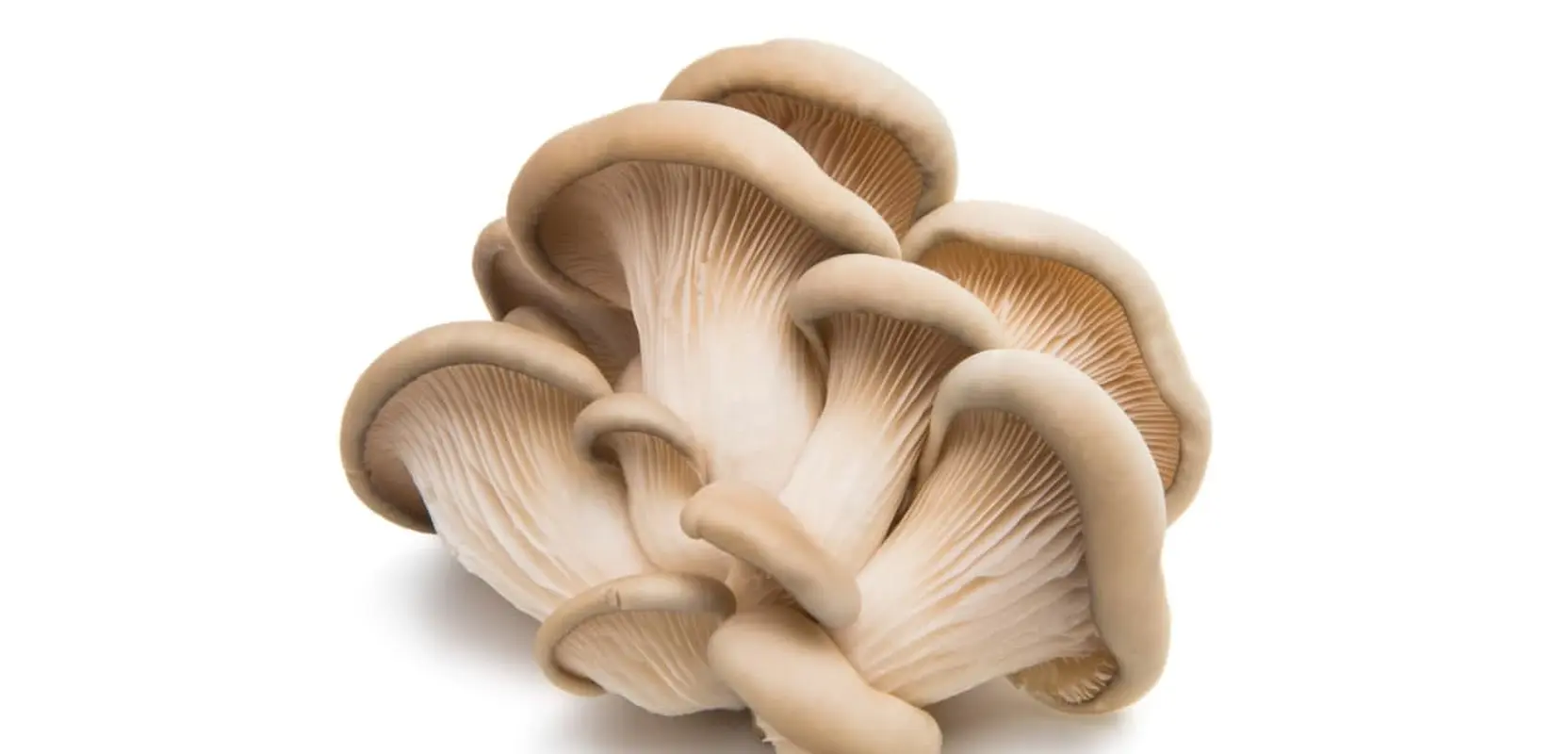


Latin: Pleurotus ostreatus
Czech: hlíva ústřičná
Chinese: Ping Gu
Japanese: Hiratake
The Oyster Mushroom (Pleurotus ostreatus, oyster mushroom, hira take) belongs to wood-decaying fungi, i.e. fungi that use host wood as a source of nutrients. The Oyster Mushroom does not kill its host, nor does it significantly weaken it. The Oyster Mushroom prefers deciduous trees, stumps, and fallen branches. The Oyster Mushroom gets its name from its appearance. In shape and colour, it resembles an oyster. The cap has an elongated shape with a diameter of approximately 5 to 35 centimetres. It is initially flat and gradually curves, and has a blue-grey or grey colour. The caps of the Oyster Mushroom resemble larger oysters, hence its name in English, oyster mushroom. The fruit bodies of the Oyster Mushroom grow in clusters. These can weigh several kilograms. The Oyster Mushroom is a highly sought-after mushroom, which is why it is widely cultivated commercially and is now available fresh in almost every supermarket.
However, the Oyster Mushroom is not used only as food, but also as medicine. This is mainly in Asia, where it has been used for thousands of years by traditional Chinese medicine. The use of the mushroom is mentioned in the largest Chinese herbal, Shen Nong Ben Cao Jing. It is also described here that the mushroom has been artificially cultivated since 199 AD. It also appears in poems from the Song Dynasty period. Here it is called "the mushroom of flower heaven".
In Europe, the mushroom was described and classified into biological systems in 1775, thanks to the Danish naturalist Joseph Freiherr von Jacquin. He named the Oyster Mushroom Agaricus ostreatus. The Oyster Mushroom received its current name in 1871. It was renamed by the German mycologist Paul Kummer.
Nature (Si Qi): mildly warm
Taste (Wu Wei): sweet
Tropism (Gui Jing): liver, spleen, stomach
1, Strengthens the spleen and the centre
2, Immune support
3, Support for vaccination
4, Anti-cancer effects
5, Arthrosis
6, Use of the Oyster Mushroom for metabolic problems
7, Anaemia (blood deficiency)
8, Skin problems
9, Supports wound healing
10, Anti-inflammatory effects
11, Varicose veins
12, Antioxidant effect
13, Constipation
The Oyster Mushroom is also used for constipation, but rather cooked due to the high fibre content
a, Mushrooms in the form of extracts (recommended form of use)
If you are taking mushrooms in the form of 30% extracts, I recommend:
Preventive use
For milder health problems
For more serious health problems
b, Mushrooms in tincture
c, Mushrooms in the form of powder (powder, biomass)
d, Dried mushrooms
The dry matter of mushrooms consists mainly of sugar components. The most important are polysaccharides, i.e. complex sugars. The Oyster Mushroom contains insoluble, non-absorbable polysaccharides, i.e. crude fibre, which supports healthy bowel function and ensures the correct composition of microflora, which draws energy from the fibre for its life, reproduction and growth. Another type of polysaccharides are glucans, including the well-known beta glucans, these are represented by both alpha and beta glucans with branching at positions 3 and 6, i.e. (1→3), (1→6). A unique beta glucan in the Oyster Mushroom is pleuran. This is characterised by immunomodulatory effects. Simple sugars, monosaccharides, such as glucose or galactose, are also found in the Oyster Mushroom.
It is possible to obtain amino acids and proteins from the Oyster Mushroom.
As from the attached table (a comparison of the values of the Oyster Mushroom and its relative is here), the Oyster Mushroom contains the most glutamic acid, arginine, alanine, aspartic acid, leucine, serine, threonine, glycine. Valine, lysine, isoleucine, phenylalanine, lysine, histidine, tyrosine, tryptophan, methionine and norvaline are also present.
Chirinang, Pornariya and Kanok-Orn Intarapichet. "Amino acids and antioxidant properties of the oyster mushrooms , Pleurotus ostreatus and Pleurotus sajor-caju." (2009).
Now let's look at proteins. Ostreolysin and pleurotolysin are typical for the Oyster Mushroom. These proteins have the ability to disrupt cell membranes and create pores in them. This can lead to cell death. However, if you consume the Oyster Mushroom, you do not have to worry that these proteins would have a negative effect on your health. For their effect to manifest in the organism, you would have to consume literally kilograms of mushrooms daily.
It is similar with osteatin, this protein acts toxically on ribosomes that synthesise proteins. The amount in the mushroom is negligible, but if the substance were extracted, it could be used as a medicine.
Proteins in the Oyster Mushroom are also represented by enzymes, mainly those that break down wood mass into components that the mushroom uses as a source of energy. These are lignocellulolytic and hydrolytic enzymes, e.g. lactases, manganases, cellulases, xylanases, tannases... Enzymes that can neutralise free radicals and thus reduce oxidative stress, i.e. superoxide dismutases, peroxidases or catalases, are also present in the Oyster Mushroom.
In mushrooms, and therefore also in the Oyster Mushroom, we can also find fatty acids. According to the table inserted below, it is clearly evident that unsaturated fatty acids predominate, i.e. those that have at least one double bond in the chain. It is precisely those with more double bonds that are most suitable for our health. At the end of the table, it can be seen that monounsaturated are around 17.6%, polyunsaturated 64% and the rest consists of saturated fatty acids.
In the table (taken from Fogarasi, M.; Socaci, S.A.; Dulf, F.V.; Diaconeasa, Z.M.; Fărca, A.C.; Tofană, M.; Semeniuc, C.A. Bioactive Compounds and Volatile Profiles of Five Transylvanian Wild Edible Mushrooms. Molecules 2018, 23, 3272. https://doi.org/10.3390/molecules23123272) are listed the concentrations of fatty acids represented in the Oyster Mushroom. The first number in the bracket indicates the length of the fatty acid and the second the number of unsaturated bonds.
number | Fatty acids | P. ostreatus |
1 | caproic acid (6:0) | 0.02 ± 0.001 |
2 | caprylic acid (8:0) | 0.02 ± 0.001 |
3 | capric acid (10:0) | 0.06 ± 0.002 |
4 | lauric acid (12:0) | 0.03 ± 0.001 |
5 | myristic acid (14:0) | 0.47 ± 0.001 |
6 | pentadecanoic acid (15:0) | 1.87 ± 0.01 |
7 | palmitic acid (16:0) | 12.40 ± 0.07 |
8 | Z-7 palmitoleic acid (16:1)n-9 | 0.16 ± 0.01 |
9 | palmitoleic acid (16:1)n-7 | 0.47 ± 0.002 |
10 | heptadecanoic acid (17:0) | 0.19 ± 0.02 |
11 | stearic acid (18:0) | 2.18 ± 0.01 |
12 | oleic acid (18:1)n-9 | 15.96 ± 0.04 |
13 | vaccenic acid (18:1)n-7 | 0.12 ± 0.005 |
14 | linoleic acid (18:2)n-6 | 63.68 ± 0.001 |
15 | alpha linolenic acid (18:3)n-3 | 0.12 ± 0.001 |
16 | arachidic acid (20:0) | 0.20 ± 0.003 |
17 | arachidonic acid (20:1)n-9 | 0.16 ± 0.01 |
18 | eicosadienoic acid (20:2)n-6 | 0.24 ± 0.006 |
19 | heneicosanoic acid (21:0) | 0.04 ± 0.03 |
20 | behenic acid (22:0) | 0.64 ± 0.02 |
21 | erucic acid (22:1)n-9 | 0.18 ± 0.01 |
22 | tricosanoic acid (23:0) | 0.06 ± 0.004 |
23 | lignoceric acid (24:0) | 0.21 ± 0.03 |
24 | nervonic acid (24:1) | 0.53 ± 0.02 |
| total saturated | 18.38 ± 0.04 |
| total monounsaturated | 17.58 ± 0.01 |
| total polyunsaturated | 64.04 ± 0.03 |
Terpenoids are a very important component of the Oyster Mushroom. They mainly have antioxidant, anti-infective and anti-tumour effects. It is possible to extract from the Oyster Mushroom.
Phenolic compounds, just like terpenoids, mainly have antioxidant, anti-tumour and anti-infective effects.
In the attached table is an overview of phenolic compounds in the Oyster Mushroom and other mushrooms. (table taken from the article Fogarasi M, Socaci SA, Dulf FV, et al. Bioactive Compounds and Volatile Profiles of Five Transylvanian Wild Edible Mushrooms. Molecules. 2018;23(12):3272. Published 2018 Dec 11. doi:10.3390/molecules23123272)
component numbers | Components | content per 100 g dry matter |
P. ostreatus | ||
1 | 4-Hydroxybenzoic acid | 75.04 ± 0.20 |
2 | 2,4-Dihydroxybenzoic acid | 11.84 ± 0.20 |
3 | 4-Hydroxyphenylacetic acid | 4.02 ± 0.05 |
4 | Protocatechuic acid | 17.28 ± 0.6 |
5 | Catechin | 14.86 ± 0.10 |
6 | Gallocatechin | 5.04 ± 0.15 |
10 | o-coumaric acid | 3.63 ± 0.20 |
11 | Cinnamic acid | 10.09 ± 0.15 |
12 | 5-Feruloylquinic acid | 35.04 ± 0.08 |
13 | 3,5 Dicaffeoylquinic acid | 14.60 ± 0.10 |
Sterols are substances that contain the same core as cholesterol. Among the best-known sterols is ergosterol, i.e. vitamin D2.
Others are
Many compounds give mushrooms their typical aroma and taste. In the Oyster Mushroom, these are mainly alcohols, ketones, esters, aldehydes and also amino acids containing sulphur.
Minerals and trace elements are also found in the Oyster Mushroom. It is necessary to mention that their concentration is often dependent on the environment in which they live.
From vitamins, we can mention the already described vitamin D2, vitamins from the B group and vitamin E. In small amounts, the Oyster Mushroom also contains vitamin C.
For some compounds, we mentioned what effects they have. It is therefore clear that the mushroom will have the same. We will analyse some effects more deeply in the following text.
The Oyster Mushroom contains components that have the potential to modulate the activity of the immune system. The immune system must function correctly to protect us and at the same time not threaten us. It must be strong enough to resist attacks by infectious pathogens and be able to kill tumour cells. At the same time, however, its reaction must not be too strong and long, that would lead to tissue damage. The immune system also must not react to "harmless" stimuli, i.e. e.g. to allergens, and what is more, it must tolerate its own proteins. If tolerance is broken, autoimmune inflammation develops.
The Oyster Mushroom can harmonise the immune system.
Many studies were conducted directly on immune system cells, to which the Oyster Mushroom was added, mainly polysaccharides. Immune cells react by increasing reproduction, activity, production of substances (cytokines), which can further strengthen the immune response, e.g. IL-2, IL-1beta, TNF alpha. In the case of action on phagocytosing cells (capable of absorbing foreign material, or clearing "dangerous" products created in the organism), phagocytosis and decomposition of the phagocytosed material are strengthened.
Many studies with animals were also conducted, but since clinical studies exist, i.e. with volunteers, we will focus mainly on them.
In one study with the Oyster Mushroom, the influence of the mushroom on the morbidity of healthy children was monitored. Children often suffer from respiratory tract infections, their immune system is not yet fully mature. 175 children participated in the study, who took the Oyster Mushroom long-term. In comparison with previous years, the children had much fewer infections, in 36% of children there was even no infection during the year. Blood tests revealed that thanks to the Oyster Mushroom, there was an increase in the number of immune cells and the concentration of immunity-strengthening substances also increased. A study with athletes was also conducted. Although sport is healthy and strengthens the immune system, excessive physical exertion has the opposite effect. Elite athletes are significantly susceptible to infections. Athletes were divided into 2 groups. One received pleuran and the other a placebo. The athletes did not know which group they were in. If they took pleuran, there was a reduction in morbidity and blood tests found that there was a strengthening of NK cell activity and also phagocytosis.
The immunostimulatory effects of the Oyster Mushroom can also be used for vaccination. In addition to the component against which we are to create immunity, substances that stimulate the immune system to activity are also put into the vaccine. This is ensured, for example, by aluminium salts, but it turned out that this immunostimulatory task can also be very well fulfilled by polysaccharides from the Oyster Mushroom. They will strengthen the response to vaccination.
So far we have discussed immunostimulatory effects, now we will also look at the suppressive ones.
In a study on mice, inflammation of the middle ear was caused by the administration of a toxic substance. The immune system was massively activated, which caused tissue damage, swelling was present, pus was formed, the production of free oxygen radicals increased, etc. Administration of the Oyster Mushroom led to a reduction in the intensity of inflammation, which also meant less final damage to the middle ear. The effects of the Oyster Mushroom were comparable to the anti-inflammatory drug indomethacin.
In another study, the Oyster Mushroom was administered to rats in which inflammation of the intestines was induced. Part received pleuran, part did not. Pleuran reduced inflammatory infiltration of the intestinal mucosa by 67%. The reduction of inflammation manifested itself in a lower incidence of diarrhoea and an improvement in the condition of the rats. The same results were achieved in a study with rats that suffered from an analogue of human Crohn's disease. The Oyster Mushroom reduced inflammation.
The Oyster Mushroom can also suppress allergic inflammations and reactions. During studies, it was confirmed that thanks to the Oyster Mushroom, the activity of cells participating in an allergic reaction (mast cells, Th2 lymphocytes, eosinophils...) was reduced, the concentration of pro-inflammatory cytokines was reduced. This also alleviated symptoms in asthmatics. The Oyster Mushroom was also applied in the form of a cream for atopic eczema to 80 patients. Patients applied it to areas affected by eczema and reported that the eczema areas itched less, burned less and shrank.
It is therefore evident that the Oyster Mushroom not only stimulates but also suppresses the immune system. It is possible to say that it harmonises it, balances its reactions so that it works correctly.
Jayasuriya WJABN, Handunnetti SM, Wanigatunge CA, Fernando GH, Abeytunga DTU, Suresh TS. Anti-Inflammatory Activity of Pleurotus ostreatus, a Culinary Medicinal Mushroom, in Wistar Rats. Evid Based Complement Alternat Med. 2020 Mar 5;2020:6845383. doi: 10.1155/2020/6845383. PMID: 32215044; PMCID: PMC7077046.Bobek P, Nosálová V, Cerná S. Effect of pleuran (beta-glucan from Pleurotus ostreatus) in diet or drinking fluid on colitis in rats.Nahrung. 2001 Oct;45(5):360-3.Jesenak M, Urbancek S, Majtan J, Banovcin P, Hercogova J. β-Glucan-based cream (containing pleuran isolated from pleurotus ostreatus) in supportive treatment of mild-to-moderate atopic dermatitis.J Dermatolog Treat. 2015 Dec 10:1-4.Hye-sook Ryu, Kyoung-ok Kim, Yanan Liu, Leena Yoon, Hyun-sook Kim. Effects of edible mushrooms (Pleurotus ostreatus (Jacq.) P. Kumm., Pleurotus eryngil, Flammulina velutipes) extracts on immune cell activation in mice (830.17). The FASEB Journal. 2014; vol. 28 no. 1 Supplement 830.17Rivero-Pérez N, Ayala-Martínez M, Zepeda-Bastida A, Meneses-Mayo M, Ojeda-Ramírez D. Anti-inflammatory effect of aqueous extracts of spent Pleurotus ostreatus substrates in mouse ears treated with 12-O-tetradecanoylphorbol-13-acetate.Indian J Pharmacol. 2016 Mar-Apr;48(2):141-4.Tanaka A, Nishimura M, Sato Y, Sato H, Nishihira J. Enhancement of the Th1-phenotype immune system by the intake of Oyster mushroom (Tamogitake) extract in a double-blind, placebo-controlled study. J Tradit Complement Med 2016 Oct; 6(4):424-430.Jesenak M, Majtan J, Rennerova Z, Kyselovic J, Banovcin P, Hrubisko M. Immunomodulatory effect of pleuran (β-glucan from Pleurotus ostreatus) in children with recurrent respiratory tract infections.Int Immunopharmacol. 2013 Feb;15(2):395-9.Rivero-Pérez N, Ayala-Martínez M, Zepeda-Bastida A, Meneses-Mayo M, Ojeda-Ramírez D. Anti-inflammatory effect of aqueous extracts of spent Pleurotus ostreatus substrates in mouse ears treated with 12-O-tetradecanoylphorbol-13-acetate.Indian J Pharmacol. 2016;48(2):141-4.Devi KS, Sahoo B, Behera B, Maiti TK. Nanoparticle and polysaccharide conjugate: a potential candidate vaccine to improve immunological stimuli.Int J Biol Macromol. 2015;72:1254-64.Bergendiova K, Tibenska E, Majtan J. Pleuran (β-glucan from Pleurotus ostreatus) supplementation, cellular immune response and respiratory tract infections in athletes.Eur J Appl Physiol. 2011;111(9):2033-40.Shamtsyan MM, Konusova VG, Goloshchev AM, Maksimova YO, Panchenko AV, Petrishchev NN, et al.(2004) Immunomodulating and anti-tumor effects of basidiomycetes Pleurotus ostreatus (Jacq.: fr) P. Kumm and P. conucopiae (Pau. Ex Pers.) Rollan. J Biol Phys Chem 4(3): 157-61.Rovenský J, Stančíkova M, Svík K, Bauerová K, Jurčovičová J. The effects of β-glucan isolated from Pleurotus ostreatus on methotrexate treatment in rats with adjuvant arthritis. Rheumatol Int. 2011;31(4):507-11.Nosál'ová V, Bobek P, Cerná S, Galbavý S, Stvrtina S. Effects of pleuran (beta-glucan isolated from Pleurotus ostreatus) on experimental colitis in rats. Physiol Res. 2001;50(6):575-81.
Tumour diseases are very diverse. Many are preventable, i.e. it is possible to prevent them. It is proven that the risk of developing various types of cancer is smoking, alcohol, poor lifestyle, etc. Although today a cancer diagnosis is no longer a death sentence, there are still people who succumb to cancer. Anti-tumour treatment is also very demanding and has a large number of side effects. A big problem is also that cancer cells can be resistant to treatment, i.e. it does not destroy them.
Other possibilities are being sought to make treatment more effective and mitigate its impacts. It turns out that substances that have anti-tumour effects occur in nature. They are also present in the Oyster Mushroom.
A large part of attempts at anti-tumour effects is carried out on cell cultures. This means that various types of tumour cells are grown in the laboratory, in dishes, bottles, so that they multiply, thrive. Then the Oyster Mushroom or some component of it is added to them and the effect is monitored. The result is usually the same. Tumour cells stop multiplying, the cell cycle is stopped. Moreover, the process of apoptosis, i.e. cell death, is triggered. There are therefore fewer tumour cells in the culture. The Oyster Mushroom also damages the mitochondria of tumour cells, these serve as power plants, supply the cell with energy, without them it cannot survive. This anti-tumour effect was proven on lung, prostate, colon cancer cells, etc.
To the anti-tumour effect, we must also count the positive influence of the Oyster Mushroom on the immune system. It increases the activity of cells that have the ability to kill tumour cells, e.g. NK cells, CD8+ T lymphocytes.
Anti-tumour effects are also monitored on animals with tumours. Parts are administered the Oyster Mushroom and parts are not. In one study, thanks to the strengthening of the immune response, lymphoma was suppressed, reduced by up to 75%. Mice treated with the Oyster Mushroom lived longer than mice that were not treated. A good effect was also confirmed in mice with stomach cancer. Tumour growth stopped, or even shrank and metastasis was reduced.
We cannot also omit the fact that the Oyster Mushroom can help with the side effects of anti-tumour therapy, i.e. reduce the impacts. Mice were exposed to radiotherapy, which led to the suppression of haematopoiesis, depression of bone marrow. However, if they took the Oyster Mushroom, the impact on haematopoiesis was not so significant. Bone marrow cellularity was up to 5x greater with the Oyster Mushroom, which is good.
Even here, however, we will not end. The Oyster Mushroom can also increase the sensitivity of tumour cells to anti-tumour therapy. Then a smaller dose of treatment is enough to achieve the same effect. This was tested directly on cervical cancer cells.
The Oyster Mushroom therefore acts against tumours through various mechanisms.
Devi KS, Behera B, Mishra D, Maiti TK. Immune augmentation and Dalton's Lymphoma tumor inhibition by glucans/glycans isolated from the mycelia and fruit body of Pleurotus ostreatus. Int Immunopharmacol. 2015 Mar;25(1):207-17.Cao, X., Liu, J., Yang, W., Hou, X., Li, Q."Antitumor activity of polysaccharide extracted from Pleurotus ostreatus mycelia against gastric cancer in vitro and in vivo". Molecular Medicine Reports 12.2 (2015): 2383-2389.Olufemi AE, Terry AOA, Kola OJ. Anti-leukemic and immunomodulatory effects of fungal metabolites of Pleurotus pulmonarius and Pleurotus ostreatus on benzene-induced leukemia in Wister rats. The Korean Journal of Hematology. 2012;47(1):67-73. doi:10.5045/kjh.2012.47.1.67. Llauradó G, Morris HJ, Tamayo V, Lebeque Y, Beltrán Y, Marcos J, Moukha S, Creppy EE, Bermúdez RC. Haematopoiesis radioprotection in Balb/c mice by an aqueous mycelium extract from the Basidiomycete Pleurotus ostreatus mushroom. Nat. Prod. Res. 2015; 29(16):1557-61. Gu, YH, Sivam G. (2006) Cytotoxic effect of oyster mushroom Pleurotus ostreatus on human androgen-independent prostate cancer PC-3 cells. J Med Food 9:196-204. Krishnamoorthy D, Sankaran M. Modulatory effect of Pleurotus ostreatus on oxidant/antioxidant status in 7, 12-dimethylbenz (a) anthracene induced mammary carcinoma in experimental rats - A dose-response study.J Cancer Res Ther. 2016;12(1):386-94. Olufemi AE, Terry AOA, Kola OJ. Anti-leukemic and immunomodulatory effects of fungal metabolites of Pleurotus pulmonarius and Pleurotus ostreatus on benzene-induced leukemia in Wister rats. The Korean Journal of Hematology. 2012;47(1):67-73. Devi KS, Behera B, Mishra D, Maiti TK. Immune augmentation and Dalton's Lymphoma tumor inhibition by glucans/glycans isolated from the mycelia and fruit body of Pleurotus ostreatus. Int Immunopharmacol. 2015 Mar;25(1):207-17. Jedinak A, Sliva D. (2008) Pleurotus ostreatus inhibits proliferation of human breast and colon cancer cells through p53 –independent pathway. Int J Oncol 33:1307-1313. Meza-Menchaca T, Poblete-Naredo I, Albores-Medina A, Pedraza-Chaverri J, Quiroz-Figueroa FR, Cruz-Gregorio A, Zepeda RC, Melgar-Lalanne G, Lagunes I, Trigos Á. Ergosterol Peroxide Isolated from Oyster Medicinal Mushroom, Pleurotus ostreatus (Agaricomycetes), Potentially Induces Radiosensitivity in Cervical Cancer. Int J Med Mushrooms. 2020;22(11):1109-1119. doi: 10.1615/IntJMedMushrooms.2020036673. PMID: 33426842.
Everywhere around us are present microorganisms that can cause an infection. Whether its outbreak occurs depends mainly on the immune system. Whether it is capable of eliminating the pathogen before it causes an infection. The Oyster Mushroom contains substances that have antiviral, antimicrobial and antifungal effects. The advantage is that these substances are not toxic to the body's cells. These are mainly phenolic substances and tannins. These substances disrupt bacterial membranes, prevent bacteria from synthesising proteins that are important for their survival. It also limits the formation of molecules on the surface of the bacterium. It is precisely surface molecules that allow the bacterium to attach itself e.g. to the mucosa of the respiratory tract. In some bacteria, it then triggers apoptosis, i.e. cell death. This negative influence had the Oyster Mushroom e.g. on Staphylococcus aureus, salmonella, pseudomonas, klebsiella, E. coli. These are often unpleasant to dangerous bacteria, which are also resistant to many types of antibiotics.
However, the Oyster Mushroom can also stand up to moulds and yeasts. It managed to confirm that it limits the growth and kills e.g. the yeast Candida albicans, Candida glabrata and moulds causing skin diseases Trychophyton and Epidermophyton and Aspergillus, some species of which can also cause lung infections in weakened individuals.
Besides bacteria and fungi, the Oyster Mushroom also acts against viruses. It blocks some of their enzymes and thus makes it impossible for them to multiply. It can destroy HIV, herpetic and influenza viruses and also the hepatitis C virus.
The influence of beta glucans of the Oyster Mushroom was tested on patients with HSV-1 infection, i.e. herpes simplex virus type I. It most often manifests as cold sores in the mouth area. However, it can also have a more serious course and cause e.g. meningoencephalitis. The virus survives in the body and can reactivate. Doctors administered beta glucans from the Oyster Mushroom to patients and monitored the amount of reactivations and their seriousness and symptoms, including the duration of symptoms. Systemic administration of pleuran significantly shortened the duration of symptoms, most often symptoms related to the respiratory system.
We must also not forget the anti-parasitic effects of the Oyster Mushroom. It helps to liquidate trypanosoma. It is transmitted by the tsetse fly and causes so-called sleeping sickness. On mice infected with this parasite, it was found that the Oyster Mushroom with diminazene (a drug for trypanosoma) is more effective than the drug itself.
Another study proved that ergosterol peroxide from the Oyster Mushroom can handle amoebae. It acts cytotoxically and limits their growth. And that even for amoebae causing diarrhoeal disease, i.e. Entamoeba enterocolica.
The Oyster Mushroom also destroys the parasite Haemonchus contortus (barber's pole worm), it is a nematode, which although does not cause infections in humans, but if the Oyster Mushroom acts against one type of nematode, it is possible that it can also act against another type.
It is necessary to point out that the Oyster Mushroom itself probably cannot deparasitise, but e.g. increase the effectiveness of administered drugs.
Ganeshpurkar A, Bhadoriya SS, Pardhi P, Jain AP, Rai G. Study of Antimicrobial and Cytotoxic Potential of the Oyster Mushroom Pleurotus ostreatus cv. Florida (Agaricomycetes).Int J Med Mushrooms. 2016;18(4):321-5.
http://www.dl.begellhouse.com/journals/708ae68d64b17c52,23ce65314f371f4f,0d8a55415243418c.html
Iwalokun BA, Usen UA, Otunba AA and Olukoya DK. Comparative phytochemical evaluation, antimicrobial and antioxidant properties of Pleurotus ostreatus. Arf J Biotechnol 2007;6 (15): 1732-1739.
Mirunalini S, Arulmozhi V, Deepalakshmi K, Krishnaveni M. (2012) Intracellular biosynthesis and antibacterial activity of silver nanoparticles using Edible mushrooms. Not Sic Biol 4(4): 55-61
Younis AM, Wu FS, El Shikh HH. Antimicrobial Activity of Extracts of the Oyster Culinary Medicinal Mushroom Pleurotus ostreatus (Higher Basidiomycetes) and Identification of a New Antimicrobial Compound. Int J Med Mushrooms. 2015;17(6):579-90.
Skariyachan S, Prasanna A, Manjunath SP, Karanth SS, Nazre A. Exploring the Medicinal Potential of the Fruit Bodies of Oyster Mushroom, Pleurotus ostreatus (Agaricomycetes), against Multidrug-Resistant Bacterial Isolates. Int J Med Mushrooms. 2016;18(3):245-52.
Santoyo, S., Rámirez-Anguiano, A. C., Aldars-García, L., Reglero, G., & Soler-Rivas, C. (2012). Antiviral activities of Boletus edulis, Pleurotus ostreatus and Lentinus edodes extracts and polysaccharide fractions against herpes simplex virus type 1. Acta Facultatis Forestalis Zvolen (Slovak Republic), 51(4), 225-235.
Wang H, Ng TB. (2000) Isolation of a novel ubiquitin-like protein from Pleurotus ostreatus mushroom with anti-human immune deficiency virus, translation-inhibitory and ribonuclease activities. Biochem Biophys Res Commun 276:587-593.
EI- Fakharany EM, Haroun BM, Ng TB, Redwan, ER. (2010) Oyster mushroom laccase inhibits hepatitis C virus entry into Peripheral blood cells and hepatoma cells. Protein Pept Lett 17: 1031-1039.
Urbancikova I, Hudackova D, Majtan J, Rennerova Z, Banovcin P, Jesenak M. Efficacy of Pleuran (β-Glucan from Pleurotus ostreatus) in the Management of Herpes Simplex Virus Type 1 Infection. Evid Based Complement Alternat Med. 2020 Apr 13;2020:8562309. doi: 10.1155/2020/8562309. PMID: 32419831; PMCID: PMC7201855.
Ademola IO, Odeniran PO. Novel trypanocide from an extract of Pleurotus sajor-caju against Trypanosoma congolense.Pharm Biol. 2016 Sep 21:1-7.
Hearst R, Nelson D, McCollum G, Millar BC, Maeda Y, Goldsmith CE, Rooney PJ, Loughrey A, Rao JR, Moore JE. An examination of antibacterial and antifungal properties of constituents of Shiitake (Lentinula edodes) and oyster (Pleurotus ostreatus) mushrooms.Complement Ther Clin Pract. 2009 Feb;15(1):5-7.
Meza-Menchaca T, Suárez-Medellín J, Del Ángel-Piña C, Trigos Á. The Amoebicidal Effect of Ergosterol Peroxide Isolated from Pleurotus ostreatus. Phytother Res. 2015 Dec;29(12):1982-6. doi: 10.1002/ptr.5474.
de Matos AFIM, Greesler LT, Giacometi M, Barasuol BM, de Vasconcelos FRC, Stainki DR, Monteiro SG. Nematocidal Effect of Oyster Culinary-Medicinal Mushroom Pleurotus ostreatus (Agaricomycetes) against Haemonchus contortus. Int J Med Mushrooms. 2020;22(11):1089-1098. doi: 10.1615/IntJMedMushrooms.2020036364.
Diabetes is a disease that is characterised by an increased level of sugar in the blood, i.e. increased glycaemia. Commonly, two main types are distinguished. Type I, which affects children and young people. It is an autoimmune disease, the pancreas is damaged and insulin production is reduced. Type II is frequent more in older and obese people. It is associated with insulin resistance, i.e. a state where there is enough insulin in the body, but cells do not react to it. They are not sensitive to it. It may seem that increased glycaemia does not have to be any problem. The opposite is true, even a small, but long-term increase leads to gradual damage to blood vessels, nerves, and organs. Diabetics often suffer from retinal damage, blindness can occur, kidney damage, poorly healing wounds, inflammations, etc.
Attempts on animals confirmed that the Oyster Mushroom has the potential to control sugar levels. In an attempt on rats with diabetes, where one part of the rats received the Oyster Mushroom and the other did not, it turned out that the Oyster Mushroom lowers glycaemia by up to 23.5%. Moreover, it reduces oxidative stress and breaks insulin resistance.
Results of a clinical study with volunteers are available. One group were type II diabetics and the second group were completely healthy volunteers. Everyone was administered powder from the Oyster Mushroom. Then a high dose of glucose was administered and it was monitored how glycaemia would react. In healthy individuals, there was no increase in glycaemia values above the limit, which was to be expected. A healthy organism can handle a load of sugar. However, even in diabetics, glycaemia did not increase as much as was expected. Moreover, the insulin level increased. Thanks to the Oyster Mushroom, although a larger amount of glucose was absorbed from the intestine, it was more quickly "processed". The Oyster Mushroom namely also increased the activity of glucokinase.
Krishna S, Usha PTA. Hyoglycaemic effect of a combination of Pleurotus ostreatus, Murray Koenigii and Aegle marmelos in diabetic rats. Indian J Anim Sci 2009;79: 986-987.
Zhang Y, Hu T, Zhou H, Zhang Y, Jin G, Yang Y. Antidiabetic effect of polysaccharides from Pleurotus ostreatus in streptozotocin-induced diabetic rats. Int J Biol Macromol. 2016 ;83:126-32.
Jayasuriya WJ, Wanigatunge CA, Fernando GH, Abeytunga DT, Suresh TS. Hypoglycaemic activity of culinary Pleurotus ostreatus and P. cystidiosus mushrooms in healthy volunteers and type 2 diabetic patients on diet control and the possible mechanisms of action. Phytother Res. 2015;29(2):303-9.
Free radicals are compounds that can react with many stable compounds and disrupt them. These are e.g. fats in cell membranes, DNA in the nucleus. Excessive production of free radicals is associated with oxidative stress. This increases the risk of developing many diseases, including cancer, accelerates ageing, etc. The body has many enzymes and compounds that can free

Characteristics and effects of mushrooms according to traditional Chinese medicine

Description of herbal blends, effects according to Chinese medicine and main usage

Dietary recommendations including individual foods for specific patterns

Characteristics and effects of herbs according to traditional Chinese medicine

Characteristics of food and its influence on individual organs

Classification of herbs and mushrooms by individual diseases


Subscribe to our newsletter and you won't miss any promotions or important information