

Latin: Inonotus obliquus
Czech: Rezavec šikmý
Chinese: Hua Jie Kong Jun
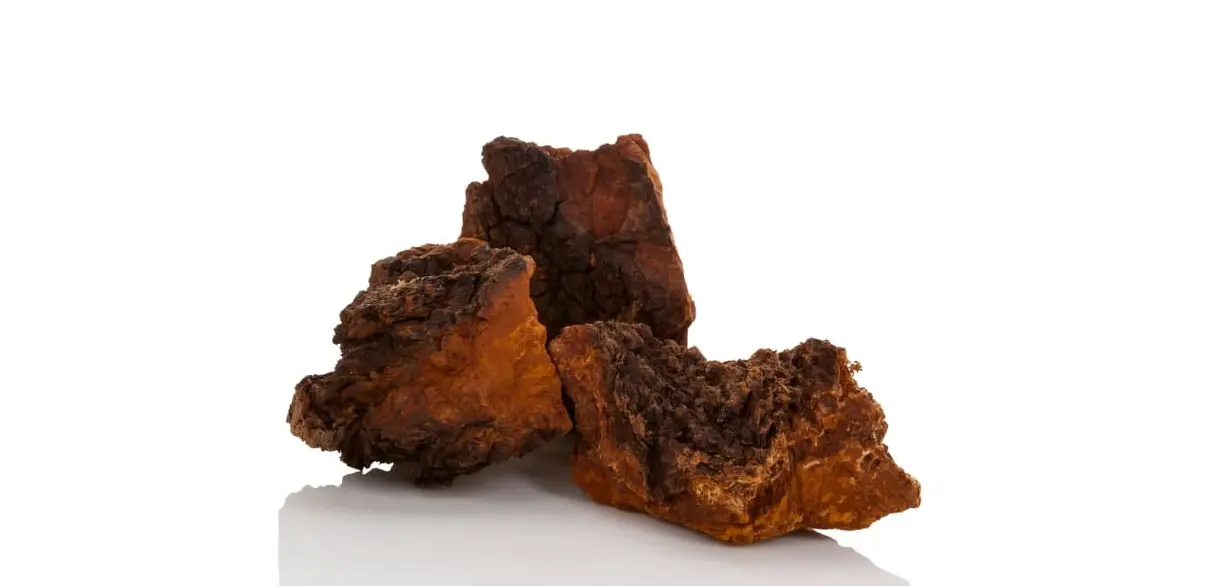
Chaga (Inonotus obliquus, rezavec šikmý) is a parasitic mushroom that can be found on deciduous trees, mainly birch. We recognise it by its fruiting body, which is irregular, cracked, brown to black. It is also very hard and the surface looks like burnt coal. Under the top layer is a light centre.
The mushroom infects the tree with spores that attach to a wound on the tree. The spore germinates and its mycelium grows for many years, damaging and killing the tree. Chaga has two stages of development: the sexual stage, where the fruiting body is formed between the bark and the sapwood (part of the wood), so it is not visible. The fruiting body is beige and gradually turns brown. It is formed only after the death of the tree, when the tree dries out and the bark separates from the wood, revealing the formed fruiting bodies, which can be along the entire length of the tree trunk. It contains basidiospores, which ensure the spread of the mushroom into the surroundings. The asexual form is the one described above. That is, black, cracked on the surface of the tree bark.
Chaga is found all over the world and prefers mainly cooler climates, i.e., the northern hemisphere. High-quality Chaga comes mainly from the Chinese province of Hei Longjiang, which is known for the purity and pristine nature of its environment. It is grown on wild-growing birch trees. It is harvested after three years of growth. It is an integral part of traditional Chinese medicine, as it is widely spread in Russia, including Siberia. The inhabitants of Siberia make decoctions from it to treat tumours and call it the "Gift from God." However, the mushroom was known more than 4,000 years ago, when it was used for treatment by the inhabitants of Mesopotamia, Egypt, and China. In addition to healing, Chaga was also used during shamanic rituals. In Russia, Chaga was so popular that it was used by Tsar Vladimir Monomach and Rasputin. Chaga is also mentioned in the books of the famous Russian writer Solzhenitsyn. In Japan, Chaga was used mainly by the indigenous people, i.e., the Ainu, who prepared tea from Chaga, which was served for digestive difficulties. So far, we have only mentioned the region of Asia. However, Chaga also has its history in North America, where it was used by Native Americans, both for healing and for shamanic rituals.
In modern times, the mushroom was described by Persoon in 1801 and was given the name Boletus obliquus. In 1830, it was renamed by Fries to Polyporus obliquus; its final name, after several other changes, was given to Chaga only in 1936, when it was named by the mycologist Pilát.
From what has been written, it is clear that in the following text we will focus on the composition and effects of the mushroom, which are very closely related. We will start with the composition.
In its action, it is similar to Coriolus, which scans the organism, searches for various pathogens, and then eliminates them. Chaga directs this effect towards the digestive tract and the liver.
Nature (Si Qi): warm
Taste (Wu Wei): sweet, bland
Tropism (Gui Jing): liver, spleen, heart (kidneys, stomach)
1, Support of the immune system
2, Aphthae, cold sores
3, Digestive support
4, Anti-inflammatory effects
5, Oncological problems
6, Psoriasis
7, Hepatoprotective effects
8, Gallbladder
9, Cardiovascular problems
10, Metabolic problems
11, Breaks up blood stasis
a, Mushrooms in the form of extracts (recommended form of use)
If you are using mushrooms in the form of 30% extracts, I recommend:
Preventive use
For milder health problems
For more serious health problems
b, Mushrooms in tincture
c, Mushrooms in the form of powder (powder, biomass)
d, Dried mushrooms
Chaga is rich in compounds that are biologically active. They have the potential to interfere with the functioning of the organism, mainly positively.
Terpenes
Terpenes ensure many of the effects that the mushroom possesses. They have anti-tumour, antioxidant, and anti-infective effects. Many of the terpene compounds named below can be found in other mushrooms, but for Chaga, there are substances that are unique to it. These are betulin and betulinic acid. The mushroom obtains these from its host, i.e., from the birch.
Polyphenols
Chaga contains a large amount of phenolic compounds. These mainly have antioxidant effects, but also anti-tumour and anti-infective. Among the best-known polyphenols in Chaga are:
Polysaccharides
Just like with other mushrooms, polysaccharides make up a significant part of the dry matter. These sugar compounds have immunomodulatory, antioxidant, and anti-tumour effects. The most important are beta-glucans; in Chaga, there are both β (1→3)-glucans and (1→6)-glucans. Another important polysaccharide is IP3, which consists of rhamnose, arabinose, glucose, and galactose. This polysaccharide has significant immunostimulatory effects.
Sterols
Sterols are typical in that they have a so-called steroid core, just like cholesterol. Often they have the function of phytohormones, they influence the functions of the plant and can also protect it, e.g., from attack by viruses and bacteria. In Chaga, there are mainly:
Melanins
Melanins are pigments that guarantee that black colour of Chaga. They are created from tyrosine, which is an amino acid. We also create melanin, and it gives colour to hair, eyes, and skin. Melanin possesses anti-tumour effects. It protects against UV radiation.
Chaga also does not lack amino acids, which are the building blocks of proteins. In a mature mushroom, there are 14 types of amino acids, and in the mycelium, there are 16. The highest concentration is in glycine, cysteine, and tryptophan.
Proteins are represented mainly by enzymes that can break down wood, from which the mushroom obtains nutrients, e.g., chitinases.
Chaga is also a source of fats/fatty acids. These are mainly the health-beneficial ones, i.e., unsaturated, e.g.
The list of Chaga components would be far from complete if we did not mention minerals and trace elements. Here, the dominant ones are
The vitamins that can be obtained from Chaga are mainly those from the B vitamin group, then vitamin D and beta-carotene.
You have already been introduced to some of the components that are in Chaga. They are by no means all of them, but even those mentioned give a hint that Chaga hides a lot of strength and the ability to influence health status.
The proper functioning of the immune system is important for our life. It protects us from negative influences from the external environment, but also from within the organism, but it can also harm us. And that is in the case that it reacts excessively to harmless stimuli, allergens, or to its own proteins, autoimmunity. The immune system is most strongly influenced by polysaccharides, but other components of Chaga can do it too.
Many studies have taken place that verified the direct influence of Chaga on immune cells, i.e., a component or extract from Chaga was added to a cell culture. In the presence of Chaga, immune cells multiplied better, produced more activating substances, i.e., cytokines, and were able to better engulf foreign material, i.e., phagocytose. Chaga also strengthens the production of antibodies.
A strengthening effect was also observed during vaccination. Besides the active substance, there are also substances in vaccines that are meant to stimulate the immune system to induce the necessary immune response. Scientists vaccinated chickens against the Newcastle virus. If Chaga was also in the vaccine, the vaccine induced a better response and the chickens were thus better protected against infection.
Many studies were also performed on animals to confirm the results found on cell cultures. Administering Chaga can even reverse the effects of immunosuppressants! Rats received cyclophosphamide, which led to significant suppression of the immune system, but after 8 days of administering Chaga, there was an increase in immune system activity.
Besides those strengthening immunity, Chaga also has suppressive effects, i.e., anti-inflammatory. These were verified on mice with allergic and autoimmune diseases. It was possible to suppress inflammation, e.g., in Crohn's disease; in mice, there was a mitigation of symptoms, weight gain, the intestinal lining was restored, etc.
In allergic mice, administering Chaga led to a reduction in reactivity and IgE antibodies, which are typical for allergies. In one study, mice with food allergies were administered inotodiols or Chaga extract; both reduced inflammation in the intestine and allergy symptoms.
An anti-inflammatory influence was even confirmed in chronic pancreatitis. If sick animals were fed Chaga, there was a reduction in pancreatic damage and an improvement in condition.
Yoon TJ, Lee SJ, Kim EY, Cho EH, Kang TB, Yu KW, Suh HJ. Inhibitory effect of chaga mushroom extract on compound 48/80-induced anaphylactic shock and IgE production in mice. Int Immunopharmacol. 2013 Apr;15(4):666-70.
Ko SK, Jin M, Pyo MY.Inonotus obliquus extracts suppress antigen-specific IgE production through the modulation of Th1/Th2 cytokines in ovalbumin-sensitized mice. J Ethnopharmacol. 2011 Oct 11;137(3):1077-82.
Hu Y, Sheng Y, Yu M, Li K, Ren G, Xu X, Qu J. Antioxidant activity of Inonotus obliquus polysaccharide and its amelioration for chronic pancreatitis in mice. Int J Biol Macromol. 2016 Mar 5. pii: S0141-8130(16)30229-X.
Xu X, Li J, Hu Y. Polysaccharides from Inonotus obliquus sclerotia and cultured mycelia stimulate cytokine production of human peripheral blood mononuclear cells in vitro and their chemical characterization. Int Immunopharmacol. 2014 Aug;21(2):269-78. doi: 10.1016/j.intimp.2014.05.015.
Kim YR. Immunomodulatory Activity of the Water Extract from Medicinal Mushroom Inonotus obliquus. Mycobiology. 2005;33(3):158-62.
Kim YO, Han SB, Lee HW, Ahn HJ, Yoon YD, Jung JK, Kim HM, Shin CS. Immuno-stimulating effect of the endo-polysaccharide produced by submerged culture of Inonotus obliquus. Life Sci. 2005;77(19):2438-56.
Harikrishnan R, Balasundaram C, Heo MS. Inonotus obliquus containing diet enhances the innate immune mechanism and disease resistance in olive flounder Paralichythys olivaceus against Uronema marinum. Fish Shellfish Immunol. 2012;32(6):1148-54.
Nguyen TMN, Le HS, Le BV, Kim YH, Hwang I. Anti-allergic effect of inotodiol, a lanostane triterpenoid from Chaga mushroom, via selective inhibition of mast cell function. Int Immunopharmacol. 2020 Apr;81:106244. doi: 10.1016/j.intimp.2020.106244.
Zhang L, Lin D, Li H, Yu S, Bai J, Ding Z, Wu J. Immunopotentiating effect of Inonotus obliquus fermentation products administered at vaccination in chickens. Mol Cell Probes. 2018 Oct;41:43-51. doi: 10.1016/j.mcp.2018.09.002.
Tumour diseases are still a cause of death, although a large part of cancers is now treatable and curable. However, treatment is very demanding and weakening. Scientists are therefore looking for ways to treat the patient effectively but safely.
First, we will mention the indirect effect of Chaga on cancer. This is given by the strengthening of the immune system, which subsequently stands up to cancer cells and kills them.
However, Chaga also acts on cancer directly, e.g., many terpenes, phenols. The influence of Chaga is most often tested on cell cultures of various types of tumour cells. Chaga is then added to them and how the cells behave is monitored. Chaga was able to limit the division, i.e., the multiplication of tumour cells; moreover, it was able to kill them, to trigger apoptosis in them. Chaga acted in this way on cells of breast, ovarian, melanoma, lung, brain, colon, bone, liver cancer, and on leukaemia.
Besides killing tumour cells, Chaga can also reduce their ability to travel and establish metastases. Tumour cells create enzymes that break down the intercellular matrix, which is relatively stiff and makes the movement of cells difficult, keeping them in place. However, if the matrix is broken down, the tumour cell can travel. Chaga limits the production of metalloproteinases by tumour cells.
There are also experiments performed on animals. Mice with lung cancer that metastasised received either saline or Chaga. Mice with Chaga had 25% fewer metastases and there was also a reduction in the tumour by up to 60%.
Lee KR, Lee JS, Lee S, Son YK, Kim GR, Sim YC, Song JE, Ha SJ, Hong EK. Polysaccharide isolated from the liquid culture broth of Inonotus obliquus suppresses invasion of B16-F10 melanoma cells via AKT/NF-κB signaling pathway. Mol Med Rep. 2016 Sep 23.
Lee KR, Lee JS, Song JE, Ha SJ, Hong EK. Inonotus obliquus-derived polysaccharide inhibits the migration and invasion of human non-small cell lung carcinoma cells via suppression of MMP-2 and MMP-9. Int J Oncol. 2014 Dec;45(6):2533-40.
Kang JH, Jang JE, Kumar Mishra S, Lee HJ, Ergosterol peroxide from Chaga mushroom (Inonotus obliquus) exhibits anti-Cancer activity by down-regulation of the β-catenin pathway in colorectal Cancer. J Ethnopharmacol. 2015 Jul 22. pii: S0378-8741(15)30047-7.
Wang Q, Mu H, Zhang L, Dong D, Zhang W, Duan J. Characterization of two water-soluble lignin metabolites with antiproliferative activities from Inonotus obliquus. Int J Biol Macromol. 2015 Mar;74:507-14. doi: 10.1016/j.ijbiomac.2014.12.044.
Betulinic acid, a natural compound with potent anticancer effects. Mullauer F.B, Kessler J.H, Medema J.P. Anticancer Drugs. 2010;21(3):215-27. 2010;24(1):90-114.
Schmidt M.L, Kuzmanoff K.L, Ling-Indeck L, Pezzuto J.Betulinic acid induces apoptosis in human neuroblastoma cell lines. M. European Journal of Cancer. 1997;33(12):2007–10.
Su B, Yan X, Li Y, Zhang J, Xia X. Effects of Inonotus obliquus Polysaccharides on Proliferation, Invasion, Migration, and Apoptosis of Osteosarcoma Cells. Anal Cell Pathol (Amst). 2020 Nov 17;2020:4282036. doi: 10.1155/2020/4282036.
Oxidative stress is very harmful to the body. Free radicals, if they are formed in excess, i.e., so that the neutralising capacity of the organism is exceeded, react with many molecules and damage them. They react, e.g., with fats in cell membranes or with DNA. Accelerated ageing occurs, the risk of developing various diseases, including cancer, increases. Reducing oxidative stress therefore also functions as prevention.
The strongest antioxidant effects are had by phenols and terpenoids. Their effects are tested in solutions that contain free radicals, to which substances from Chaga are added. "Removal" of radicals from the solution occurs.
Further tests are also performed on cell cultures. For example, hydrogen peroxide (an oxidant) is added to cells, which kills them; however, if Chaga is also added, the cells are able to survive and are not as damaged.
Antioxidant effects are also very well tested on animals. If an increase in oxidative stress is induced in them, changes occur in the body and malondialdehyde is produced in increased amounts. If Chaga is administered to the animals, they have a much smaller concentration of malondialdehyde than animals exposed to the same stimuli but without Chaga.
Du X, Mu H, Zhou S, Zhang Y, Zhu X. Chemical analysis and antioxidant activity of polysaccharides extracted from Inonotus obliquus sclerotia. Int J Biol Macromol. 2013;62:691-6.
Zheng W, Zhang M, Zhao Y, Miao K, Pan S, Cao F, Dai Y. Analysis of antioxidant metabolites by solvent extraction from sclerotia of Inonotus obliquus (Chaga). Phytochem Anal. 2011 Mar-;22(2):95-102.
Liang L, Zhang Z, Wang H. Antioxidant activities of extracts and subfractions from Inonotus Obliquus. Int J Food Sci Nutr. 2009;60 Suppl 2:175-84.
Xu HY, Sun JE, Lu ZM, Zhang XM, Dou WF, Xu ZH. Beneficial effects of the ethanol extract from the dry matter of a culture broth of Inonotus obliquus in submerged culture on the antioxidant defence system and regeneration of pancreatic beta-cells in experimental diabetes in mice. Nat Prod Res. 2010;24(6):542-53.
Infectious pathogens are everywhere around us. Whether we get sick plays an important role in the immune system. We are most attacked by viruses and bacteria, then by pathogenic fungi and parasites. The problem with infections is that there is a cure for very few viral infections, bacteria and other pathogens are becoming resistant to currently effective treatments, i.e., antibiotics, antifungals, and antiparasitics do not destroy them. Therefore, substances in nature are being sought that are safe for the body but deadly for pathogens.
We will start with viruses. In experiments, Chaga was able to deal with herpes viruses (most often they cause cold sores), with which 98% of people are infected. Chaga prevents the virus from entering the cell and destroys it. In experiments on mice infected with genital herpes HSV2, which is deadly for them, administering Chaga led to an increase in survival by 90% compared to similarly infected mice that did not receive Chaga. The same effect was also seen with viral hepatitis types B and C. It reduces the multiplication of the virus and thus can increase the effectiveness of the established therapy. Chaga can even deal with HIV, it prevents the outbreak of infection because it does not allow the virus to enter the cell.
The mushroom is not only effective on human viruses, but it also lowers animal viruses, e.g., feline calicivirus and feline flu virus.
If we look at bacteria, Chaga limits the division and kills many even very dangerous and resistant bacteria, among which are also mycobacteria, among which is also the causative agent of tuberculosis. Furthermore, it liquidates the causative agent of intestinal infections, campylobacter.
Chaga can also deal with its relatives, i.e., moulds, e.g., with Aspergillus fumigatus.
We cannot fail to mention the anti-plasmodial effect of Chaga. Plasmodia are parasites that cause malaria. Another parasite that does not resist the action of Chaga is trypanosoma. It is the causative agent of sleeping sickness.
Polkovnikova MV, Nosik NN, Garaev TM, Kondrashina NG, Finogenova MP, Shibnev VA. A study of the antiherpetic activity of the chaga mushroom (Inonotus obliquus) extracts in the Vero cells infected with the herpes simplex virus. Vopr Virusol. 2014 Mar-Apr;59(2):45-8.
Razumov IA, Kazachinskaia EI, Puchkova LI, Kosogorova TA, Gorbunova IA, Loktev VB, Tepliakova TV. Protective activity of aqueous extracts from higher mushrooms against Herpes simplex virus type-2 on albino mice model. Antibiot Khimioter. 2013;58(9-10):8-12.
Shibnev VA, Mishin DV, Garaev TM, Finogenova NP, Botikov AG, Deryabin PG. Antiviral activity of Inonotus obliquus fungus extract towards infection caused by hepatitis C virus in cell cultures. Bull Exp Biol Med. 2011;151(5):612-4.
Cichewicz RH, Kouzi SA. Chemistry, biological activity, and chemotherapeutic potential of betulinic acid for the prevention and treatment of cancer and HIV infection. Med Res Rev. 2004;24(1):90-114.
S Panthong, S Chuchawankul. Antioxidation and antiproliferation of ethanol extracts from edible mushrooms against U937 human monocytic leukemia cells. Planta Med 2016; 82(S 01): S1-S381
Eid, Jehane Ibrahim, et al. "CHAGA MUSHROOM (INONOTUS OBLIQUUS) INHIBITS GROWTH OF BOTH LUNG ADENOCARCINOMA (A549) CELLS AND ASPERGILLUS FUMIGATUS." Current Topics in Nutraceutical Research, vol. 16, no. 4, 2018, p. 289+. Gale Academic OneFile, . Accessed 4 Feb. 2021.
In this section, we will look at how Chaga can help mitigate the course of lifestyle diseases or prevent their occurrence.
Diabetes (diabetes mellitus), especially type II, is currently a big problem. Younger and younger people suffer from it, yet type II is associated with being overweight, lack of exercise, etc. Unlike type I, which occurs in children or young adults who are rather thin. This form is autoimmune, while type II is caused by impaired glucose tolerance, unresponsiveness of cells to insulin (insulin resistance), and inflammation. Higher blood sugar values damage the lining of blood vessels, destroy the retina, kidneys, immune system, etc. Experiments on animals with diabetes proved that Chaga can lower blood sugar levels, restore the sensitivity of cells to insulin, reduces oxidative stress and inflammation. Thereby, it also improves the state of the pancreas, which can then produce the necessary amount of insulin.
High values of fats in the blood are caused mainly by increased intake of fats; we therefore encounter them in persons who are overweight and obese. Excess fat is stored in blood vessels, the liver, around organs, etc., the risk of developing cardiovascular diseases, liver damage, etc., increases. To verify the hypolipidaemic effects of Chaga, experiments with animals were used. Experiments take place such that animals are fed a high-fat diet and then Chaga is added to the food of part of them and the differences between both groups are monitored. In animals using Chaga, there was a reduction in total cholesterol, triglycerides, and conversely, the level of good cholesterol HDL increased.
Melanin and substances associated with it also increase the production of the hormone of adipose tissue, adiponectin. It has proven anti-inflammatory effects and is involved in fat metabolism and also has the ability to lower glycaemia. The gene that encodes adiponectin is more active in people who are thin, while in people who are overweight, the activity of the gene decreases, i.e., also the production of adiponectin. Thanks to the action of the melanin complex, the overall volume of adipose tissue in the organism decreases.
The melanin complex in Chaga also increases the production of adiponectin in fat cells. It acts anti-inflammatorily and influences fat metabolism and lowers glycaemia. The gene for adiponectin is more active in thin people; its activity decreases with weight gain. Administering the melanin complex to overweight mice led to a reduction in the volume of adipose tissue.
Xu HY, Sun JE, Lu ZM, Zhang XM, Dou WF, Xu ZH. Beneficial effects of the ethanol extract from the dry matter of a culture broth of Inonotus obliquus in submerged culture on the antioxidant defence system and regeneration of pancreatic beta-cells in experimental diabetes in mice. Nat Prod Res. 2010;24(6):542-53.
Diao BZ, Jin WR, Yu XJ. Protective Effect of Polysaccharides from Inonotus obliquus on Streptozotocin-Induced Diabetic Symptoms and Their Potential Mechanisms in Rats. Evid Based Complement Alternat Med. 2014;2014:841496.
Lu X, Chen H, Dong P, Fu L, Zhang X. Phytochemical characteristics and hypoglycaemic activity of fraction from mushroom Inonotus obliquus. J Sci Food Agric. 2010;90(2):276-80.
Lee JH, Hyun CK. Insulin-sensitizing and beneficial lipid-metabolic effects of the water-soluble melanin complex extracted from Inonotus obliquus. Phytother Res. 2014 Sep;28(9):1320-8.
Bao-zhong Diao, Wei-rong Jin, Xue-jing Yu. Protective Effect of Polysaccharides from Inonotus obliquus on Streptozotocin-Induced Diabetic Symptoms and Their Potential Mechanisms in Rats. Evid Based Complement Alternat Med. 2014; 2014: 841496.
Chaga can also be a protector and healer of organs.
Chaga acts very positively on the stomach, which is often irritated, e.g., by poor composition of the diet or the presence of the bacterium Helicobacter pylori. Inflammation, gastritis, develops. Chaga can suppress this inflammation, as well as the bacterium. Thereby, it prevents the formation of stomach ulcers and cancer.
We can mention a study with mice that were given alcohol and damage to the stomach lining occurred, on which ulcers even formed. 200 mg/kg of Chaga extract was able to calm the inflammation on the lining, even heal the ulcers.
Chaga does not only protect the stomach, but also the liver. This is also given by the fact that it reduces levels of fats, which are then not stored in the liver. The liver can be damaged by various toxins, drugs, drugs, poisons; damage is associated with inflammation and oxidative stress. As you already know, Chaga reduces oxidative stress and inflammation and the extent of damage is thus significantly smaller and Chaga also supports healing. Here we will mention an interesting study in which mice had livers damaged by the parasite Toxoplasma gondii. There was an increase in the levels of liver enzymes in the blood (they are released during damage to a liver cell) AST, ALT, the concentration of malondialdehyde and pro-inflammatory cytokines increased. However, Chaga had a positive influence on the liver, it prevented damage.
We cannot omit the influence of Chaga on the kidneys. They are also often damaged. Impairment of their function is manifested by higher permeability for proteins into urine, not removing nitrogen metabolites from the blood, i.e., urea and creatinine. In one study with diabetic rats, whose disease damaged their kidneys, it was proven that Chaga was able to reduce the release of proteins into urine, and conversely, it increased the removal of harmful substances from the body, i.e., liver functions improved.
Well-known is the positive influence of betulin and betulinic acid on the urinary system. Birch, leaves, extracts, are commonly used as a supportive agent for solving problems of the urinary system.
Xin X, Qu J, Veeraraghavan VP, Mohan SK, Gu K. Assessment of the Gastroprotective Effect of the Chaga Medicinal Mushroom, Inonotus obliquus (Agaricomycetes), Against the Gastric Mucosal Ulceration Induced by Ethanol in Experimental Rats. Int J Med Mushrooms. 2019;21(8):805-816. doi: 10.1615/IntJMedMushrooms.2019031154.
Xu L, Sang R, Yu Y, Li J, Ge B, Zhang X. The polysaccharide from Inonotus obliquus protects mice from Toxoplasma gondii-induced liver injury. Int J Biol Macromol. 2019 Mar 15;125:1-8. doi: 10.1016/j.ijbiomac.2018.11.114.
Chou YJ, Kan WC, Chang CM, Peng YJ, Wang HY, Yu WC, Cheng YH, Jhang YR, Liu HW, Chuu JJ.Renal Protective Effects of Low Molecular Weight of Inonotus obliquus Polysaccharide (LIOP) on HFD/STZ-Induced Nephropathy in Mice. Int J Mol Sci 2016; 17(9).
Hong KB, Noh DO, Park Y, Suh HJ. Hepatoprotective Activity of Water Extracts from Chaga Medicinal Mushroom, Inonotus obliquus (Higher Basidiomycetes) Against Tert-Butyl Hydroperoxide-Induced Oxidative Liver Injury in Primary Cultured Rat Hepatocytes. Int J Med Mushrooms. 2015;17(11):1069-76
Sharma A, Thakur R, Lingaraju MC, Kumar D, Mathesh K, Telang AG, Singh TU, Kumar D. Betulinic acid attenuates renal fibrosis in rat chronic kidney disease model. Biomed Pharmacother. 2017 Mar 5;89:796-804.
Huang, N.L. Inonotus obliquus. Edible Fungi of China 2002, 21, 7–8.
Saar M. Fungi in Khanty folk medicine. J Ethnopharmacol. 1991;31(2):175-9.
Blood clotting is extremely important for our life. It closes wounds and limits bleeding and supports healing. On the other hand, if it is increased, thrombi are formed, which limit the flow of blood through vessels and can also break off and be thrown, e.g., into the lungs, brain, etc.
The risk of increased blood clotting is, e.g., in immobilisation, in some diseases, e.g., cancer, genetic disorders associated with blood clotting, etc. People then have to use drugs for "thinning" the blood.
Chaga interferes with the clumping of blood platelets; it can reduce it by up to 71%. It could therefore be a helper for people with a higher risk of developing thrombosis. But it is necessary to consult with doctors.
Hyun KW, Jeong SC, Lee DH, Park JS, Lee JS. Isolation and characterization of a novel platelet aggregation inhibitory peptide from the medicinal mushroom, Inonotus obliquus. Peptides. 2006 Jun;27(6):1173-8.
Strengthening physical fitness is often associated with Cordyceps, but Chaga can do it too. Unfortunately, studies with volunteers are missing. However, we have studies on mice. 64 mice received polysaccharides from Chaga for 14 days. Physical fitness was evaluated before and after the experiment. In mice, endurance increased, the onset of fatigue was delayed, and moreover, regeneration after demanding physical activity was also accelerated. This was tested by determining the concentration of lactate, which is formed during intense exertion. Lactate values were lower when using Chaga. This was also confirmed in another study with mice.
Yue Z, Xiuhong Z, Shuyan Y, Zhonghua Z. Effect of Inonotus Obliquus Polysaccharides on physical fatigue in mice. J Tradit Chin Med. 2015 Aug;35(4):468-72.
Zhang CJ, Guo JY, Cheng H, Li L, Liu Y, Shi Y, Xu J, Yu HT. Spatial structure and anti-fatigue of polysaccharide from Inonotus obliquus. Int J Biol Macromol. 2020 May 15;151:855-860. doi: 10.1016/j.ijbiomac.2020.02.147. Epub 2020 Feb 15. PMID: 32068062.
For us humans, the brain and thinking are extremely important. There are many diseases that damage the nervous system, but of course, it is also damaged by increasing age. In mushrooms, there are substances that can slow down, stop, or even improve the deterioration of brain functions. Polysaccharides from Chaga can fight Alzheimer's disease. And that is also thanks to the fact that it reduces oxidative stress and prevents the death of nerve cells. In mice, there was also a reduction in the accumulation of beta-amyloid in the brain. It is precisely this substance, or rather its production, that is typical for Alzheimer's disease and damages nerve cells.
Han Y, Nan S, Fan J, Chen Q, Zhang Y. Inonotus obliquus polysaccharides protect against Alzheimer's disease by regulating Nrf2 signaling and exerting antioxidative and antiapoptotic effects. Int J Biol Macromol. 2019 Jun 15;131:769-778. doi: 10.1016/j.ijbiomac.2019.03.033. Epub 2019 Mar 13. PMID: 30878614.

Characteristics and effects of mushrooms according to traditional Chinese medicine

Description of herbal blends, effects according to Chinese medicine and main usage

Dietary recommendations including individual foods for specific patterns

Characteristics and effects of herbs according to traditional Chinese medicine

Characteristics of food and its influence on individual organs

Classification of herbs and mushrooms by individual diseases


Subscribe to our newsletter and you won't miss any promotions or important information