

Please note that the information provided below is the personal opinion of Mr Milan Schirlo, who is a therapist and an advocate of traditional Chinese medicine and a healthy lifestyle. Mr Schirlo does not promote any specific products or manufacturers of food supplements. Furthermore, this article is not connected to the sale of any products. The information is provided for the purpose of disseminating publicly available knowledge, conclusions of professional studies, education, and personal findings regarding medicinal mushrooms and a healthy lifestyle.
For legislative reasons, I cannot provide some information. Therefore, the text for some points is missing. I am working on republishing it. Thank you for your understanding.
Latin: Coriolus versicolor or Trametes versicolor
Czech: Outkovka pestrá
Chinese: Yun Zhi
Japanese: Kawaratake (mushroom growing by the river)
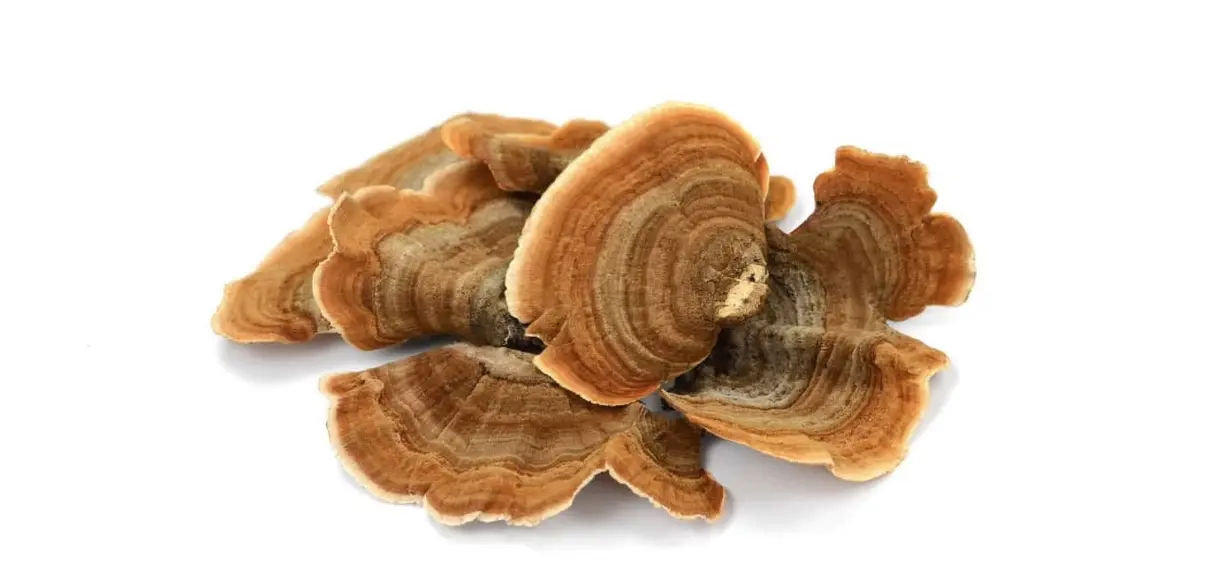
Coriolus (Coriolus versicolor, Trametes versicolor, Turkey Tail Mushroom, Chinese Yun Zhi, Japanese Kawaratake) belongs to wood-decaying fungi, i.e., mushrooms that use the wood they attach to as a source of nutrients. We most often find it on damaged deciduous trees, their stumps, or fallen branches. Coriolus occurs mainly in the temperate climate zone, but it is found all over the globe. It creates small fruiting bodies, which, however, occur in larger clusters. Individual caps are approximately semicircular and are brightly coloured, i.e., there are bands of various colours on the cap, from grey and beige to various dark browns. As the mushroom ages, it darkens.
Just like other vital mushrooms, Coriolus has been known for thousands of years, thanks to the fact that it was used as a medicinal plant.
Coriolus is mentioned in the fundamental work of Chinese herbalism in the so-called Shen Nong's Herbal. The legendary Emperor Shen Nong was the founder of Chinese agriculture and herbalism. He describes Coriolus as a mushroom that strengthens male power, calms the nerves, prolongs life, and strengthens hearing.
However, according to traditional medicine, the most fundamental effect of Coriolus is in helping to treat tumour diseases. Chinese doctors have known about its anti-cancer effects since at least the Han dynasty.
It is widely mentioned in Chinese writings from 1386, which describe the tradition of using Coriolus in traditional Chinese medicine, where it was used, for example, for overall strengthening of health, physical and mental condition, and strengthening Qi (chi energy). While various types of traditional medical systems have known Coriolus since time immemorial, the scientific world only began to register Coriolus in the 1960s and 1970s. At that time, a Japanese scientist succeeded in obtaining PKS from Coriolus, which is a polysaccharide with many biological effects, among which the anti-tumour ones dominate. The results of the studies were so convincing that Coriolus even entered clinical medicine in Japan and Korea, where it is administered to up to 70% of patients with tumour diseases. Since then, Coriolus has been widely researched and continues to surprise.
In the European Union, Coriolus is on the list of Novel Foods, meaning it must not be used as a food supplement. This is one of the other absurdities that EU officials supply us with. Coriolus is, in fact, one of the most researched mushrooms, and it is known that it does not harm the organism but helps it. More, for example, on the website www.nedejmesicoriolus.cz.
1, Support of Wei Qi
2,
3,
4, Support during vaccination
5, Detoxification
6, Chronic bladder inflammation
7, Cold sores and warts
8, Autoimmune problems
9, Tumour diseases
10, Regeneration of mucous membranes
11, Sinusitis
12, Anti-inflammatory effects
13, Anti-fatigue action
a, Mushrooms in the form of extracts (recommended form of use)
If you are taking mushrooms in the form of 30% extracts, I recommend:
Preventive use
For milder health problems
For more serious health problems
b, Mushrooms in tincture
c, Mushrooms in the form of powder (biomass)
d, Dried mushrooms
Finding out what composition a mushroom has is extremely important; it is precisely the individual components, separately and in synergy, that create the effects of the mushroom.
Sugar compounds
A large part of all mushrooms consists of sugar compounds, carbohydrates. The most important are polysaccharides, which have both antioxidant and anti-tumour effects. This group includes beta-glucans and also the polysaccharide Krestin (PSK) and the polysaccharide-peptide PSP, which are typical for Coriolus.
Since Krestin is so important, we will look at it a little closer (https://www.ncbi.nlm.nih.gov/books/NBK401261/#).
We will start with the fact that since the mid-1970s, it has been approved in Japan as part of anti-tumour therapy. It is therefore clear that there are also clinical studies that confirm the effects of Krestin.
Stomach cancer
In one study with stomach cancer patients, the addition of Krestin to chemotherapy led to an improvement in survival compared to patients who were treated only with chemotherapy. Another study with stomach cancer patients included 254 patients after surgical operation and subsequent chemotherapy, where 115 also received PSK. In patients who also had affected lymph nodes, there was an improvement in 5-year survival (47.8% vs. 22.8%). This study does not end there, again stomach cancer, 262 patients after stomach surgery + chemotherapy. The addition of PSK increased survival 73% vs. 60%
In 2007, a meta-analysis was published, i.e., a study summarising the results of available quality studies. In total, data from 8,009 patients after stomach resection who received chemotherapy or chemotherapy and PSK were worked with. Even in this case, it was proven that PSK increased survival by approx. 12%. It may seem like a little, but in real life, it is a lot. A very interesting study is one in which the patient took chemotherapy or PSK for 1 year, then underwent stomach surgery. 3 years after the surgery, 62.2% of patients with PSK survived, and only 12.5% of patients with chemotherapy.
Colon and rectal cancer
Just like with stomach cancer, the results with PSK are very promising.
In one study, there were 63 patients older than 70 years. They were treated with chemotherapy with or without PSK – 3-year survival without relapse was 76.2% with PSK and 47.8% only with chemotherapy, i.e., the disease returned more often.
A study analysing 101 patients was treated with chemotherapy alone or chemotherapy + PSK for 24 months after the operation was performed. Patients were monitored for 10 years. In patients with PSK, 10-year survival was significantly higher!
Even in the case of colorectal carcinoma, there is a meta-analysis that included 1,094 patients. You probably know the results, patients with PSK had a much higher chance of surviving.
Lung cancer
In one meta-analysis, the results of 28 studies were summarised. Administering PSK for treatment improved the 1, 2, and 5-year survival of patients. It reduced the size of the tumour.
The aforementioned polysaccharides are truly the pride of Coriolus, but it is not possible to omit amino acids and proteins either. 18 amino acids were revealed in Coriolus, among them are the most abundantly represented, according to concentration in the mushroom
From amino acids, of course, proteins are also synthesised. Here are interesting enzymes breaking down wood mass so that the mushroom can obtain energy from it, i.e., laccases, chitinases, etc. Coriolus also contains an enzyme breaking down RNA, i.e., RNase.
Coriolus is not just polysaccharides and proteins. It contains other very important components.
Phenolic compounds are an important component of Coriolus. They have antioxidant, anti-tumour, and antimicrobial effects. In the table below is their overview in individual extracts.
Table reworked from
Janjušević L, Karaman M, Šibul F, Tommonaro G, Iodice C, Jakovljević D, Pejin B. The lignicolous fungus Trametes versicolor (L.) Lloyd (1920): a promising natural source of antiradical and AChE inhibitory agents. J Enzyme Inhib Med Chem. 2017 Dec;32(1):355-362. doi: 10.1080/14756366.2016.
The abbreviation nd means that the substance was not detected.
|
| Types of extract, polysaccharide, aqueous, ethanolic and methanolic | |||
class | component | PSH | H2O | EtOH | MeOH |
Flavones | Apigenin | 1.57 | 1.71 | 0.93 | 0.23 |
| Baicalein | 43.00 | 21.60 | 8.04 | 3.63 |
| Luteolin | 2.01 | 1.47 | 1.05 | 1.19 |
| Chrysoeriol | 1.68 | 1.79 | 1.21 | 0.74 |
| Vitexin | 2.06 | 1.56 | 1.98 | 1.19 |
| Apigenin-7-O-Glucoside | 2.37 | 1.41 | 1.34 | 0.54 |
| Luteolin-7-O-glucoside | 0.78 | 0.91 | 0.78 | 0.26 |
| Apiin | 2.86 | 1.82 | 2.07 | 0.86 |
| Baicalin | 9.95 | 10.7 | 8.88 | 6.27 |
Flavonols | Kaempferol | 1.69 | 2.15 | 1.96 | 1.58 |
| Quercetin | 33.70 | 31.20 | 29.90 | 29.30 |
| Isorhamnetin | 21.40 | 14.60 | 9.36 | 8.97 |
| Quercitrin | 0.89 | 1.62 | 1.81 | 1.93 |
| Kaempferol-3-O-Glucoside | 1.68 | 1.71 | 1.86 | 0.80 |
| Hyperoside | 0.85 | 0.68 | 0.11 | 0.43 |
| Quercetin-3-O-Glucoside | 0.96 | 0.31 | 1.72 | 0.59 |
| Rutin | 1.01 | 1.11 | 1.34 | 0.53 |
Flavanones | Naringenin | 1.82 | 1.70 | 1.82 | 1.06 |
Flavanols | Catechin | nd | 17.20 | 5.91 | 21.90 |
Epicatechin | 3.92 | nd | nd | nd | |
Biflavonoid | Amentoflavone | 32.40 | 17.20 | 7.79 | 6.60 |
Isoflavonoids | Daidzein | 0.86 | 0.53 | nd | nd |
Genistein | 0.51 | 0.37 | 0.30 | 0.21 | |
Hydroxybenzoic acids | p-Hydroxybenzoic acid | 10.10 | 141.00 | 465.00 | 184.00 |
| Protocatechuic acid | 2.06 | 1.82 | 18.20 | 8.57 |
| Gentisic acid | nd | nd | 32.10 | 24.90 |
| Vanillic acid | nd | nd | 45.60 | 44.70 |
| Gallic acid | 9.30 | 11.40 | 16.80 | 22.00 |
| Syringic acid | nd | 6.02 | 59.10 | 30.10 |
Hydroxycinnamic acids | p-coumaric acid | 1.56 | 1.21 | 1.49 | 1.28 |
| o-coumaric acid | 0.81 | 1.16 | 0.79 | 0.74 |
| Ferulic acid | 2.12 | nd | 2.66 | 2.12 |
| Caffeic acid | 1.72 | 1.53 | 3.26 | 2.33 |
Coumarins | Esculetin | nd | 0.78 | 26.20 | 2.87 |
| Scopoletin | 4.22 | 1.66 | 0.59 | nd |
| Umbelliferone | 1.40 | 1.13 | 1.37 | 1.13 |
Cyclohexanecarboxylic acids | Quinic acid | 2.72 | 80.40 | 8.84 | 98.70 |
Chlorogenic acids | 5-O-caffeoylquinic acid | 2.29 | 2.93 | 4.13 | 2.41 |
total | 206.27 | 384.39 | 776.29 | 514.66 | |
Fatty acids/fats
There are also fatty acids in Coriolus, mainly the polyunsaturated ones, which we know by the name omega 3 or 6. Saturated ones are not missing either, but they are in a lower concentration.
Minerals, trace elements and vitamins
In listing the components of Coriolus, it is not possible to omit minerals and trace elements either. These are mainly potassium, magnesium, zinc, copper, iron.
Vitamins are represented by vitamin D2, i.e., ergosterol, and B-group vitamins.
Everyone has experienced pain. It is caused by the irritation of nerve endings that transmit impulses to the brain. A painful stimulus can be heat, pressure, but also inflammation, because immune cells and "irritated" body cells produce substances that also stimulate nerve endings.
Drugs affecting pain are associated with negative effects, especially in the case that we take them long-term and in higher doses. Strong analgesics, of the opioid type, are also highly addictive.
In one study, the authors used PSP on mice to which acetic acid was applied, which triggered a painful reaction. Mice that did not receive PSP perceived pain more strongly (it is possible to conclude from their behaviour). The authors even attempted to determine by what percentage PSP reduced pain and came to the conclusion that it was by more than 90%. Which was also due to the fact that PSP significantly reduced the inflammation that accompanies the application of acetic acid, which has irritating effects.
Experiments were also conducted with acetylsalicylic acid (acylpyrin, aspirin) and Coriolus, where their effectiveness was compared. Acetylsalicylic acid is commonly used to mitigate inflammation and pain. It turned out that Coriolus had a very similar effectiveness and also influenced the same mechanisms as acetylsalicylic acid, i.e., it suppresses the activity of cyclooxygenases and reduced the production of prostaglandin E2.
There is another interesting study in which it was proven that PSP increases the pain threshold. We are able to tolerate higher pain, which is due to the fact that it influences the production of interleukin-2, which subsequently acts on pain centres in the brain, in the hypothalamus. When we talk about the direct influence of pain in brain centres, we must mention one more study in which PSP reduced inflammation and pain, and also tolerance to morphine in osteoarthritis. Osteoarthritis is a chronic joint disease, it is caused by damage and loss of cartilage, this is associated with pain, limitation of movement, etc. Treatment is focused mainly on reducing inflammation and pain. In severe cases, morphine is also used, to which, however, one can develop tolerance and doses must constantly be raised. The authors of the study found that PSP acts through cannabinoid type 2 receptors, which, among other things, also increases the production of beta-endorphin, thus besides reducing inflammation and pain.
Gong S, Zhang HQ, Yin WP, Yin QZ, Zhang Y, Gu ZL, Qian ZM, Tang PL. Involvement of interleukin-2 in analgesia produced by Coriolus versicolor polysaccharide peptides. Zhongguo Yao Li Xue Bao. 1998 Jan;19(1):67-70.
Chan SL, Yeung JH. Polysaccharide peptides from COV-1 strain of Coriolus versicolor induce hyperalgesia via inflammatory mediator release in the mouse. Life Sci. 2006 Apr 18;78(21):2463-70.
Hung PH, Lin CM, Tsai JC, et al. Acetylsalicylic acid-like analgesic effects of Trametes versicolor in Wistar rats. Biomedicine & Pharmacotherapy = Biomedecine & Pharmacotherapie. 2020 Sep;129:110328. DOI: 10.1016/j.biopha.2020.110328.
Wang K, Wang Z, Cui R, Chu H. Polysaccharopeptide from Trametes versicolor blocks inflammatory osteoarthritis pain-morphine tolerance effects via activating cannabinoid type 2 receptor. Int J Biol Macromol. 2019 Apr 1;126:805-810. doi: 10.1016/j.ijbiomac.2018.12.212. Epub 2018 Dec 22. PMID: 30584942.
We have mentioned many clinical studies and their results in the chapter on the composition of the mushroom regarding the polysaccharide Krestin. However, it is not the only component that acts anti-tumourly.
The anti-tumour effects of Coriolus are most often confirmed on cell cultures, where the mechanism by which Coriolus acts is also recognised. Coriolus and its components are added to cells of various types of cancer, which leads to the fact that the cells that were hitherto actively multiplying stop multiplying, and what is more, they begin to die, their ability to move, i.e., to metastasise, is reduced, etc. This was confirmed on cells of lung, colon, stomach, breast, prostate cancer, lymphomas, leukemias, etc.
Experiments are also conducted with animals, where Coriolus is administered to part and not administered to part, and the difference in the health state of the animals, tumour size, and metastasis is monitored. In all studies, there was a prolongation of the survival of animals with Coriolus, reduction of the tumour, and reduction of metastasis (mainly in colon and lung carcinoma).
Coriolus can also help women with cervical and uterine cancer. It was confirmed that it increases survival. Similar results are also from a study with patients with liver cancer in an advanced stage, who were already only being relieved of pain. 15 patients received either Coriolus or an ineffective substance for palliative treatment. Patients with Coriolus achieved a slowing of the progression of the disease. If we look at the total survival time from the start of the study, it was 2.2 months for patients with placebo and 6.5 months for patients with Coriolus. However, Coriolus did not just prolong life at the expense of quality. For patients with Coriolus, even despite the serious condition, appetite improved and pain decreased.
We must also highlight that Coriolus strengthens the effectiveness of other types of therapies, e.g., chemo- and radiotherapy. Some types of tumours are resistant to treatment, it does not work on them, but the addition of Coriolus returns sensitivity to the therapy, which again becomes effective. Furthermore, administering PSP before the start of chemotherapy and during it leads to a slowing of the excretion of the drug cyclophosphamide. The desired concentration of the drug is maintained in the organism for longer, and it is necessary to administer lower doses.
Chay WY, Tham CK, Toh HC, Lim HY, Tan CK, Lim C, Wang WW, Choo SP. Coriolus versicolor (Yunzhi) Use as Therapy in Advanced Hepatocellular Carcinoma Patients with Poor Liver Function or Who Are Unfit for Standard Therapy. J Altern Complement Med. 2017 Apr 4.
Chan SL, Yeung JH. Effects of polysaccharide peptide (PSP) from Coriolus versicolor on the pharmacokinetics of cyclophosphamide in the rat and cytotoxicity in HepG2 cells. Food Chem Toxicol. 2006 May;44(5):689-94.
Kowalczewska M, Piotrowski J, Jędrzejewski T, Kozak W. Polysaccharide peptides from Coriolus versicolor exert differential immunomodulatory effects on blood lymphocytes and breast cancer cell line MCF-7 in vitro. Immunol Lett. 2016 Jun;174:37-44.
Eliza WL, Fai CK, Chung LP. Efficacy of Yun Zhi (Coriolus versicolor) on survival in cancer patients: systematic review and meta-analysis. Recent Pat Inflamm Allergy Drug Discov. 2012 Jan;6(1):78-87.
Luo KW, Yue GG, Ko CH, Lee JK et al. In vivo and in vitro anti-tumor and anti-metastasis effects of Coriolus versicolor aqueous extract on mouse mammary 4T1 carcinoma. Phytomedicine. 2014 Jul-Aug;21(8-9):1078-87.
Bao YX, Wong CK, Leung SF, Chan AT, Li PW, Wong EL, Leung PC, Fung KP, Yin YB, Lam CW. Clinical studies of immunomodulatory activities of Yunzhi-Danshen in patients with nasopharyngeal carcinoma. J Altern Complement Med. 2006;12(8):771-6.
Iguchi C, Nio Y, Takeda H, Yamasawa K, Hirahara N, Toga T, Itakura M, Tamura K. Plant polysaccharide PSK: cytostatic effects on growth and invasion; modulating effect on the expression of HLA and adhesion molecules on human gastric and colonic tumor cell surface. Anticancer Res. 2001;21(2A):1007-13.
Jiménez-Medina E, Berruguilla E, Romero I, Algarra I, Collado A, Garrido F, Garcia-Lora A.
The immunomodulator PSK induces in vitro cytotoxic activity in tumour cell lines via arrest of cell cycle and induction of apoptosis. BMC Cancer. 2008 Mar 24;8:78.
Go P, Chung CH. Adjuvant PSK immunotherapy in patients with carcinoma of the nasopharynx. J Int Med Res. 1989 Mar-Apr;17(2):141-9.
Standish LJ, Wenner CA, Sweet ES, Bridge C, Nelson A, Martzen M, Novack J, Torkelson C. Trametes versicolor mushroom immune therapy in breast cancer. J Soc Integr Oncol. 2008 Summer;6(3):122-8.
Kidd PM. The use of mushroom glucans and proteoglycans in cancer treatment. Altern Med Rev. 2000;5(1):4-27.
Fisher M, Yang L.X. Anticancer effects and mechanisms of polysaccharide-K (PSK): Implications of cancer immunotherapy. Anticancer Res. 2002;22:1737-1754.
Kanazawa M, Yoshihara K, Abe H, Iwadate M, Watanabe K, Suzuki S, Endoh Y, Takita K, Sekikawa K, Takenoshita S, Ogata T, Ohto H. Effects of PSK on T and dendritic cells differentiation in gastric or colorectal cancer patients. Anticancer Res. 2005;25(1B):443-9.
Luo KW, Yue GG, Ko CH, Lee JK, Gao S, Li LF, Li G, Fung KP, Leung PC, Lau CB. In vivo and in vitro anti-tumor and anti-metastasis effects of Coriolus versicolor aqueous extract on mouse mammary 4T1 carcinoma.Phytomedicine. 2014 Jul-Aug;21(8-9):1078-87
Wang DF, Lou N, Li XD. Effect of coriolus versicolor polysaccharide-B on the biological characteristics of human esophageal carcinoma cell line eca109.Cancer Biol Med. 2012;9(3):164-7.
Sekhon BK, Sze DM, Chan WK, Fan K, Li GQ, Moore DE, Roubin RH. PSP activates monocytes in resting human peripheral blood mononuclear cells: immunomodulatory implications for cancer treatment.Food Chem. 2013;138(4):2201-9.
Ito G, Tanaka H, Ohira M, Yoshii M, Muguruma K, Kubo N, Yashiro M, Yamada N, Maeda K, Sawada T, Hirakawa K. Correlation between efficacy of PSK postoperative adjuvant immunochemotherapy for gastric cancer and expression of MHC class I.Exp Ther Med. 2012;3(6):925-930.
Eliza WL, Fai CK, Chung LP. Efficacy of Yun Zhi (Coriolus versicolor) on survival in cancer patients: systematic review and meta-analysis.Recent Pat Inflamm Allergy Drug Discov. 2012;6(1):78-87.
Habtemariam S. Trametes versicolor (Synn. Coriolus versicolor) Polysaccharides in Cancer Therapy: Targets and Efficacy. Biomedicines. 2020;8(5):135. Published 2020 May 25. doi:10.3390/biomedicines8050135
Oxidative stress plays a role in the development of many diseases, including cancer, and accelerates ageing. Free radicals arise in the organism quite commonly, e.g., during the metabolism of nutrients, but the organism has mechanisms to neutralise them. If production outweighs neutralisation, oxidative stress develops. Unremoved free radicals react with many compounds, including fats in cell membranes and also with DNA. Oxidative stress therefore has genotoxic effects.
The authors found that in a solution with free radicals, the addition of extract from Coriolus leads to a reduction in their concentration. In experiments on cells, the effectiveness was also confirmed. Cells were exposed to hydrogen peroxide, which increases oxidative stress and were seriously damaged. If Coriolus was added, the damage was significantly lower, because the rate of oxidative stress was also much lower.
Scientists can confirm antioxidant effects also in animal models. It is possible to evaluate the concentration of compounds that arise specifically in the presence of free radicals, these are, e.g., malondialdehyde. Even in animal experiments, antioxidant effects were proven.
Knežević A, Živković L, Stajić M, Vukojević J, Milovanović I, Spremo-Potparević B. Antigenotoxic Effect of Trametes spp. Extracts against DNA Damage on Human Peripheral White Blood Cells. Scientific World Journal. 2015;2015:146378.
Chen J, Jin X, Zhang L, Yang L. A study on the antioxidant effect of Coriolus versicolor polysaccharide in rat brain tissues. Afr J Tradit Complement Altern Med. 2013 Oct 3;10(6):481-4. eCollection 2013.
Sun X, Sun Y, Zhang Q, Zhang H, Yang B, Wang Z, Zhu W, Li B, Wang Q, Kuang H. Screening and comparison of antioxidant activities of polysaccharides from Coriolus versicolor.Int J Biol Macromol. 2014;69:12-9.
Coriolus has anti-inflammatory and antioxidant effects, which makes it a mushroom that can reduce the risk of damage to the nervous system. Delay the onset of dementias and other neurodegenerative diseases. In experiments on mice or rats with an analogy to human Alzheimer's disease, it was possible to prove that Coriolus together with flavonoids from Ginkgo can improve brain functions and memory. The animals had to go through maze tests, those with Coriolus oriented themselves better and remembered the path more easily.
Besides direct action against inflammation, Coriolus can also support the production of lipoxin, which can suppress damaging inflammation in the brain.
Another disease with which Coriolus can help is Meniere's disease. People with this disease suffer from dizziness, hearing impairment, tinnitus, etc. In the blood of patients, it is evident that inflammation is taking place in the organism and oxidative stress is present. Part of the patients in the study were treated standardly, part received Coriolus. Coriolus reduced inflammation and oxidative stress, also thanks to the fact that it increased the production and activity of enzymes and substances in the body that have antioxidant effects. Patients with Coriolus also felt somewhat better than patients without it.
Fang X, Jiang Y, Ji H, Zhao L, Xiao W, Wang Z, Ding G. The Synergistic Beneficial Effects of Ginkgo Flavonoid and Coriolus versicolor Polysaccharide for Memory Improvements in a Mouse Model of Dementia. Evid Based Complement Alternat Med. 2015;2015:128394.
Trovato A, Siracusa R, Di Paola R, Scuto M et al. Redox modulation of cellular stress response and lipoxin A4 expression by Coriolus versicolor in rat brain: Relevance to Alzheimer's disease pathogenesis. Neurotoxicology. 2016 Mar;53:350-8
Scuto M, Di Mauro P, Ontario ML, Amato C, Modafferi S, Ciavardelli D, Trovato Salinaro A, Maiolino L, Calabrese V. Nutritional Mushroom Treatment in Meniere's Disease with Coriolus versicolor: A Rationale for Therapeutic Intervention in Neuroinflammation and Antineurodegeneration. Int J Mol Sci. 2019 Dec 31;21(1):284. doi: 10.3390/ijms21010284.
Increased blood sugar level is typical for diabetes (diabetes mellitus). It is commonly divided into two types, type I, i.e., an autoimmune disease that manifests already in children and young people, when the pancreas is damaged and insulin production is negligible. Type II, which is associated with overweight/obesity and often also higher age. Here, there does not have to be a reduction in insulin production, only the cells become insensitive to insulin. The hormone stops acting and insulin resistance arises. Higher blood sugar levels damage vessel walls, nerves, kidneys, retina, immune system, worsen the healing process, etc.
We have already repeated several times that Coriolus has anti-inflammatory and antioxidant effects. These are also applied in the case of diabetes. They can mitigate it. Protection and support of pancreas regeneration can even lead to an increase in insulin production.
In many experiments on mice or rats, it was confirmed that administering Coriolus to diabetic animals reduces blood sugar values, increases cell sensitivity to insulin, increases insulin production, etc.
Su CH, Lai MN, Ng LT. Inhibitory effects of medicinal mushrooms on α-amylase and α-glucosidase - enzymes related to hyperglycemia. Food Funct. 2013;4(4):644-9.
Yang JP, Hsu T, Lin F, Hsu W, Chen Y. Potential antidiabetic activity of extracellular polysaccharides in submerged fermentation culture of Coriolus versicolor LH1.Carbohydr Polym. 2012;90(1):174-80.
Xian HM, Che H, Qin Y, Yang F, Meng SY, Li XG, Bai YL, Wang LH. Coriolus versicolor aqueous extract ameliorates insulin resistance with PI3K/Akt and p38 MAPK signaling pathways involved in diabetic skeletal muscle. Phytother Res. 2018 Mar;32(3):551-560. doi: 10.1002/ptr.6007.
Coriolus can get involved in fat metabolism and can reduce their concentration in the blood. High fat values in the blood are associated with the development of cardiovascular diseases, because excess fat is deposited in vessel walls, in which inflammation and atherosclerosis develop. Fat is further deposited in other tissues and organs, mainly the liver. Hepatosteatosis, fatty liver, develops, which is accompanied by inflammation, which can lead to fibrosis and liver cirrhosis.
In experiments on animals that were fed a high-fat diet, the fat level increased. If they were administered Coriolus, there was a reduction in total cholesterol, bad LDL cholesterol, and triglycerides. Conversely, the values of good HDL cholesterol increased. Already by this decrease, the risk of cardiovascular diseases and liver diseases is significantly reduced.
The liver is also damaged by other substances, among which paracetamol belongs, which is commonly available and used. High doses can even cause liver failure. If animals with liver damaged by paracetamol were treated, there was a reduction in oxidative stress and damage to liver cells. The same positive effect was recorded also in the case that the liver was damaged by tetrachlorides or alcohol.
Farghali H, Masek K. Immunopharmacologic agents in the amelioration of hepatic injuries. Int J Immunopharmacol. 1998 Apr-May;20(4-5):125-39.
Kim B.K et al. Effects of a hot water extract of Trametes versicolor on the recovery of rat liver function. Int J Med Mushr. 2000;2(1):35-42
Sook Yee Hor, Elham Farsi, Mun Fei Yam, Norazimah Mat Nuyah, Mohd. Zaini Asmawi. Lipid lowering effects of Coriolus versicolor extract in poloxamer 407-induced hypercholesterolaemic rats and high cholesterol-fed rats. Journal of M

Characteristics and effects of mushrooms according to traditional Chinese medicine

Description of herbal blends, effects according to Chinese medicine and main usage

Dietary recommendations including individual foods for specific patterns

Characteristics and effects of herbs according to traditional Chinese medicine

Characteristics of food and its influence on individual organs

Classification of herbs and mushrooms by individual diseases


Subscribe to our newsletter and you won't miss any promotions or important information