

We would like to point out that the information provided below is the personal opinion of Mr Milan Schirlo, who is a therapist and an advocate of traditional Chinese medicine and a healthy lifestyle. Mr Schirlo does not promote any specific products or manufacturers of food supplements. Furthermore, the article is not connected with the sale of any products. The information is provided for the purpose of disseminating publicly available knowledge, conclusions of professional studies, education and personal findings regarding medicinal mushrooms and a healthy lifestyle.
For legislative reasons, I cannot provide some information. Therefore, the text is missing for some points. I am working on republishing it. Thank you for your understanding.
Latin: Cordyceps sinensis or Ophiocordyceps sinensis
Czech: Chinese caterpillar fungus
Chinese: Dong Chong Xia Cao
Japanese: tochukaso
Tibetan: yartsa gumbu
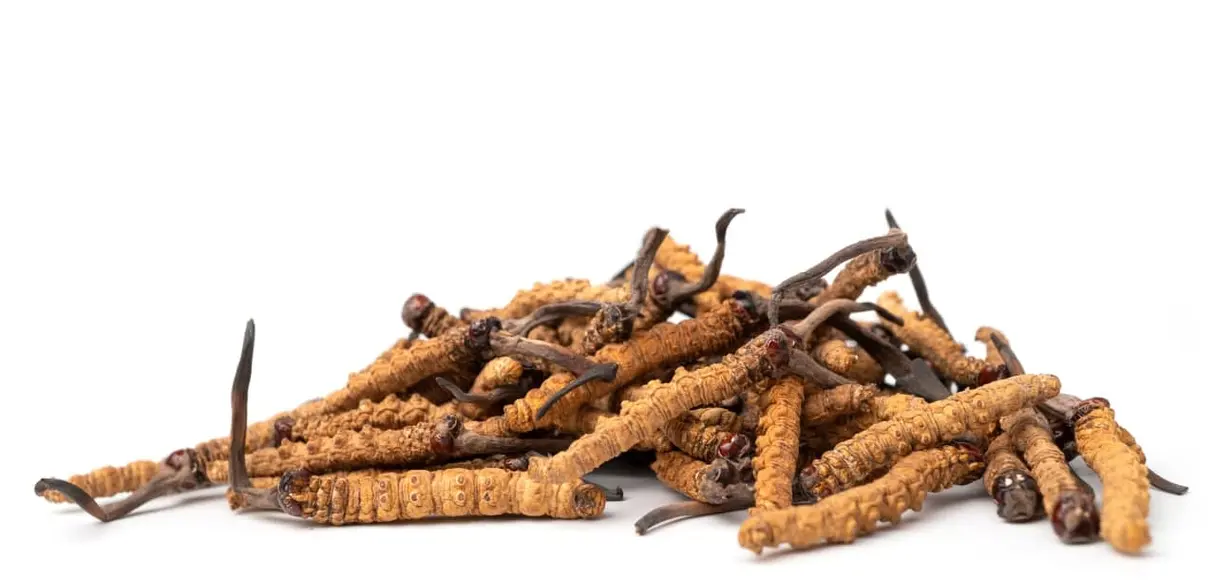
Cordyceps sinensis (Dongchonxiacao, Chinese caterpillar fungus, caterpillar mushroom, Ophiocordyceps sinensis) is a very well-known and valued representative of the Cordyceps genus, which includes more than 700 species, e.g. C. militaris, C. liangshamensis, C. gunnii, etc. The Cordyceps genus belongs to the sac fungi (Ascomycota). A peculiarity of the Cordyceps genus is its parasitic life. The spores that the fungi produce are released and spread into the surroundings of the fungus. Some attach themselves to insect larvae that bury themselves in the ground for the winter, where they hibernate. In this way, they bury themselves together with the fungal spore, which subsequently germinates and breaks into the interior of the larva, which it uses as a store of nutrients for its growth. This creates mycelium, which completely fills the larval shell. In the spring, a fruiting body then emerges from the mycelium and breaks through to the surface. The fruiting body has a club-like shape and a yellow to brown colour. In the wild, Cordyceps can be found in the high-altitude regions of Asia, mainly China and Tibet. It thrives best at an altitude of over 3,500 metres. Currently, the fungus is becoming increasingly rare and is disappearing from the wild. Its cultivation/growing, unlike its close relative C. militaris, is very difficult. So far, it has not been possible to grow a mature fruiting body, only mycelia.
If we look at the history of the use of the fungus, we must mention the stories that describe the experiences of yak herders. They observed that the animals that grazed on Cordyceps along with the grass were more vital, livelier, but also more fertile. Written records regarding Cordyceps date back to 620 AD, when the fungus entered old Chinese herbals and became part of traditional Chinese medicine. In the Western world, there is a written mention only from 1726. At that time, a mycological conference was held in Paris. Here, of course, the fungus as such was introduced, not its effects. It is also interesting that Cordyceps has appeared in Chinese pharmacology among medicinal plants since 1964, so it is recognised as a medicinal herb not only by traditional Chinese medicine but also by the "classical" one.
Si Qi (nature): warm
Wu Wei (taste): sweet, slightly pungent
Gui Jing (tropism): lung and kidney systems
1, Energy support
2, Support for adaptation ability
3, Support for Shen Yang (kidney Yang)
4, Support for sexual and reproductive functions
5, Support for Shen Jing (kidney essence)
6, Support for kidney diseases
7, Support for athletes
8, Support for insufficient thyroid function
9, Lung support
10, Mental support
11, Heart and cardiovascular function support
a, Mushrooms in the form of extracts (recommended form of use)
If you take mushrooms in the form of 30% extracts, I recommend:
Preventive use
For milder health problems
For more serious health problems
b, Mushrooms in tincture
c, Mushrooms in the form of powder (biomass)
d, Dried mushrooms
In order to understand the breadth of Cordyceps' effects well, we must know its composition, which is very varied. It contains a large amount of bioactive substances that can act on cells and thus on the entire organism. In the following text, we will mention some of the most essential components of Cordyceps.
Polysaccharides
Like all mushrooms, Cordyceps is a rich source of polysaccharides, which are known mainly for their antioxidant effects. They make up 3 to 8% of the fungus's weight. The activity of polysaccharides depends on their exact composition, i.e. on what monosaccharides they consist of, how branched they are, etc. Polysaccharides can be divided into extracellular and intracellular. Extracellular polysaccharides are released by the fungus into the surroundings; they are not part of its "body". Intracellular polysaccharides are part of the fungus's cells. The most important are undoubtedly glucans, namely alpha and beta.
Polysaccharides from Cordyceps can thus be divided into two types, according to where we obtain them from, namely from the cell (intracellular) and polysaccharides that are found outside the cell (extracellular, exopolysaccharides). Most often, these are so-called glucans, both alpha and beta: 1,3-β-D-glucans, 1,3-α-D-glucans and 1,4-α-D-glucans.
1, Mannitol
Mannitol is also known as cordycepic acid. It is a sugar alcohol, which has the highest concentrations in the mycelia of the fungus. Mannitol is commonly used as a sweetener, but also in medicine. It has the ability to dehydrate the organism, thereby also lowering blood pressure, as well as intracranial pressure.
Phenols
Phenolic compounds have important effects, whether antioxidant or anti-tumour. Among the phenols that we can find in Cordyceps sinensis are
2, Flavonoids
Flavonoids are substances that are significant for their antioxidant effects, which is why they are also sought after. In Cordyceps, there are
3, Alkaloids
Alkaloids are plant substances, a large part of which also have toxic effects. But it always depends on the dose; otherwise, they have a positive effect on the organism.
Cordyceps contains:
4, Sterols
Sterols are very important substances whose name is derived from the fact that they have a sterol core, just like cholesterol. The most important plant sterol is ergosterol, i.e. a precursor of vitamin D2, which is also involved in bone metabolism and calcium absorption. Other sterols have, for example, anti-inflammatory, anti-tumour, kidney-protecting effects...
Other sterols in Cordyceps are
5, Nucleosides and nucleobases
As the names of these compounds already suggest, these are compounds that, among other things, participate in the construction of genetic information, i.e. nuclear DNA. These are adenine, adenosine, cytidine, cytosine, guanine, guanosine, inosine, hypoxanthine, but also cordycepin, which is unique to Cordyceps. These substances can have a positive effect on overall health, influence the nervous system, etc.
We will look closer at cordycepin, i.e. 3'-deoxyadenosine, which is being very actively researched. Studies show that it has significant anti-tumour effects; it knows how to bind to the surface molecules of tumour cells, to the A3 receptor, and thus stop their division and support the transition to cell death.
Nucleotides
A nucleotide is a compound of a nucleoside with a phosphate. In Cordyceps, there are uridine 5-monophosphate, adenosine 5-monophosphate, guanosine 5-monophosphate. These compounds are involved in the metabolism of fatty acids, support tissue regeneration, etc.
6, Proteins, amino acids, polypeptides
Although mushrooms are considered more as plants, they do not lack proteins. Enzymes, for example, are important. Cordyceps contains enzymes that are capable of cleaving DNA, but also breaking down blood clots (thrombi), so they have fibrinolytic effects.
Besides proteins, there are also their building blocks in Cordyceps, i.e. amino acids, including those that the body cannot create itself. Worth mentioning is, for example, tryptophan, from which serotonin is created, which is a substance influencing brain functioning; it is anti-depressive.
In this part, we cannot omit polypeptides, which have antioxidant, vasodilator, anti-tumour, anti-inflammatory effects. These are, for example
7, Fats and free fatty acids
Cordyceps is also a source of fatty acids, i.e. fats. 28 different fatty acids were obtained from it, both saturated and unsaturated, e.g.
Fatty acids are not just a source of energy, but they also have other abilities; they participate in various processes in the body, e.g. fat and sugar metabolism.
Among fats, glycosphingolipids and sphingomyelins are also included. In one study, it is described that it was possible to obtain 119 types of glycosphingolipids and 87 types of sphingomyelins from Cordyceps.
8, Vitamins, minerals and trace elements
The overview of Cordyceps components would not be complete if we did not mention vitamins. Vitamin D, ergosterol, vitamin E, K, and B-group vitamins are most abundantly represented. From mineral substances, these are, for example, potassium, calcium, sodium, iron, magnesium, manganese, zinc, selenium, copper.
9, Metabolites
From primary components, the fungus can create other substances, i.e. metabolites, which may have different effects than the parent substance. Among metabolites is lovastatin, which lowers lipid levels; it is similar to statin drugs, which are used in the treatment of hyperlipidaemia. Another significant metabolite is GABA, gamma-aminobutyric acid, which acts on the brain, i.e. it is a neurotransmitter.
Cordyceps is a very versatile mushroom that can help with various difficulties that can plague us. We will now look closer at the possibility of using Cordyceps. To each chapter, we will also add links to studies that confirm our words. You can look them up and read them. It is certainly possible to argue that a large part of the studies took place on cells or animals, but it is likely that the same effect could also be achieved in humans. However, clinical studies are very expensive and demanding, also from an ethical point of view, so they are not performed very often.
2, Cordyceps against cancer
Worldwide, the numbers of people who fall ill with some form of cancer are growing. Despite advances in treatment, many people succumb to the disease. It must be noted that even the treatment itself is not a walk in the park and can weaken and damage the organism. Logically, the pressure is growing for a treatment to be discovered that would be effective and at the same time safe. It turns out that vital mushrooms could also help us in this. Cordyceps contains a specific substance, cordycepin, which has significant anti-tumour effects. Many studies have been conducted on various types of cancer cells, animals and clinical studies that have confirmed the anti-tumour effects. If Cordyceps or its components are added to tumour cells, e.g. lung, brain, pancreatic, breast, prostate, bladder cancer, the cells stop dividing and die. This then manifests in animals in such a way that the tumour they have in them shrinks, and the animals survive for a longer time than animals with cancer without Cordyceps treatment. It is also important that the toxic effect of Cordyceps does not manifest on healthy cells. They survive in health the concentrations of Cordyceps that destroy tumour cells.
Another remarkable effect of Cordyceps is that it increases the sensitivity of tumour cells to therapy. Some tumour cells are resistant to treatment and the effectiveness of treatment is therefore low. After exposure to Cordyceps, however, even a lower dose of treatment can help, whether radiotherapy or chemotherapy.
Cordyceps, however, does not only fight cancer, but can also accelerate the regeneration of the organism after anti-tumour therapy. Restore the immune system, heal mucous membranes after radiotherapy or chemotherapy. It also turns out that it can mitigate negative impacts directly during ongoing treatment, i.e. reduce nausea, vomiting, fatigue, etc.
It is clear that Cordyceps has the potential to help in the fight against tumour diseases.
Li J, Cai H, Sun H, Qu J, Zhao B, Hu X, Li W, Qian Z, Yu X, Kang F, Wang W, Zou Z, Gu B, Xu K. Extracts of Cordyceps sinensis inhibit breast cancer growth through promoting M1 macrophage polarization via NF-κB pathway activation. J Ethnopharmacol. 2020 Oct 5;260:112969. doi: 10.1016/j.jep.2020.112969.
Su NW, Wu SH, Chi CW, Tsai TH, Chen YJ. Cordycepin, isolated from medicinal fungus Cordyceps sinensis, enhances radiosensitivity of oral cancer associated with modulation of DNA damage repair. Food Chem Toxicol. 2019 Feb;124:400-410. doi: 10.1016/j.fct.2018.12.025.
Cai H, Li J, Gu B, Xiao Y, Chen R, Liu X, Xie X, Cao L. Extracts of Cordyceps sinensis inhibit breast cancer cell metastasis via down-regulation of metastasis-related cytokines expression. J Ethnopharmacol. 2018 Mar 25;214:106-112. doi: 10.1016/j.jep.2017.12.012.
Nakamura K, Shinozuka K, Yoshikawa N. Anticancer and antimetastatic effects of cordycepin, an active component of Cordyceps sinensis. J Pharmacol Sci. 2015 Jan;127(1):53-6. doi: 10.1016/j.jphs.2014.09.001.
Niwa Y, Matsuura H, Murakami M, Sato J, Hirai K, Sumi H. Evidence that naturopathic therapy including Cordyceps sinensis prolongs survival of patients with hepatocellular carcinoma. Integr Cancer Ther. 2013;12(1):50-68.
Wang H, Zhang J, Sit WH, Lee CY, Wan JM. Cordyceps cicadae induces G2/M cell cycle arrest in MHCC97H human hepatocellular carcinoma cells: a proteomic study. Chin Med. 2014;9:15.
Chou SM, Lai WJ, Hong TW, Lai JY, Tsai SH, Chen YH, Yu SH, Kao CH, Chu R, Ding ST, Li TK, Shen TL. Synergistic property of cordycepin in cultivated Cordyceps militaris-mediated apoptosis in human leukemia cells. Phytomedicine. 2014;21(12):1516-24.
Chen LS, Stellrecht CM, Gandhi V. RNA-directed agent, cordycepin, induces cell death in multiple myeloma cells. Br J Haematol. 2008;140(6):682-391.
Yoshikawa N, Nakamura K, Yamaguchi Y, Kagota S, Shinozuka K, Kunitomo M. Antitumor activity of Cordycepin in mice. Clin Exp Pharmacol Physiol. 2004;31 Suppl 2:S51-3.
Wong YY, Moon A, Duffin R, Barthet-Barateig A, Meijer HA, Clemens MJ, de Moor CH. Cordycepin inhibits protein synthesis and cell adhesion through effects on signal transduction. J Biol Chem. 2010 22;285(4):2610-21.
Zhou X, Meyer CU, Schmidtke P, Zepp F. Effect of cordycepin on interleukin-10 production of human peripheral blood mononuclear cells. Eur J Pharmacol. 2002 Oct 25;453(2-3):309-17.
Jing Ji, Juan Liu, Haijuan Liu, and Yueling Wang, “Effects of Fermented Mushroom of Cordyceps sinensis, Rich in Selenium, on Uterine Cervix Cancer,” Evidence-Based Complementary and Alternative Medicine, vol. 2014, Article ID 173180, 7 pages, 2014.
Lee EJ, Kim WJ, Moon SK. Cordycepin suppresses TNF-alpha-induced invasion, migration and matrix metalloproteinase-9 expression in human bladder cancer cells. Phytother Res. 2010 Jun 17.
Wang H, Zhang J, Sit WH, Lee CY, Wan JM. Cordyceps cicadae induces G2/M cell cycle arrest in MHCC97H human hepatocellular carcinoma cells: a proteomic study. Chin Med. 2014;9:15.
Liu W. C, Chuang W. L, Tsai M. L, Hong J. H, McBride W. H, Chiang C. S. Cordyceps sinensis health supplement enhances recovery from taxol-induced leucopenia. Exp Biol Med (Maywood) 2008;233:447–55.
Wu J. Y, Zhang Q. X, Leung P. H. Inhibitory effects of ethyl acetate extract of Cordyceps sinensis mycelium on various cancer cells in culture and B16 melanoma in C57BL/6 mice. Phytomedicine. 2007a;14:43–9.
Chou SM, Lai WJ, Hong TW, Lai JY, Tsai SH, Chen YH, Yu SH, Kao CH, Chu R, Ding ST, Li TK, Shen TL. Synergistic property of cordycepin in cultivated Cordyceps militaris-mediated apoptosis in human leukemia cells. Phytomedicine. 2014;21(12):1516-24.
Hu T, Jiang C, Huang Q, Sun F. A comb-like branched β-D-glucan produced by a Cordyceps sinensis fungus and its protective effect against cyclophosphamide-induced immunosuppression in mice. Carbohydr Polym. 2016 May 20;142:259-67. doi: 10.1016/j.carbpol.2016.01.036.
3, Cordyceps and oxidative stress
Oxidative stress is a state where there is a larger amount of free radicals in the body than the organism is capable of neutralising. Free radicals arise during the normal functioning of the organism and production increases if the organism is exposed to stress; by this, we do not mean only psychological, but chemical, physical, etc. Free radicals react, for example, with fats in cell membranes, with DNA, etc., thereby damaging cells, causing mutations, accelerating ageing and also increasing the risk of cancer. It is therefore important to reduce oxidative stress. Substances in Cordyceps have this ability. If they are added to a solution with free radicals, their amount decreases. In experiments on living organisms, most often mice, levels of products that arise during oxidative stress are reduced. Cordyceps acts directly, but can also increase the activity of enzymes that are in the body and that remove free radicals, i.e. superoxide dismutase, glutathione peroxidase, etc.
Thus, Cordyceps also acts as cancer prevention.
Mishra J, Rajput R, Singh K, Bansal A, Misra K. Antioxidant-Rich Peptide Fractions Derived from High-Altitude Chinese Caterpillar Medicinal Mushroom Ophiocordyceps sinensis (Ascomycetes) Inhibit Bacterial Pathogens. Int J Med Mushrooms. 2019;21(2):155-168. doi: 10.1615/IntJMedMushrooms.2019030013.
Yamaguchi Y, Kagota S, Nakamura K, Shinozuka K, Kunitomo M. Antioxidant activity of the extracts from fruiting bodies of cultured Cordyceps sinensis. Phytother Res. 2000a;14:647–9.
Yamaguchi Y, Kagota S, Nakamura K, Shinozuka K, Kunitomo M. Inhibitory effects of water extracts from fruiting bodies of cultured Cordyceps sinensis on raised serum lipid peroxide levels and aortic cholesterol deposition in atherosclerotic mice. Phytother Res. 2000b;14:650–2.
Yu H. M, Wang B. S, Huang S. C, Duh P. D. Comparison of protective effects between cultured Cordyceps militaris and natural Cordyceps sinensis against oxidative damage. J Agric Food Chem. 2006;54:3132–8.
4, Cordyceps and diabetes
Diabetes can be labelled as a silent killer. Many people, especially with type II diabetes, do not even know that they have increased blood sugar levels, but they damage the organism. If you know you have diabetes, you must treat it. For type II diabetics, diet is often enough, but even for them, just like for type I diabetics, it is necessary to switch to insulin injections. For milder cases, vital mushrooms can also be beneficial. Studies that were conducted mainly on animals with diabetes showed that Cordyceps has the potential to lower blood sugar values, and it also protects the pancreas from damage. The pancreas produces insulin, which is essential for regulating sugar levels. Cordyceps can therefore support insulin production. It is also important to say that it mitigates insulin resistance, which is a state where there is enough insulin in the body, or even more, but cells do not react to it and sugar remains in the blood, not passing into cells as much.
Li SP, Zhang GH, Zeng Q, Huang ZG, Wang YT, Dong TT, Tsim KW.
Hypoglycemic activity of polysaccharide, with antioxidation, isolated from cultured Cordyceps mycelia. Phytomedicine. 2006;13(6):428-33.
Balon T. W, Jasman A. P, Zhu J. S. A fermentation product of Cordyceps sinensis increases whole-body insulin sensitivity in rats. J Altern Complement Med. 2002;8:315–23
Choi S. B, Park C. H, Choi M. K, Jun D. W, Park S. Improvement of insulin resistance and insulin secretion by water extracts of Cordyceps militaris, Phellinus linteus, and Paecilomyces tenuipes in 90% pancreatectomized rats. Biosci Biotechnol Biochem. 2004;68:2257–64.
Kan WC, Wang HY, Chien CC, Li SL, Chen YC, Chang LH, Cheng CH, Tsai WC, Hwang JC, Su SB, Huang LH, Chuu JJ. Effects of Extract from Solid-State Fermented Cordyceps sinensis on Type 2 Diabetes Mellitus. Evid Based Complement Alternat Med. 2012;2012:743107.
5, Cordyceps and hyperlipidaemia
Similar to high sugar values, high fat values in the blood, i.e. hyperlipidaemia, are also dangerous. Fat damages blood vessels, into whose walls it is deposited, the liver and other organs. It is closely related to cardiovascular system diseases. Often, adjusting one's lifestyle is enough to solve the condition, but sometimes it is necessary to add medication, hypolipidaemics, to the lifestyle change.
It turns out that adding Cordyceps can also be beneficial. In experiments with animals, it is shown that in animals fed a high-fat diet, the administration of Cordyceps leads to a decrease in fat values, total cholesterol, bad LDL, while in animals without Cordyceps, these values increase significantly. When taking samples from the liver, it was also found that thanks to Cordyceps, fat deposition in the liver decreases; hepatosteatosis does not occur.
Shimada T, Hiramatsu N, Kasai A, Mukai M, Okamura M, Yao J, Huang T, Tamai M, Takahashi S, Nakamura T, Kitamura M. Suppression of adipocyte differentiation by Cordyceps militaris through activation of the aryl hydrocarbon receptor. Am J Physiol Endocrinol Metab. 2008 Oct;295(4):E859-67.
Guo P, Kai Q, Gao J, Lian ZQ, Wu CM, Wu CA, Zhu HB. Cordycepin prevents hyperlipidemia in hamsters fed a high-fat diet via activation of AMP-activated protein kinase. J Pharmacol Sci. 2010;113(4):395-403.
Kim SB, Ahn B, Kim M, Ji HJ, Shin SK, Hong IP, Kim CY, Hwang BY, Lee MK. Effect of Cordyceps militaris extract and active constituents on metabolic parameters of obesity induced by high-fat diet in C58BL/6J mice. J Ethnopharmacol. 2014;151(1):478-84.
Li F, Wu Z, Sui X. Biotransformation of ginsenoside Rb1 with wild Cordyceps sinensis and Ascomycota sp. and its antihyperlipidemic effects on the diet-induced cholesterol of zebrafish. J Food Biochem. 2020 Jun;44(6):e13192. doi: 10.1111/jfbc.13192.
7, Anti-fatigue Cordyceps
Cordyceps is exceptional for its ability to strengthen physical and mental condition, delay the onset of fatigue and accelerate convalescence. Studies have been conducted with both top athletes, e.g. cyclists, and "weekend" athletes. Sports performance is associated with an increase in the accumulation of various metabolites in muscles, e.g. lactic acid; micro-injuries of muscles and mild inflammation also occur. This naturally leads to muscle fatigue and pain. When taking Cordyceps, muscle tissue is better supplied with blood, better uses energy in the form of glycogen and reduces inflammation in muscles and supports muscle repair. From this, it follows that fatigue sets in later, there is greater endurance and strength, and regeneration is accelerated. Cordyceps thus also reduces the risk of overtraining. A large number of studies have also been conducted on animals that were placed in a tank with water and it was monitored how long they could swim. Mice taking Cordyceps could swim for a longer time, by up to 20 minutes.
In a human study from 2020, there were 21 people who received either a preparation with rhodiola and Cordyceps, or identical-looking ineffective tablets. People went through a 14-day training. It turned out that the administration of Cordyceps increased "speed" during the same training, bench press lifting, people managed a higher total exercise load, etc.
So far, we have mentioned only the physical side and now we will also focus on the psyche. Psychological stress also leads to fatigue and exhaustion. Even here, Cordyceps can be a benefit. It has an influence on the brain and its activity, influences the production of neurotransmitters in the brain, increases serotonin values. It mitigates, for example, depression, increases the ability to adapt to changing conditions, increases the ability to learn, concentrate, etc.
Kreipke PhD VC, Moffatt PhD RJ, Tanner Ma CJ, Ormsbee PhD MJ. Effects of Concurrent Training and a Multi-Ingredient Performance Supplement Containing Rhodiola rosea and Cordyceps sinensis on Body Composition, Performance, and Health in Active Men. J Diet Suppl. 2020 Oct 20:1-17. doi: 10.1080/19390211.2020.1822486.
Siu K. M, Mak D. H, Chiu P. Y, Poon M. K, Du Y, Ko K. M. Pharmacological basis of “Yin-nourishing” and “Yang-invigorating” actions of Cordyceps, a Chinese tonifying herb. Life Sci. 2004;76:385–95.
Rossi P, Buonocore D, Altobelli E, Brandalise F, Cesaroni V, Iozzi D, Savino E, Marzatico F. Improving Training Condition Assessment in Endurance Cyclists: Effects of Ganoderma lucidum and Ophiocordyceps sinensis Dietary Supplementation. Evid Based Complement Alternat Med. 2014;2014:979613.
Colson S. N, Wyatt F. B, Johnston D. L, Autrey L. D, FitzGerald Y. L, Earnest C. P. Cordyceps sinensis- and Rhodiola rosea-based supplementation in male cyclists and its effect on muscle tissue oxygen saturation. J Strength Cond Res. 2005;19:358–63.
Nishizawa K, Torii K, Kawasaki A, et al., editors. Antidepressant-like effect of Cordyceps sinensis in the mouse tail suspension test. Biol Pharm Bull. 2007;30:1758–62.
8, Cordyceps slows down ageing
If we look at the effects of Cordyceps written above, it clearly follows for us that Cordyceps slows down the ageing process, mitigates degenerative processes and rather strengthens regeneration. A very interesting experiment was conducted where in mice to which D-galactose was administered (accelerates ageing), a positive effect of Cordyceps was manifested. Actually, the ageing process was slightly reversed. There was an improvement in brain functions, i.e. learning, reacting to stimuli and remembering. In animals, potency also increased.
Wang YH, Ye J, Li CL, Cai SQ, Ishizaki M, Katada M. An experimental study on anti-aging action of Cordyceps extract. Zhongguo Zhong Yao Za Zhi. 2004;29(8):773-6.
Ji D.B, Ye J, Li C.L, Wang Y.H, Zhao J, Cai S.Q. Antiaging effect of Cordyceps sinensis extract. Phytother Res. 2009;23(1):116-22.
9, Cordyceps will help libido and potency
We have already approached that Cordyceps strengthens our condition. It is therefore no surprise that it can also increase our sexuality and fertility. Studies show that the administration of Cordyceps can increase testosterone values, which is of course also associated with fertility, better sperm production and their quality, including motility. Thanks to the fact that Cordyceps also dilates small blood vessels, it also positively influences erection, which is dependent precisely on the blood supply to the penis. The blood supply to the sexual organs in a woman then naturally leads to an increase in sexual desire. In women, we must also mention the support of female hormone production, mainly oestrogen. This can be usable, for example, during the transition period, menopause. We can mention one significant study in which there were 2 men who received Cordyceps for 8 weeks; there was a 33% increase in sperm quantity and the occurrence of sperm deformities decreased by 29%. Sperm survival increased by 79%. These are therefore high numbers. In a study in which there were 189 men and women, there was an increase in sexual desire by 66%; in women, the increase in libido was 86%.
Chang Y, Jeng KC, Huang KF, Lee YC, Hou CW, Chen KH, Cheng FY, Liao JW, Chen YS Effect of Cordyceps militaris supplementation on sperm production, sperm motility and hormones in Sprague-Dawley rats. Am J Chin Med. 2008;36(5):849-59.
JIN Hong-lan1, GUO Rui-xin2 Influence of Cordyceps Sinensis on Reproduction and Testis Morphology in Mice. Shenzhen Journal of Integrated Chinese and Western Medicine. 2005-6
Hirokazu Kawagishi, Kentaro Okamura, Fumio Kobayashi, Noriko Kinjo. Estrogenic Substances from the Mycelia of Medicinal Fungus Cordyceps ophioglossoides (Ehrh.) Fr. (Ascomycetes). IntJMedMushr.v6.i3.40 2004
Bu-Miin Huang, Kuei-Yang Hsiao, Pei-Chin Chuang, Meng-Hsing Wu, Hsien-An Pan, and Shaw-Jenq Tsai. Upregulation of Steroidogenic Enzymes and Ovarian 17β-Estradiol in Human Granulosa-Lutein Cells by Cordyceps sinensis Mycelium. Biology of Reproduction May 1, 2004 vol. 70 no. 5 1358-1364
Drewes S. E, George J, Khan F. Recent findings on natural products with erectile-dysfunction activity. Phytochemical. 2003;62:1019–25
Jiraungkoorskul K, Jiraungkoorskul W. Review of Naturopathy of Medical Mushroom, Ophiocordyceps Sinensis, in Sexual Dysfunction. Pharmacogn Rev. 2016;10(19):1-5. doi:10.4103/0973-7847.176566
10, Cordyceps and kidneys
During life, damage to some organs can also occur. Kidneys are very sensitive and their disease is relatively common in the population. We can say that, for example, diabetics often have significant difficulties with kidneys, which is related to the high level of blood sugar. Furthermore, kidneys can be affected by infections or autoimmune diseases. The toxic influence of some substances and medication on kidneys cannot be overlooked either. Serious kidney damage leads to the necessity to dialyse the patient and transplant a new organ. As we said, Cordyceps mitigates inflammation and reduces oxidative stress, which also limits kidney damage. It also supports their regeneration. This was confirmed in many studies. As we are already used to, they were most often conducted on animals. We will highlight the results of a study on rats whose kidneys were poorly supplied with blood, i.e. ischaemic, which leads to damage. Rats that received Cordyceps had much milder kidney damage than rats that did not receive Cordyceps. Just like before ischaemia, Cordyceps also protects against toxic substances, e.g. cyclosporine A, which is used to suppress the immune system for autoimmune diseases or after a transplant. When administering Cyclosporine, kidneys are not as significantly damaged as without it. Finally, we will mention a meta-analysis summarising the results of studies in which there were 655 people in total who were dialysed; part received Cordyceps in addition to treatment, part only standard therapy without Cordyceps. The administration of Cordyceps was associated with a decrease in CRP, which is a marker of inflammation. There were also better albumin values (it escapes through damaged kidneys with urine from the body) and haemoglobin (values decrease, as kidneys produce less EPO). Adding Cordyceps to standard treatment for patients with failing kidneys can be beneficial.
Wojcikowski K, Johnson D. W, Gobë G. Medicinal herbal extracts-renal friend or foe? Part two: Herbal extracts with potential renal benefits. Nephrology (Carlton) 2004;9:400–5.
Chyau CC, Chen CC, Chen JC, Yang TC, Shu KH, Cheng CH. Mycelia glycoproteins from Cordyceps sobolifera ameliorate cyclosporine-induced renal tubule dysfunction in rats. J Ethnopharmacol. 2014;153(3):650-8.
Lu L. Study on effect of Cordyceps sinensis and artemisinin in preventing recurrence of lupus nephritis. Zhongguo Zhong Xi Yi Jie HeZa Zhi Zhongguo Zhongxiyi Jiehe Zazhi/Chinese J. Integrated Traditional Western Med./Zhongguo Zhong Xi Yi Jie He Xue Hui, Zhongguo Zhong Yi Yan Jiu Yuan Zhu Ban 2002; 22 : 169–71.
Zheng F, Li LS, Chu XM. Effects of fermented cordyceps on acute renal damage induced by gentamycin in rats. China J. Chin. Material Med. 1994; 19: 494–7.
Zhao X, Li L. Cordyceps sinensis in protection of the kidney from cyclosporine A nephrotoxicity. Chung-Hua I Hsueh TsaChih 1993;73(410–2): 447.
Wu Z. L, Wang X. X, Cheng W. Y. Inhibitory effect of Cordyceps sinensis and Cordyceps militaris on human glomerular mesangial cell proliferation induced by native LDL. Cell Biochem Funct. 2000;18:93–7.
Bee Yean O, Zoriah A. Efficacy of Cordyceps sinensis as an adjunctive treatment in hemodialysis patients: a systematic review and Meta-analysis. J Tradit Chin Med. 2019 Feb;39(1):1-14. PMID: 32186018.

Characteristics and effects of mushrooms according to traditional Chinese medicine

Description of herbal blends, effects according to Chinese medicine and main usage

Dietary recommendations including individual foods for specific patterns

Characteristics and effects of herbs according to traditional Chinese medicine

Characteristics of food and its influence on individual organs

Classification of herbs and mushrooms by individual diseases


Subscribe to our newsletter and you won't miss any promotions or important information