Please note that the information provided below is the personal opinion of Mr Milan Schirlo, who is a therapist and an advocate of Traditional Chinese Medicine and a healthy lifestyle. Mr Schirlo does not promote any specific products or manufacturers of food supplements. Furthermore, this article is not connected to the sale of any products. The information is provided for the purpose of disseminating publicly available knowledge, conclusions of professional studies, education, and personal findings regarding vital mushrooms and a healthy lifestyle.
For legislative reasons, I cannot state some information. Therefore, the text is missing for some points. I am working on republishing it. Thank you for your understanding.
Latin: Laricifomes officinalis
Czech: Larch Polypore
Larch Polypore (Laricifomes officinalis, Polyporus officinalis, Fomitopsis officinalis, Agarikon, Quinine conk) belongs to the polypore wood-decaying mushrooms. It appears mainly in the northern hemisphere, i.e., it prefers cooler temperatures. It has therefore been found in Europe, e.g., in the Alps, the Carpathians, and it also occurs in Canada, Russia, and the cooler regions of Asia.
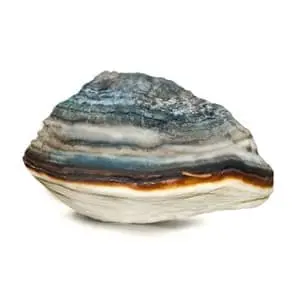
Agarikon prefers coniferous trees, namely larches. A perennial, multi-year fruiting body forms on the bark of the trees (it is stated that the oldest fruiting bodies were up to 75 years old), which resembles a column or a hoof. The fruiting body can be 60 centimetres or more in length.
Young, developing fruiting bodies are soft and light beige, yellowish, whitish. Gradually, however, they darken and also harden.
Although the mushroom is edible, it is not consumed. This is partly due to its structure and also its taste, which is distinctly bitter and unpleasant. Although Agarikon has not found use in the kitchen, its popularity is enormous. It has been used for centuries as a medicinal remedy. It has "always" been dried and crushed into a powder or into larger pieces, which are used to make teas or decoctions. In ancient writings from the year 65 AD written by Pedanius Dioscorides, Agarikon is described as a medicine that helps patients with tuberculosis or chickenpox; it was also used against excessive sweating and as a laxative. Agarikon is very popular in Iran, where it is an integral part of their traditional medicine. Here it is called Gharikon and is used in the treatment of sciatica, muscle weakness, bronchitis and lung inflammation, constipation, stomach pain, and poor digestion; it reduces fever and alleviates the consequences of insect bites. It is also used as a diuretic, i.e., it supports the production and excretion of urine.
Agarikon was also used by the indigenous peoples of North America, both as a medicine and as a tool in shamanic rituals. The indigenous people even carved figurines from it. They used Agarikon as a remedy that has an astringent effect on blood vessels and thus accelerates the stopping of bleeding. It was also valued as a medicine for lung diseases and used for joint and muscle pain in the form of compresses.
1, Stimulation of the immune system and protection against infection
2, Support for cancer treatment
3, Anti-inflammatory effects
4, Digestive support
5, Asthma
6, Detoxification
a, Mushrooms in the form of extracts (recommended form of use)
If you are taking mushrooms in the form of 30% extracts, I recommend:
Preventive use
For milder health problems
For more serious health problems
b, Mushrooms in tincture
c, Mushrooms in the form of powder (powder, biomass)
d, Dried mushrooms
Composition of Agarikon, substances in milligrams per 100 grams of dry matter. The abbreviation nd means that no traces of this compound were found.
Substance name | fruiting body (mg/100 g dry matter) | mycelium (mg/100 g dry matter) |
Indole components | ||
l-tryptophan | 70.08 ± 6.16a | 8.06 ± 0.96a |
6-Methyl-d,l-tryptophan | 9.24 ± 1.34a,b | 0.53 ± 0.06a,b |
Melatonin | 1.51 ± 0.52a,b | 0.34 ± 0.03a,c |
5-Hydroxy-l-tryptophan | * | 517.99 ± 5.29a,b,c |
Phenolic components | ||
p-Hydroxybenzoic acid | 0.07 ± 0.00 | * |
Catechin | nd | 58.37 ± 0.9 |
Gallic acid | nd | 0.09 ± 0.0 |
Amino acids | ||
Phenylalanine | nd | 346.48 ± 4.0 |
Sterols | ||
Ergosterol | 52.97 ± 0.21 | 102.02 ± 0.44 |
Ergosterol peroxide | * | * |
Bioelements | ||
Zinc | 9.62 ± 0.42 | 15.34 ± 0.55 |
Copper | 3.22 ± 0.31 | 0.72 ± 0.04 |
Iron | 4.15 ± 0.12 | 12.06 ± 1.37 |
Magnesium | 189.5 ± 2.69 | 218.9 ± 12.13 |
Component | antimicrobial/antiparasitic effects |
eburicoic acid | – |
sulfurenic acid | – |
Fomefficinic acid A-E | – |
Versisponic acid D | – |
Fomefficinic acid F,G | – |
Dehydroeburicoic acid | – |
Dehydrosulfurenic acid | – |
3-Ketodehydrosulfurenic acid | – |
Fomefficinol A-B | – |
Fomlactone A-C | – |
Obtusifoldienol | – |
Eburicodiol | – |
(3β,5α,6β)-3,6-dihydroxy-4,4,14-trimethyl-Pregn-8- en-20-one | – |
3α-hydroxy-4,4,14α-trimethyl-5α-pregn-8-en-20-one | – |
Eburical | – |
Agaric acid | – |
Laricinoic acid | – |
Officinalic acid | – |
2H-6-chloro-2-oxo-4-phenyl-1-Benzopyran-3-carboxylicacidethylester | antimicrobial |
6-Chloro-4-phenyl-coumarin | antimicrobial |
Officimalonic acid A-H | – |
Fomitopsin A | – |
Fomitopsin C | – |
Fomitopsin F, G, H | Trypanocidal |
Demalonyl fomitopsin H | Trypanocidal |
Fomitopsin D Ethyl ester | Trypanocidal |
3-acetyloxylanosta-8, 24-dien-21-oic acid | – |
(25S)-(+)-12α-hydroxy-3α-malonyloxy-24-methyllanosta-8,24(31)-dien-26-oic acid | – |
15α-hydroxy-3-oxo-24-methylenelanosta-7,9(11)-dien-21-oic acid | Trypanocidal |
t-Z-trans-zeatin | – |
c-Z-cis-zeatin | – |
ZR-zeatin riboside | – |
zeatin-glucoside | – |
Girometta C. Antimicrobial properties of Fomitopsis officinalis in the light of its bioactive metabolites: a review. Mycology. 2018;10(1):32-39. Published 2018 Oct 25. doi:10.1080/21501203.2018.1536680
Important polysaccharides are also missing from the list. In Agarikon, these are mainly mannofucogalactans, which are composed of many monosaccharides. They contain mainly galactose, fucose, and mannose. There are also "classic" beta-glucans in Agarikon.
Agarikon is both a part of many traditional medicines and many of its effects are confirmed in studies. We will mention some of them.
Waill A Elkhateeb, Ghoson M Daba, Marwa O Elnahas, Paul W Thomas. Fomitopsis officinalis mushroom: ancient gold mine of functional components and biological activities for modern medicine. Egyptian Pharmaceutical Journal 18(4):285-289
Microbes that can cause infectious diseases are all around us. It mainly depends on the immune system whether it can repel their onslaught. The fact that we do not get sick does not mean that we have not caught a microbe. It is just immediately liquidated.
Agarikon has significant antimicrobial effects.
It can make life unpleasant for viruses. It can limit their entry into the cell, limit the activity of their enzymes, thereby limiting their replication, i.e., multiplication. Agarikon has been tested against the smallpox virus, hepatitis C, herpes viruses, and influenza viruses. It can even destroy the bird flu virus.
Antibacterial effects have also been proven. If Agarikon is added to bacteria, they stop multiplying and die. This also applies to Mycobacterium tuberculosis, which causes tuberculosis. This bacterium is extremely resistant; to eliminate it, it is necessary to use up to 4 antibiotics at once. Agarikon further destroys Staphylococcus aureus, Escherichia coli, Streptococcus pneumoniae (pneumococcus), Enterococcus faecalis, Pseudomonas aeruginosa, Klebsiella pneumoniae, Listeria monocytogenes, Salmonella typhimurium, etc.
Agarikon also acts against fungi and yeasts, e.g., against Candida albicans and Alternaria solani, Fusarium oxysporum, and Aspergillus terreus.
Agarikon also has antiparasitic effects. These have been proven against Trypanosoma congolense. This is a parasite related to the trypanosome that causes sleeping sickness in humans.
Agarikon contains components that influence the functioning of the immune system, which is essential for our health.
Agarikon can strengthen the immune response. Polysaccharides are mainly responsible for this. Under the influence of Agarikon, the activity of immune cells increases, they produce more cytokines, the ability of macrophages to engulf foreign material or damaged parts of cells is strengthened, they kill engulfed microbes better, etc.
Agarikon does not only have immunity-strengthening effects, but it can also suppress undesirable inflammation. Although inflammation is a healing process, if it is disproportionate and long-term, it can lead to tissue damage. We see this also in autoimmune and allergic inflammation. Triterpene lanostanes, which include officinomalonic acids and fomitopsin A, have suppressive effects.
Tumour diseases are still increasing. Despite new treatment procedures, there are patients who succumb to the disease, and the treatment itself is very demanding. Scientists are therefore looking for substances that have antitumour effects but do not damage the healthy cells of the body.
The effects of Agarikon have been tested on breast, liver, lung, osteosarcoma, and cervical cancer. If Agarikon was added to these cells, they stopped multiplying and began to die. Lanostane triterpenes such as fomitopsin C are mainly behind this effect.
Experiments have also been carried out on animals with tumour diseases. Part of the animals is treated with Agarikon and part is not. It is compared how the tumour behaved during the study. In mice that received Agarikon, the tumour shrank, and necrosis, i.e., death, was evident in it. Doses of 20 mg/l can reduce tumour growth by more than 65%.
Besides the direct effect on tumour cells, Agarikon also limits the formation of new blood vessels, which tumour cells stimulate. Tumour cells require a greater supply of energy, and this ensures sufficient blood supply. Limiting the formation of new blood vessels that supply the tumour with blood also limits the growth of the tumour.
We cannot omit the fact that Agarikon increases the activity of the immune system, and therefore also antitumour immunity.
Thanks to its components, Agarikon has antioxidant effects, i.e., it limits oxidative stress, thereby slowing down degenerative processes and reducing the risk of tumour diseases.
It has also been proven that it suppresses the activity of thrombin, thus reducing the formation of thrombi, i.e., blood clotting.

Characteristics and effects of mushrooms according to traditional Chinese medicine

Description of herbal blends, effects according to Chinese medicine and main usage

Dietary recommendations including individual foods for specific patterns

Characteristics and effects of herbs according to traditional Chinese medicine

Characteristics of food and its influence on individual organs

Classification of herbs and mushrooms by individual diseases


Subscribe to our newsletter and you won't miss any promotions or important information